


Quitting vaping suddenly triggers nicotine withdrawal, a well-defined physiological process that begins within hours of your last puff and affects your mood, sleep, appetite, and physical comfort. The side effects of quitting vaping suddenly are not random. They follow a predictable pattern: symptoms start 2–12 hours after cessation, peak at 48–72 hours, and largely resolve within a month. Knowing what to expect removes the fear and gives you a real advantage. This guide covers every physical and psychological symptom, the full timeline, and the strategies that actually work.
What are the most common physical side effects of quitting vaping suddenly?
The body’s physical response to sudden vaping cessation is driven by one core change: nicotine is gone, and your nervous system has to recalibrate without it. Nicotine affects blood vessels, digestion, metabolism, and sleep. When it disappears abruptly, each of those systems reacts.

Headaches
Headaches are one of the first physical symptoms you will notice. Nicotine constricts blood vessels, so when it leaves your system, those vessels dilate rapidly. This rebound vasodilation peaks around day 3 and is one of the most common reasons people relapse. Recognizing this as a temporary physiological adjustment, not a sign of illness, is critical to getting through it.
Pro Tip: Drink at least 8 glasses of water per day and use an OTC pain reliever like ibuprofen or acetaminophen. Hydration and OTC medications work better for withdrawal headaches than caffeine, which can make rebound vasodilation worse.
Sleep disturbances
Nicotine affects the brain’s sleep architecture. Without it, many people struggle to fall asleep, wake up frequently, or experience unusually vivid dreams. These sleep disruptions are uncomfortable but temporary. Most people see significant improvement within two to four weeks.
Digestive changes and weight gain
Nicotine suppresses bowel motility, meaning your gut slows down when nicotine is removed. Constipation, nausea, and general digestive discomfort are common in the first week. Nicotine also acts as an appetite suppressant. Once it is gone, hunger increases. Research shows weight gain averages 5–10 pounds after quitting, though this stabilizes within 3–6 months as your metabolism adjusts.
Here is a quick summary of the main physical symptoms and their typical duration:
- Headaches: Days 1–5, peaking around day 3
- Sleep disturbances: Weeks 1–4, improving gradually
- Constipation and nausea: Days 3–10
- Increased appetite: Weeks 1–8
- Coughing: Days 3–14 as airways clear
- Fatigue: Weeks 1–2
Physical symptoms mostly resolve within four weeks. That is a short window relative to the long-term health benefits of stopping.
What are the psychological side effects of quitting vaping suddenly?
The psychological effects of sudden vaping cessation are often harder to manage than the physical ones. Your brain has been receiving regular nicotine doses that trigger dopamine release. When that stops, brain chemistry shifts, and mood follows.
Anxiety, irritability, and restlessness
These three symptoms are the hallmark of nicotine withdrawal. They appear within the first 24 hours and can feel intense. Nicotine withdrawal can precipitate acute psychiatric symptoms including anxiety, irritability, insomnia, and agitation that closely mimic primary psychiatric illness. That distinction matters because many people assume something is seriously wrong with them mentally, when in fact their brain is simply recalibrating.
Mood swings and depressed mood
Dopamine levels drop when nicotine is removed. The result is a low, flat mood that can feel like depression. Mood swings are also common as the brain works to restore its natural chemical balance. These symptoms typically improve over two to four weeks, though the pace varies by individual.
Cravings and difficulty concentrating
Cravings are the most persistent psychological symptom. They can last for months, though they become shorter and less intense over time. Difficulty concentrating is also common in the first week, as the prefrontal cortex adjusts to functioning without nicotine stimulation.
“Most psychological symptoms during vaping withdrawal are temporary brain neurochemical recalibrations, not permanent disorders. Persistent or severe symptoms that do not improve within a few weeks warrant professional attention.” — PMC research on nicotine withdrawal
Understanding that these symptoms are temporary reduces anxiety about them. That reduction in anxiety itself makes the symptoms easier to tolerate.
How does the timeline of withdrawal symptoms progress?
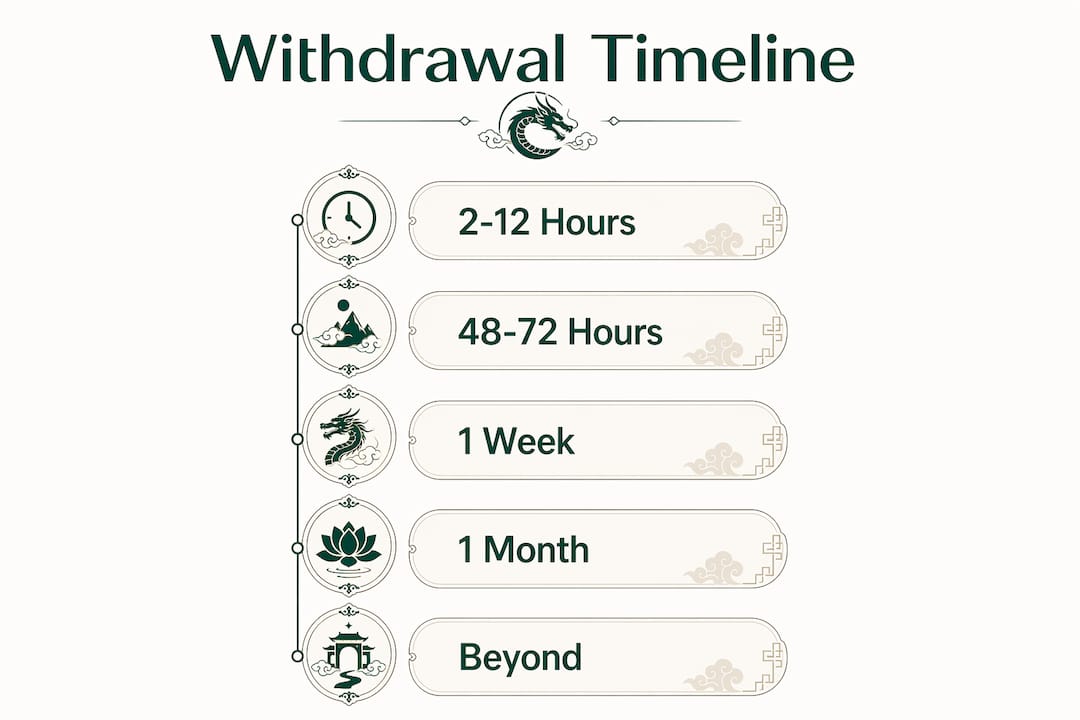
A clear timeline helps you anticipate what is coming and avoid interpreting normal withdrawal as a reason to relapse. Here is how the process unfolds:
| Time after quitting | What you experience |
|---|---|
| 2–12 hours | First cravings, mild irritability, restlessness begin |
| 24–48 hours | Headaches intensify, anxiety peaks, sleep disruption starts |
| 48–72 hours | Peak intensity of all symptoms, physical and psychological |
| Week 1–2 | Symptoms begin easing, appetite increases, fatigue common |
| Week 2–4 | Physical symptoms largely resolve, mood stabilizes |
| Month 1–3 | Cravings become intermittent, concentration improves |
| Month 3–6 | Weight stabilizes, most people feel close to baseline |
The 48–72 hour window is the hardest stretch. Symptoms peak at 48–72 hours with the full combination of anxiety, irritability, and physical discomfort hitting simultaneously. Getting through that window is the single biggest predictor of short-term success.
Pro Tip: Mark day 3 on your calendar before you quit. Knowing that peak discomfort has a specific endpoint makes it psychologically easier to endure. Plan a low-stress activity or social support for that day specifically.
Most physical symptoms resolve within one month. Mood instability and cravings can persist longer but become manageable with the right strategies.
What practical strategies help manage side effects when quitting cold turkey?
Quitting cold turkey is valid. It works for many people. The relapse risk is higher without preparation, but that risk drops significantly when you go in with a plan.
-
Prepare mentally before your quit date. Identify your top three triggers, whether that is stress, boredom, or social situations, and decide in advance how you will respond to each. Mental and physical preparation before quitting improves success rates compared to quitting without any planning.
-
Use distraction actively during cravings. A craving typically lasts 3–5 minutes. Physical movement, a cold glass of water, or a brief task can carry you through it. The craving passes whether you vape or not.
-
Manage headaches with the right tools. Hydration and OTC pain relievers are the most effective approach for rebound vasodilation headaches. Avoid caffeine during the first week, as it can amplify the vascular response.
-
Build a support system. Tell people you are quitting. Accountability reduces relapse risk. Apps like Smoke Free or Quit That track your progress and provide motivation through data.
-
Consider gradual reduction if cold turkey feels unmanageable. Tapering off gradually reduces the severity of withdrawal symptoms by giving your brain time to adjust. This is not a failure of willpower. It is a smarter physiological approach for some people.
-
Protect your sleep. Avoid screens for an hour before bed, keep a consistent sleep schedule, and consider melatonin for the first two weeks. Sleep deprivation worsens every other withdrawal symptom.
Common misconceptions that can derail your quit attempt
Several false beliefs cause people to relapse or give up before withdrawal peaks. Recognizing them in advance is one of the most practical things you can do.
- “Vaping relieves my stress.” Nicotine does not reduce stress. It temporarily relieves withdrawal symptoms, creating the illusion of stress relief. The anxiety you feel without nicotine is largely caused by nicotine addiction itself.
- “Something is seriously wrong with me mentally.” Acute psychiatric symptoms during withdrawal are temporary brain recalibrations. They are not signs of a new mental illness.
- “I have been sick for three days, so I must be relapsing for health reasons.” Day 3 headaches and fatigue are withdrawal, not illness. Treating them as illness leads to relapse.
- “One puff will not hurt.” A single puff restarts the addiction cycle and resets withdrawal. The discomfort you have already endured becomes wasted effort.
- “Cravings mean I am not strong enough.” Cravings are a neurological response, not a character flaw. Every craving that passes without a puff weakens the addiction pattern.
Key Takeaways
Quitting vaping suddenly causes predictable nicotine withdrawal symptoms that peak at 48–72 hours and largely resolve within one month, with cravings and mood changes taking longer to fully stabilize.
| Point | Details |
|---|---|
| Symptoms follow a timeline | Withdrawal begins within 12 hours and peaks at 48–72 hours before gradually improving. |
| Physical symptoms resolve the fastest | Headaches, sleep issues, and digestive changes mostly clear within four weeks. |
| Psychological effects linger longer | Cravings and mood swings can persist for months but become less intense over time. |
| Preparation reduces relapse risk | Planning your quit date, triggers, and coping strategies significantly improves success. |
| Nicotine does not relieve stress | It only relieves withdrawal symptoms, making the addiction cycle self-reinforcing. |
What I have learned from watching people quit vaping
I have spent years reading clinical research and talking to people who have quit vaping, and the pattern I see most often is this: people quit, hit day 3, feel genuinely terrible, and conclude that something has gone wrong. Nothing has gone wrong. Day 3 is exactly what the research predicts. The problem is that most people go into quitting without that knowledge, so they interpret normal withdrawal as a crisis.
The second thing I have noticed is that people underestimate the psychological trap of the “stress relief” belief. Nicotine addiction is uniquely good at disguising itself as a coping tool. The Truth Initiative’s research makes this clear: nicotine worsens anxiety over time, even though each individual puff temporarily reduces withdrawal discomfort. Once you genuinely internalize that distinction, the craving loses much of its power.
Relapse is common. It does not mean quitting is impossible for you. Most people who successfully quit make multiple attempts. Each attempt teaches you something about your specific triggers and weak points. Use that information. If cold turkey has failed you before, try a gradual reduction approach. There is no prize for doing it the hard way if a smarter method works better for your biology.
If psychological symptoms are severe, persistent beyond a month, or include thoughts of self-harm, see a doctor. Withdrawal can unmask underlying conditions that deserve proper attention, not just willpower.
— James
Vapeciga’s options for vapers at every stage of quitting
Deciding to cut back or quit is a personal process, and the path looks different for everyone. Some people quit cold turkey. Others prefer to step down gradually, reducing nicotine strength over time before stopping entirely.

Vapeciga carries a full range of products to support wherever you are in that process. If you are exploring lower-nicotine options or want a non-nicotine vape to manage the hand-to-mouth habit while eliminating nicotine entirely, Vapeciga has you covered. The main Vapeciga store stocks disposables, pod systems, mods, e-liquids, and accessories from trusted brands, giving you the flexibility to make informed choices on your own timeline.
FAQ
How soon do side effects start after quitting vaping?
Nicotine withdrawal symptoms begin within 2–12 hours of your last use. Most people notice irritability and cravings within the first few hours.
How long do vaping withdrawal symptoms last?
Physical symptoms like headaches and sleep disruption mostly resolve within four weeks. Cravings and mood changes can persist for several months but become less frequent and intense over time.
Is quitting vaping cold turkey safe?
Quitting cold turkey is safe for most adults. The main risk is relapse due to intense withdrawal symptoms, which preparation and support strategies can significantly reduce.
Can quitting vaping cause anxiety or depression?
Yes. Nicotine withdrawal commonly causes anxiety, irritability, and low mood as brain chemistry recalibrates. These symptoms are temporary and not signs of a permanent psychiatric condition.
What helps with headaches when quitting vaping?
Hydration and OTC pain relievers like ibuprofen are the most effective approach. Rebound vasodilation headaches peak around day 3 and respond better to these remedies than to caffeine.