


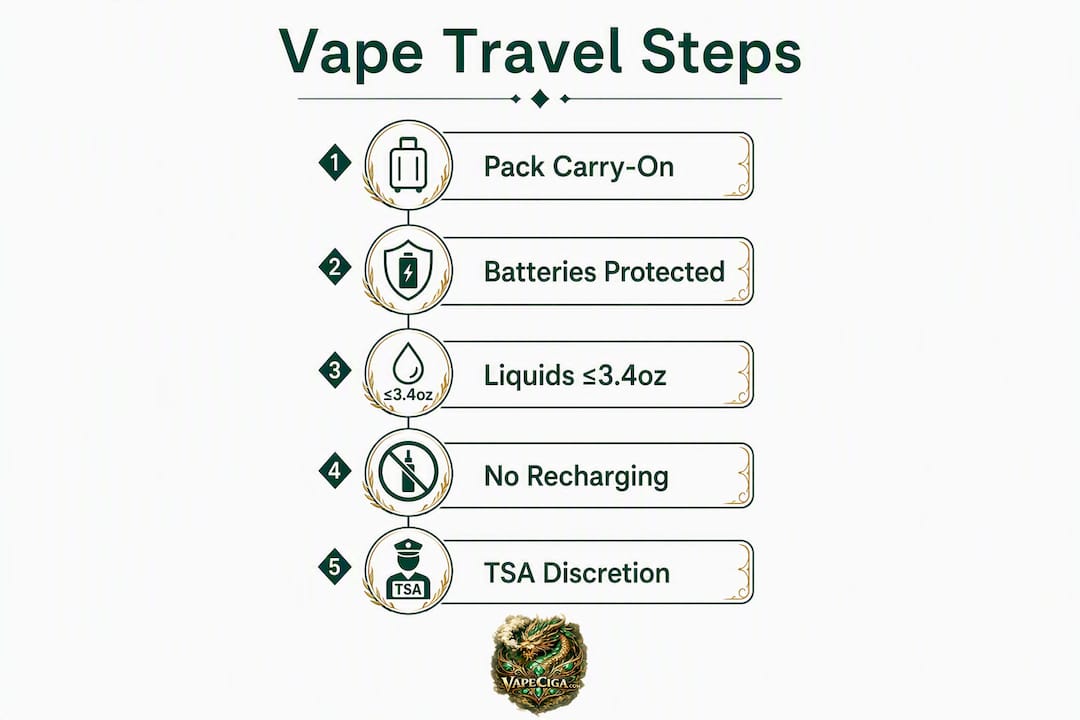
Your vape can fly with you — but only in your carry-on bag or on your person, never in checked luggage. Three things matter most before you reach the checkpoint: prevent accidental activation, stay within battery limits (≤100 Wh for lithium-ion, ≤2 g lithium for lithium-metal), and keep e-liquids in containers of 3.4 oz (100 ml) or less inside a single quart-sized bag.
Quick-pack checklist:
-
Vaping device goes in carry-on only (or in your pocket) — checked bags are prohibited
-
Deactivate or lock the device before you leave home
-
Spare batteries: carry-on only, terminals individually protected
-
E-liquids: 3.4 oz (100 ml) max per container, all in one quart-sized clear bag
-
No vaping and no recharging once you board the aircraft
Table of Contents
What do TSA and FAA officially say about vaping devices?
The TSA is unambiguous: electronic cigarettes and vaping devices are allowed in carry-on baggage only. Checked bags are a hard no. That rule covers disposables, pod systems, box mods, and vape pens alike.
The FAA’s PackSafe program explains the why behind the rule. Vaping devices contain lithium batteries, which can overheat, catch fire, or enter thermal runaway. Keeping them in the cabin means a crew can respond if something goes wrong. Buried in the cargo hold, there is no response.
One detail travelers often miss: the final decision always rests with the TSA officer at the checkpoint. A device that meets every written rule can still be flagged if the officer has concerns about its condition, battery, or behavior during screening. That is not a loophole — it is federal policy.
How do you pack a vape for airport security?
Follow these steps in order and you will rarely face a delay at the checkpoint.
-
Put the device in your carry-on or on your person. Not in a checked bag, not in a gate-checked stroller bag, not in a bag you hand off at the jetway. If the bag leaves your hands, the device must come out first.
-
Deactivate or lock the device. The FAA’s PackSafe guidance lists accepted “effective measures”: remove the battery entirely, separate the battery from the coil, engage the safety latch, or use a protective case that physically prevents the fire button from being pressed. A device that fires in a bag is a fire risk — TSA takes that seriously.
-
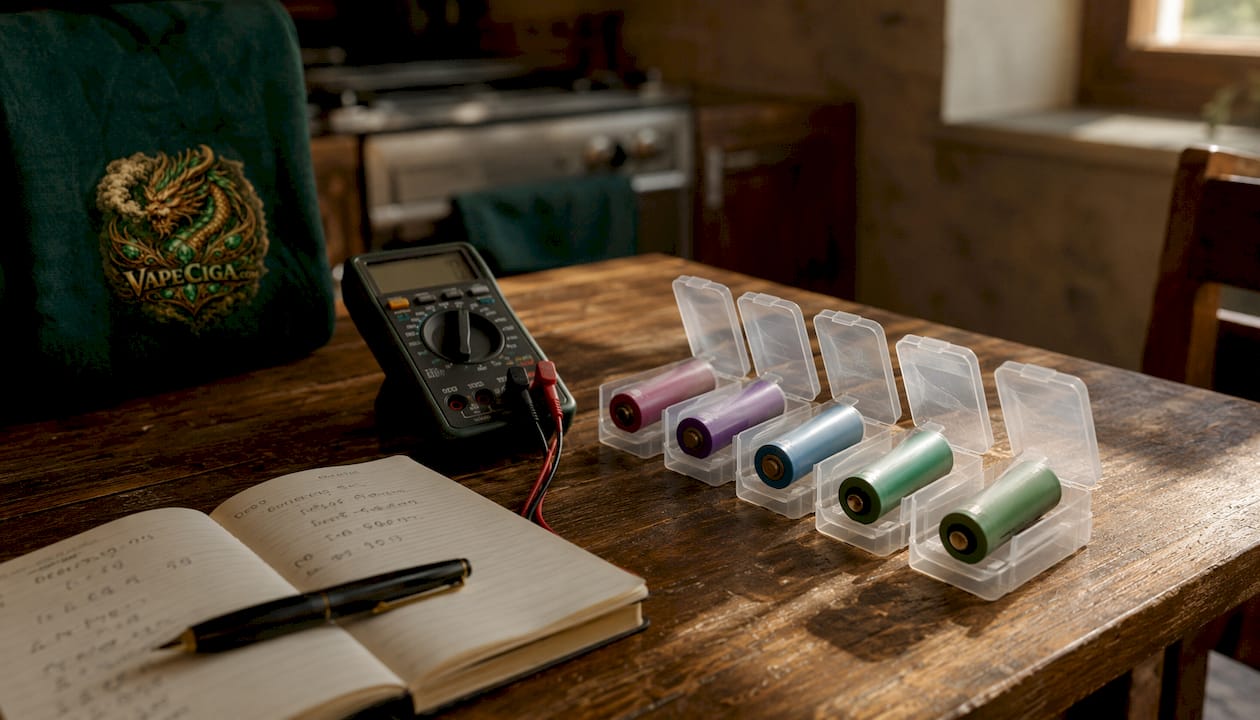
Protect spare batteries individually. Each spare cell needs its terminals insulated against contact with metal. Acceptable methods include leaving batteries in their original retail packaging, covering terminals with non-metallic tape, or placing each battery in a dedicated battery sleeve or plastic pouch. Tossing loose cells into a bag pocket is not acceptable.
-
Pack e-liquids under the 3-1-1 rule. Every container must be 3.4 oz (100 ml) or smaller, and all containers must fit inside a single quart-sized, clear, resealable bag. One bag per traveler. Bottles larger than 3.4 oz belong in checked luggage.
Pro Tip: Before you reach the bin at the checkpoint, pull your quart bag of e-liquids out of your carry-on and set your vape device on top of your bag — just like a laptop. Officers can see both clearly without digging, which keeps the line moving and avoids a secondary bag check.
What are the battery limits for vaping devices?
This is where high-wattage mod users run into trouble. The limits are per battery, not per device.
| Battery type | Limit | Common vape application |
|---|---|---|
| Lithium-ion (rechargeable) | ≤100 Wh per cell | Box mods, pod systems, rechargeables |
| Lithium-metal (non-rechargeable) | ≤2 g lithium content per cell | Some disposables, specialty cells |
Most standard vape batteries — 18650, 21700, and built-in pod cells — fall well under 100 Wh. The problem arises with high-capacity mod cells where the label shows mAh and voltage but not watt-hours. The conversion is straightforward:
Wh = (mAh × V) ÷ 1000
A 3,000 mAh cell at 3.7 V works out to 11.1 Wh — well within limits. A dual-cell mod with two 21700 cells at 5,000 mAh and 3.7 V each comes to 18.5 Wh per cell, still fine. Where travelers get caught is with oversized aftermarket cells or misread labels. If you cannot confirm the rating, check the battery specs before you pack.
Spare batteries — meaning any cell not installed in a device — must travel in carry-on only and must be individually protected. If your carry-on gets gate-checked at the jetway, pull those loose batteries out and keep them with you in the cabin.
Pro Tip: Photograph the battery label before you travel. If a TSA officer questions the rating, you have the spec on your phone and can resolve the conversation in seconds.
How does the TSA 3-1-1 rule apply to e-liquids and tanks?
E-liquids are treated as liquids, full stop. The TSA liquids rule applies without exception: containers must hold 3.4 oz (100 ml) or less, and all of them must fit in one quart-sized clear bag for carry-on.
A few practical points worth knowing:
-
Partially filled tanks count. If your tank has juice in it, that volume counts toward your 3-1-1 allowance. A 5 ml tank is fine; a 30 ml bottle is not carry-on legal.
-
Pre-filled cartridges and pods are generally treated the same as liquid containers. Keep them sealed and in the quart bag when possible.
-
Larger bottles go in checked luggage. The TSA liquids rule allows larger quantities in checked bags, so if you need more than a quart bag’s worth for a long trip, pack the overflow in your checked bag.
-
Items that alarm get extra screening. If your quart bag triggers the X-ray, expect additional inspection. That is standard procedure, not a sign of trouble.
One thing travelers overlook: nicotine salt liquids and high-VG blends are still liquids under TSA rules. The formula does not matter — the volume does.
What actually happens at the security checkpoint?
Knowing the rules and getting through screening are two different things. TSA officers have discretionary authority, and a few factors beyond rule compliance affect how your device is handled.
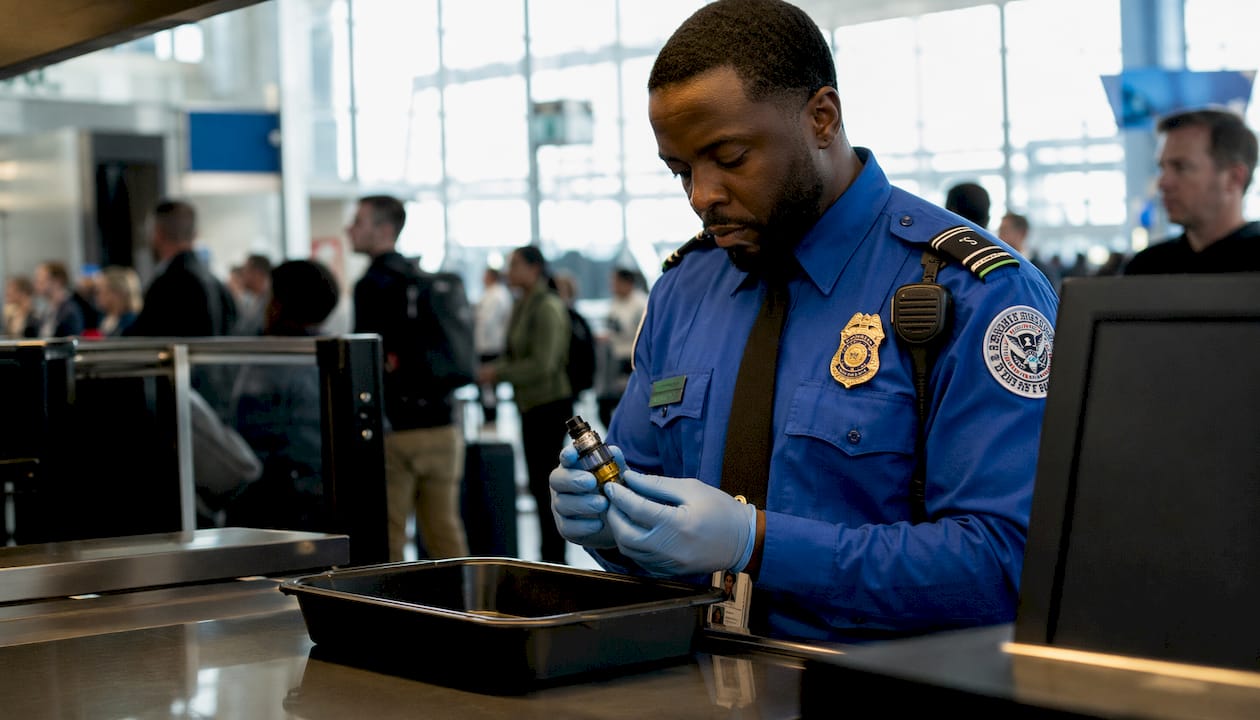
Officers may ask you to power on a device to demonstrate it functions normally. A device that cannot be powered on — dead battery, broken screen, no response — can be refused for air carriage because its safety cannot be verified. That is not a written rule most travelers read, but it happens at busy airports.
Common reasons devices get confiscated at screening:
-
Visible damage to the battery housing or device body
-
Battery rating that appears to exceed the 100 Wh limit
-
E-liquids in containers larger than 3.4 oz
-
Device alarms during X-ray and cannot be cleared by the officer
-
Accidental activation during screening that the officer cannot stop
Neat packing genuinely helps. A device in a protective case with batteries in labeled sleeves reads as organized and intentional. A loose mod rattling around with bare cells and unlabeled bottles reads as a problem. Officers are human — presentation affects outcomes.
Do airlines add their own rules on top of TSA’s?
Yes, and sometimes those rules are stricter. TSA sets the federal floor; airlines can build on it.
The rules most carriers enforce:
-
Carry-on only — mirrors TSA, but some airlines state it more explicitly in their gate announcements
-
No use onboard — vaping on a commercial aircraft is a federal offense under DOT regulations, not just an airline preference
-
No recharging in the cabin — FAA PackSafe explicitly prohibits recharging devices or batteries during flight, and most carriers repeat this in their policies
-
Device count limits — TSA advises travelers to check with their airline for limits on how many devices one passenger may carry for personal use
Delta, for example, lists e-cigarettes as carry-on only, personal use only, with no use or recharging permitted onboard. That language mirrors FAA guidance almost word for word. Most major U.S. carriers follow the same structure, but the specific device-count limit and any route-specific restrictions vary — check your carrier’s baggage policy page before you fly, not at the gate.
International flights add another layer. Destination countries may restrict nicotine products, specific device types, or e-liquid volumes at customs. The FAA notes that packing rules for lithium batteries are consistent with ICAO regulations on international routes, but liquid and product rules at your destination are separate and your responsibility to verify.
Key Takeaways
Vaping devices must travel in carry-on baggage only, with batteries protected, e-liquids under 3.4 oz, and no use or recharging permitted once you board.
| Point | Details |
|---|---|
| Carry-on only | Vaping devices and spare batteries are prohibited in checked baggage — no exceptions. |
| Battery limits | Lithium-ion cells must be ≤100 Wh; lithium-metal cells must contain ≤2 g of lithium per battery. |
| 3-1-1 for e-liquids | Containers must be 3.4 oz (100 ml) or less, all fitting in one quart-sized clear bag. |
| No charging onboard | FAA and most airlines prohibit recharging devices or spare batteries during any flight. |
| VapeCiga devices | VapeCiga carries devices with published battery specs — useful for confirming compliance before you travel. |
The part most travelers get wrong
Most people read the TSA rule, confirm their device is carry-on legal, and consider themselves prepared. What they underestimate is how much the condition of their gear matters at the checkpoint.
A cracked mod housing, a battery with a torn wrapper, or a bottle of juice with no label — none of those are technically prohibited, but all of them give a TSA officer a reason to pause. And once an officer pauses, you are at their discretion. The written rule is the minimum; the checkpoint is a judgment call.
The other thing worth saying plainly: the no-recharging rule is not a soft suggestion. Plugging a vape into an aircraft USB port is a federal violation. The FAA has been consistent on this for years, and airlines enforce it. Charge your device fully before you leave home, carry a charged spare if you need one, and accept that the flight is a dead-battery zone.
Traveling with a well-maintained device in a proper case, with batteries in labeled sleeves and liquids in a clear quart bag, is not just about compliance. It is about not being the person who holds up the security line while an officer unpacks your bag.
Stock up before you fly with VapeCiga
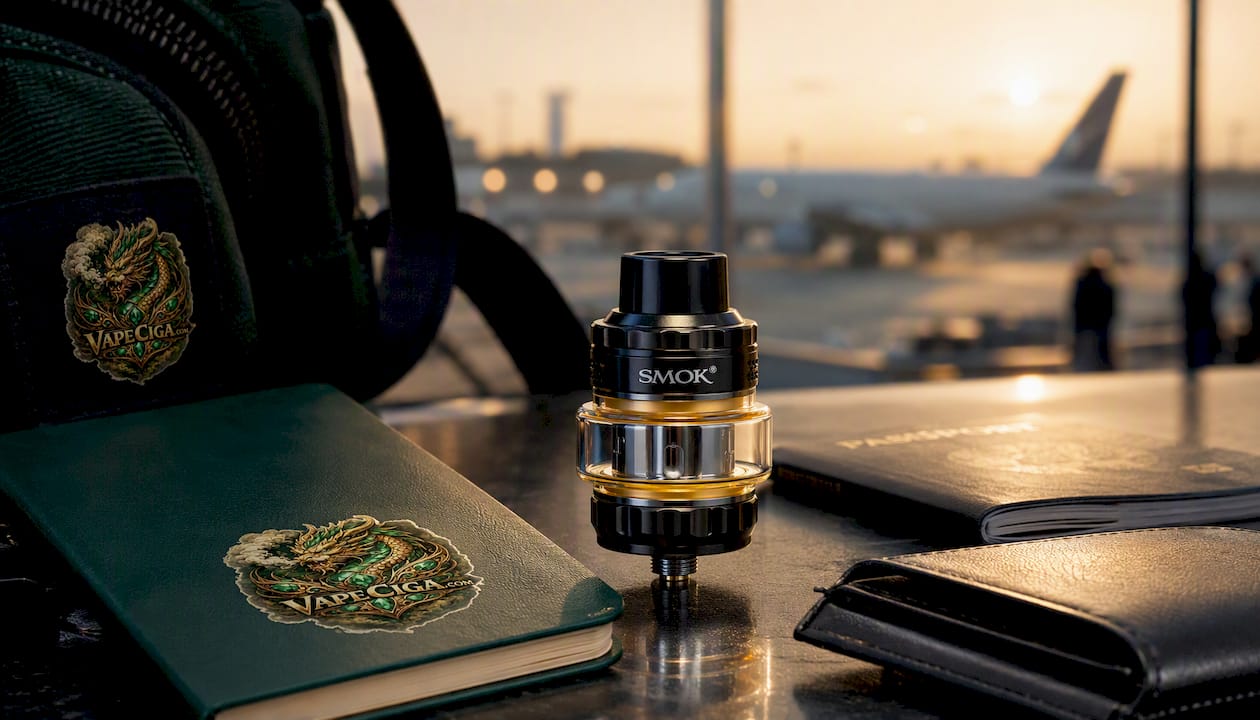
Packing right starts with gear that has clear, verifiable specs. The Smok T-Air Subtank is a solid example: published battery ratings you can confirm against TSA limits before you leave home, and a build quality that holds up in a carry-on. VapeCiga ships to adults 21 and over across the United States, with a wide selection of compliant devices and accessories including protective cases, battery sleeves, and travel-ready pod systems. Check your device specs, grab a battery sleeve if you are carrying spares, and fly with confidence knowing your gear is sorted before you reach the checkpoint.
Official sources and further reading
Verify the rules directly from the agencies before your next flight:
-
TSA — Electronic Cigarettes and Vaping Devices: the primary TSA page covering carry-on rules, battery limits, and the requirement to prevent accidental activation
-
TSA — E-Liquids: TSA’s specific guidance on traveling with e-liquids under the 3-1-1 rule
-
TSA — Liquids, Aerosols and Gels Rule: the full 3-1-1 rule and what triggers additional screening
-
FAA PackSafe — Electronic Cigarettes and Vaping Devices: FAA’s guidance on effective measures, spare battery protection, and the no-recharging rule
-
Delta Air Lines — Tobacco, E-Cigarettes or Marijuana: an example of how a major U.S. carrier states its carry-on-only and no-use policy
For international travel, check your destination country’s customs rules on nicotine products and e-liquids separately — those restrictions fall outside TSA and FAA jurisdiction entirely.
This article is general information for adult travelers and does not constitute legal or regulatory advice. Confirm current rules with TSA, the FAA, and your airline before you fly.