


A burnt taste in your vape means the coil’s cotton wick has been scorched, typically because heat exceeded the wick’s ability to stay saturated with e-liquid. This is called a “dry hit” in the industry, and it’s one of the most common complaints among vape users in the United States. Understanding why does my vape taste burnt comes down to three core factors: coil priming, wattage settings, and usage habits. Get those three right, and burnt hits become rare. Get them wrong, and no amount of troubleshooting will fix a coil that’s already ruined.
Why does my vape taste burnt? The coil priming problem
Coil priming is the single most preventable cause of burnt taste. 65% of vapers identified inadequate coil saturation as a major contributor to burnt flavor. That number tells you most burnt hits are self-inflicted, not a product defect.
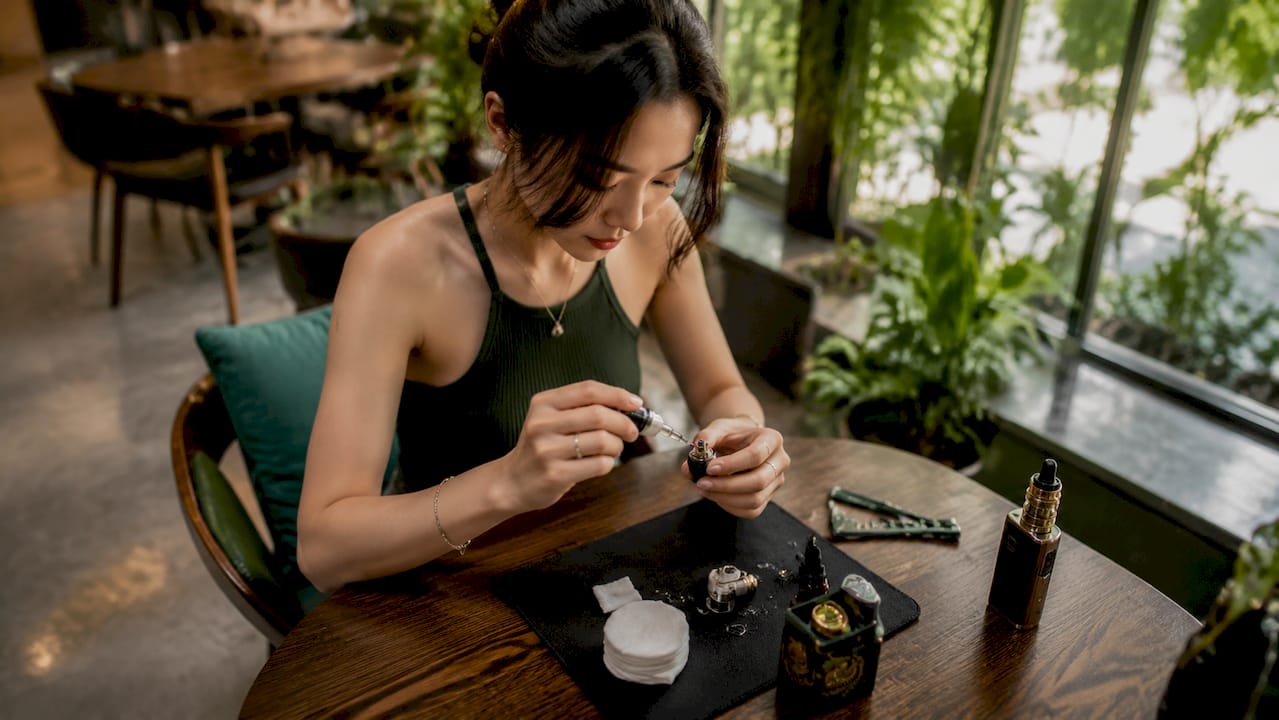
New coils ship with completely dry cotton. The moment you fire a dry coil, the heat scorches the wick instantly. Once cotton wick is scorched, the burnt flavor is permanent and the coil must be replaced. No cleaning, no soaking, and no amount of waiting reverses a burnt wick.
How to prime a coil correctly
Follow these steps every time you install a new coil:
- Apply e-liquid drops directly to the cotton ports. Look for the small openings on the side of the coil head. Add 2–3 drops of e-liquid directly onto the exposed cotton.
- Fill your tank. After dripping, fill the tank fully with e-liquid.
- Wait 5–10 minutes. Priming with 2–3 drops and waiting 5–10 minutes gives the cotton time to fully absorb liquid before any heat is applied.
- Take dry pulls first. Without pressing the fire button, draw through the mouthpiece 3–4 times. This pulls e-liquid into the wick through suction.
- Start at low wattage. Fire your first few puffs at the lowest end of the coil’s recommended wattage range, then gradually increase.
Pro Tip: If you’re in a hurry, cover the airflow holes with your finger while taking dry pulls. The increased suction speeds up cotton saturation by several minutes.
Experts confirm that skipping priming leads to instant burnt cotton and a ruined coil. The five minutes you spend priming saves you the cost of a replacement coil and the frustration of a ruined session.
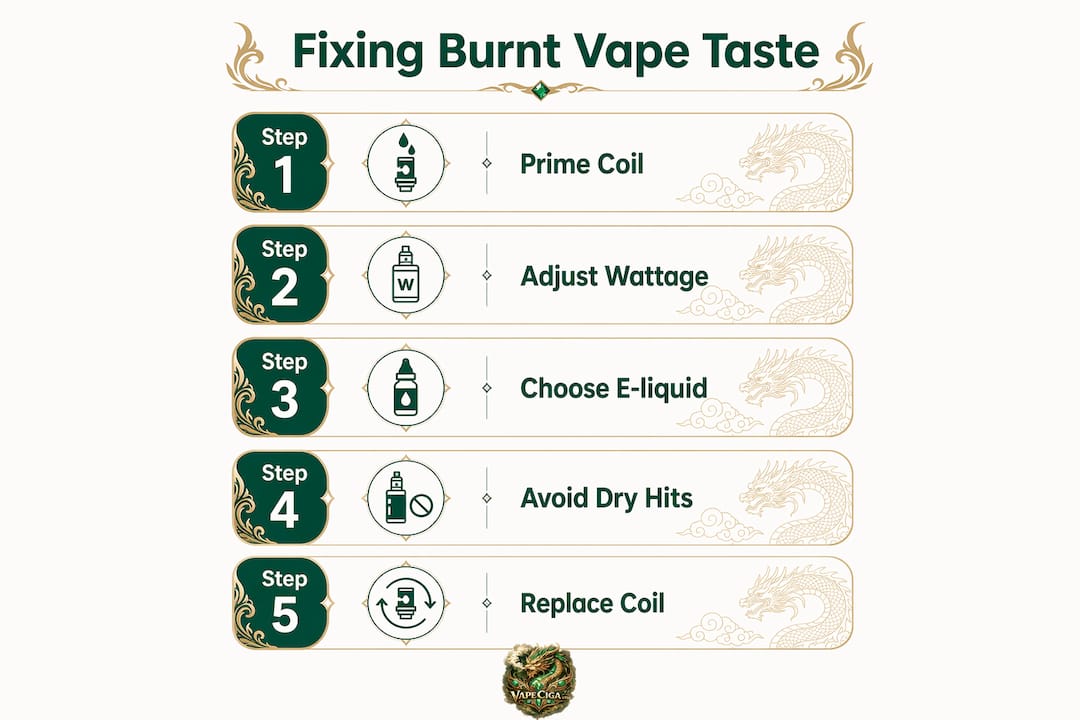
How wattage, coil resistance, and e-liquid type affect burnt flavor
Wattage is the most misunderstood variable in vaping. 75% of vapers using adjustable wattage devices reported that improper wattage settings contributed to burnt taste. Running too much power through a coil evaporates e-liquid faster than the wick can replenish it, creating a dry spot that burns.
Every coil has a printed wattage range on its side or packaging. That range exists because the coil’s resistance determines how much power it can handle safely. A 0.2-ohm coil designed for 40–80W will scorch cotton immediately if fired at 100W. A 1.2-ohm coil built for mouth-to-lung vaping at 10–15W will produce a harsh, burnt hit if pushed to 30W.
Matching your e-liquid to your coil
E-liquid composition matters as much as wattage. The ratio of vegetable glycerin (VG) to propylene glycol (PG) directly affects how fast liquid wicks into cotton.
- High VG liquids (70% VG and above): High VG e-liquids are thicker and wick slower, so they require coils with larger cotton ports and lower wattage to prevent dry hits. Sub-ohm coils with wide wicking channels handle high VG well.
- High PG liquids (50% PG and above): Thinner and faster wicking. These work well with higher resistance coils and lower wattage devices like pod systems.
- Sweetened e-liquids: Sweeteners caramelize at high temperatures, forming a dark residue called coil gunk that blocks wicking and creates hot spots. Even a full tank won’t prevent burning if the wick ports are clogged with caramelized sweetener.
| Coil resistance | Recommended wattage | Best e-liquid VG/PG ratio |
|---|---|---|
| 0.1–0.3 ohm (sub-ohm) | 40–80W | 70/30 VG/PG or higher |
| 0.4–0.6 ohm (mid-range) | 20–40W | 60/40 or 70/30 VG/PG |
| 0.8–1.2 ohm (MTL) | 10–20W | 50/50 or high PG |
| 1.4–1.8 ohm (high resistance) | 8–15W | 50/50 or high PG |
Matching these three variables, wattage, coil resistance, and VG/PG ratio, eliminates the majority of burnt hits that aren’t caused by priming errors.
User habits that cause burnt hits and how to break them
Even a perfectly primed coil with correct wattage settings will burn if your vaping habits work against the wick. The most common behavioral cause is chain vaping.
Chain vaping prevents the wick from resaturating between puffs, causing dry hits even when the tank is full. Each puff vaporizes a small amount of e-liquid from the cotton. The wick needs a few seconds to draw more liquid from the tank before the next hit. Take puffs too quickly, and you’re firing on a partially dry wick.
Here are the key behavioral fixes that extend coil life and prevent burnt flavor:
- Wait 15–30 seconds between puffs. A 15–30 second wait between hits gives the wick enough time to resaturate fully.
- Keep your tank above the wick ports. When e-liquid drops below the intake holes on the coil, the cotton stops receiving liquid. Refill before it gets that low.
- Replace coils on schedule. Most coils last 1–4 weeks depending on usage. Gunked or worn coils produce burnt flavor even with perfect technique.
- Avoid heavily sweetened e-liquids if you vape frequently. The caramelized residue from sweeteners builds up fast and shortens coil life significantly.
- Clean your tank when changing e-liquids. Residue from old juice mixes with new liquid and accelerates gunk buildup on the coil.
Pro Tip: If you notice flavor starting to fade or a faint burnt edge appearing, that’s your coil telling you it needs replacing soon. Catching it early means you replace the coil before it’s fully scorched, saving the session.
Replacing Smok Vape Pen V2 coils or similar compatible coils on a regular schedule is far cheaper than dealing with a ruined vaping session or buying a new device prematurely.
Why your vape tastes burnt after charging or with a new pod
A burnt taste after charging or with a brand new pod is one of the more confusing problems vape users face. The fix isn’t always obvious because the device seems fine on the surface.
- Voltage spike after charging: Charging causes a voltage spike that can scorch the wick if it isn’t fully saturated at the moment of that first hit. Always take a dry pull before firing after charging, especially with disposable or pod devices.
- New pod, dry wick: A new pod has the same problem as a new coil. The cotton inside ships dry. With pod systems, you can’t always drip directly onto the wick, so filling the pod and waiting 5–10 minutes before the first puff is the equivalent priming step.
- Cold temperatures thickening e-liquid: Cold weather increases e-liquid viscosity, slowing wicking speed. A device left in a cold car or carried outside in winter can produce burnt hits until the liquid warms up and flows normally again.
- Manufacturing defects: Occasionally, a coil or pod arrives with a poorly saturated or misaligned wick from the factory. If a new pod tastes burnt from the very first puff despite proper priming, the unit is defective. Replace it rather than troubleshoot further.
- Power surges in lower-quality devices: Devices without stable voltage regulation can deliver inconsistent power output, causing momentary spikes that burn the wick. Adjustable wattage devices with regulated output, like the Adjust MyFlavor 40K, give you direct control over power delivery and eliminate this variable.
If your vape tastes burnt with a new pod despite following every priming step, suspect the pod itself before blaming your technique.
Key Takeaways
A burnt vape taste is caused by a scorched wick, and fixing it requires addressing priming, wattage, e-liquid choice, and usage habits before the damage becomes permanent.
| Point | Details |
|---|---|
| Prime every new coil | Apply 2–3 drops to cotton ports and wait 5–10 minutes before the first puff. |
| Match wattage to coil resistance | Stay within the printed wattage range on the coil to prevent overheating the wick. |
| Choose the right VG/PG ratio | High VG liquids wick slowly and need sub-ohm coils; high PG liquids suit pod systems and MTL coils. |
| Avoid chain vaping | Wait 15–30 seconds between puffs to let the wick resaturate fully. |
| Replace coils proactively | Fading flavor is an early warning sign; replace before the wick scorches completely. |
What years of vaping taught me about burnt hits
The most common mistake I see from new vape users is treating priming as optional. They install a coil, fill the tank, and fire immediately because the tank is full and they assume the liquid will reach the wick on its own. It won’t. Not fast enough. The first hit on a dry coil is often the last hit that coil will ever give you cleanly.
Experienced vapers make a different mistake. They know how to prime but push their wattage too high chasing bigger clouds, then wonder why coils die in three days instead of two weeks. The sweet spot is always the lower half of the coil’s recommended wattage range. You get better flavor, longer coil life, and zero burnt hits. The top of the range is there for experienced users who want maximum vapor and accept the tradeoff of faster coil wear.
The e-liquid compatibility issue is the one most people never consider until they’ve wasted a few coils. Switching to a high VG dessert juice on a pod system designed for 50/50 liquid is a guaranteed path to burnt hits. The cotton simply can’t pull thick liquid fast enough. Checking the VG/PG ratio on your bottle before buying takes ten seconds and saves a lot of frustration.
My honest recommendation: buy quality Eleaf iJust coils or equivalent authentic replacements from a reliable source. Counterfeit coils have inconsistent cotton density and wicking channels that cause burnt hits no matter how carefully you prime. The coil is the most critical component in your setup. Cutting corners there costs more in the long run.
— James
Fix burnt hits with the right gear from VapeCiga
Getting the right equipment makes a real difference in how often you deal with burnt flavor. VapeCiga carries a full range of coils, pod systems, and adjustable wattage mods built to match different vaping styles and e-liquid types.
For pod users, the Packspod 5000 combines optimized coil design with consistent wicking for smooth, reliable hits. If you prefer a regulated mod with full wattage control, the GeekVape T200 Aegis Touch gives you precise power adjustment to stay within your coil’s safe range. VapeCiga also stocks a wide selection of e-liquids across VG/PG ratios so you can match your juice to your coil from the start. Browse the full catalog at VapeCiga’s online store and find the setup that eliminates burnt hits for good.
FAQ
Why does my vape taste burnt with a new coil?
A new coil tastes burnt when the cotton wick hasn’t been primed before the first hit. Apply 2–3 drops of e-liquid to the wick ports, fill the tank, and wait 5–10 minutes before firing.
Why does my vape taste burnt after charging?
Charging can cause a brief voltage spike that scorches a partially dry wick. Take a dry pull before your first post-charge hit to avoid this, especially with disposable or pod devices.
Why does my vape taste burnt with a new pod?
New pods ship with dry cotton just like replaceable coils. Fill the pod and wait at least 5 minutes before the first puff. If it still tastes burnt immediately, the pod may have a factory defect and should be replaced.
Can I fix a burnt coil by cleaning it?
No. Once the cotton wick is scorched, the burnt flavor is permanent. Cleaning removes surface residue but cannot restore burnt cotton fibers. Coil replacement is the only fix.
How long should I wait between puffs to avoid dry hits?
Wait 15–30 seconds between puffs. That window gives the cotton wick enough time to draw fresh e-liquid from the tank before the next hit.