


The best e-liquids of 2026 aren’t a single bottle. They’re a short list matched to how you actually vape: your device, your nicotine tolerance, and whether you want fruit, custard, or tobacco on the exhale. For most vapers running a pod system, a 30ml nic salt bottle in a fruit or dessert profile hits the sweet spot of flavor and throat feel. For sub-ohm tank owners chasing big clouds, a high-VG shortfill in a custard or bakery flavor performs best.
Here’s the quick shortlist to act on right now:
- Best for most vapers: A 50/50 nic salt bottle like Juice Head Salts, built for pod-style MTL devices.
- Best fruit pick: Juice Head’s tobacco-free fruit blends, tuned for all-day vaping without fatigue.
- Best dessert pick: Vapetasia E-Liquid 100ml, a custard-forward shortfill built for sub-ohm setups.
- Best value: Larger-format bottles (100ml+) that cut cost per session for daily vapers.
Statistic to know: premium e-liquid in 2026 typically runs $0.15 to $0.30 per mL, so bottle size and how often you vape matter as much as the flavor itself.
TL;DR:
- Nicotine salt blends like Juice Head Salts are ideal for pod systems, offering smooth throat hits at strengths between 10 and 20mg.
- High-VG shortfills such as Vapetasia are best suited for sub-ohm tanks and deliver thick vapor with custard or bakery flavors.
- Larger bottles over 100ml significantly reduce the cost per milliliter, making them a better choice for heavy daily vapers.
- Matching e-liquid VG/PG ratios and nicotine formats to specific hardware ensures optimal flavor and vapor production.
- Confirm lab testing and batch codes on product labels to ensure safety, and store liquids in a cool, dark place to maintain freshness.
Table of Contents
- Featured Picks: Product Profiles and Device Pairings
- How Do You Choose the Right E-Liquid Fast?
- What Are the Best Flavor Categories to Try?
- What Nicotine Strength Should You Start With?
- How Do You Know an E-Liquid Is Actually Safe?
- Who’s Behind This Guide
- How Are E-Liquids Rated and Reviewed?
- How Should You Store E-Liquid to Keep It Fresh?
- What the Data Actually Tells Us About Buying E-Liquid in 2026
- Ready to Shop the Picks Featured in This Guide?
- Key Takeaways
- Sources
- FAQ
Featured Picks: Product Profiles and Device Pairings
Picking a bottle is only half the job. Matching it to the right hardware is what actually determines whether a flavor tastes the way the label promises.
Juice Head Premium E-Liquid 100ml leans into tropical and fruit-forward blends built for shortfill use. It’s tobacco-free nicotine, sold in bottle sizes that suit vapers who go through juice fast, and it pairs naturally with mid-VG mods or restricted-airflow tanks that let the fruit notes stay bright instead of muddy. Check the Juice Head Premium E-Liquid 100ml listing for current flavor options.
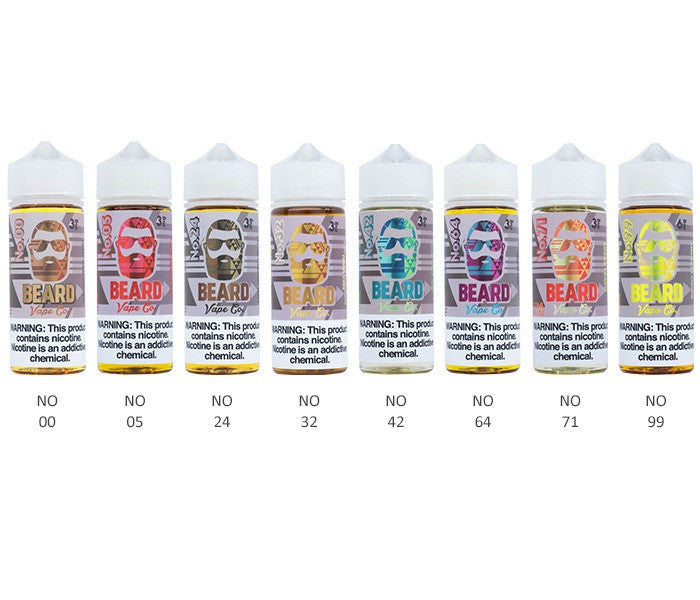
Juice Head Salts 30ml takes the same flavor DNA and reformats it as a 50/50 nic salt blend, which is the format most pod-kit owners actually want. If you’re running a low-wattage MTL device, this is a more practical everyday pick than the shortfill version. Browse the Juice Head Salts collection for strength options.
Vapetasia E-Liquid 100ml is the custard and dessert specialist on this list. Its higher-VG base is built for sub-ohm tanks and mesh coils, where the thicker vapor carries cream and bakery notes better than a thin-liquid setup ever could. Vapeciga’s own Vapetasia product page lists nicotine and bottle format details for anyone comparing options before checkout.
Custard Monster Salt Nic 30ml solves a real problem: dessert flavor in a nic-salt format for MTL users who don’t own a sub-ohm rig. It’s a smart middle ground for pod vapers who still want that bakery-shop flavor. See the Custard Monster Salt Nic listing for current strengths.
Naked 100 SALT 30ml rounds out the salt-nic lineup with a long-standing reputation for consistency, which matters if you’re refilling the same pod week after week. Check the Naked 100 SALT page for flavor availability.
For device pairing, a Packspod 5000 or similar pod system suits every nic-salt bottle above, while sub-ohm fans should look at higher-wattage mods for the custard and dessert profiles.
Pro Tip: If you vape more than 3ml a day, buy 100ml bottles instead of 30ml. The per-mL cost drops significantly, and you’ll refill your tank less often.
How Do You Choose the Right E-Liquid Fast?
Four variables decide whether a bottle works for you: device type, nicotine format, VG/PG ratio, and price per mL. Get these right and flavor preference is the only thing left to figure out.
- Match nicotine type to your device. Nicotine salts (typically 10 to 20mg) suit low-wattage pod systems and deliver a smoother throat hit at higher strengths. Freebase nicotine (usually 0 to 6mg) is built for sub-ohm tanks and mods, where higher wattage would make salt nic harsh.
- Check the VG/PG ratio before buying. High-VG liquids (70/30 or higher) need sub-ohm coils to vaporize properly and produce thicker clouds. Balanced 50/50 blends work in almost any pod device and give a stronger throat hit at lower wattage.
- Budget by cost per mL, not bottle price. Premium e-liquids in 2026 run $0.15 to $0.30 per mL, meaning a 30ml bottle can cost anywhere from $4.50 to $9. Heavy daily vapers should calculate weekly consumption before choosing bottle size.
- Scan the label before checkout. Confirm nicotine strength in mg, the VG/PG split, a batch code, and any lab-testing claim. If none of that is listed on a product page, that’s a red flag worth noting.
The term “premium” itself isn’t a regulated category. It’s editorial shorthand that Vaping360’s 2026 guide uses for brands with a track record of consistent flavor development and manufacturing quality, not an official quality tier.
What Are the Best Flavor Categories to Try?
Flavor trends in 2026 lean toward richer dessert and custard blends alongside the fruit and menthol staples that never really go out of style, according to Vaping360’s flavor roundup. Knowing which category fits your setup saves you from buying a bottle that tastes flat on your device.
- Fruit: Bright and often all-day friendly. Works best on mid-VG blends in MTL or restricted direct-lung tanks, where airflow doesn’t wash out the top notes.
- Dessert and custard: Needs higher VG and a sub-ohm setup to carry the richer, creamier mouthfeel. Thin liquid on a low-power device makes these taste watery.
- Menthol and ice: Can go muted fast on an aged coil, since cooling agents fade before sweetness does. Fresh mesh coils keep the ice sensation sharp.
- Tobacco: Lower sweetness by design, usually paired with lower VG and moderate nicotine strength for a cleaner MTL draw.
- Beverage and soda: Volatile top notes that degrade quickly on a coil that’s seen heavy use. Swap coils more often if soda flavors are your daily pick.
Pairing flavor family to hardware isn’t a minor detail. A custard e-liquid on a low-wattage pod tastes like watered-down vanilla, while that same juice on a sub-ohm mesh tank tastes like the dessert it’s supposed to be.
What Nicotine Strength Should You Start With?
Nicotine strength depends entirely on your device wattage, not just how much you used to smoke or vape.
- For MTL pod systems, nic salts in the 10 to 20mg range deliver a smooth throat hit without harshness, since salt nicotine absorbs faster at higher concentrations than freebase.
- For sub-ohm mods and tanks, freebase nicotine in the 0 to 6mg range is the standard, because higher wattage vaporizes more juice per puff, and higher nicotine at that volume gets overwhelming fast.
- To step down gradually, drop strength by roughly 25 to 30 percent every few weeks rather than jumping straight from 20mg to 3mg. Your throat and cravings adjust more comfortably that way.
- If you’re adding nicotine shots to a shortfill, confirm the bottle has headroom (most 100ml bottles with 70ml of juice leave room for a 30ml nic shot) and stick to freebase shots for high-VG blends.
How Do You Know an E-Liquid Is Actually Safe?
A lab-testing claim is only as good as what backs it up. Reputable vendors reference GC‑MS testing, the standard technique for identifying chemical constituents in e-liquid, and publish a certificate of analysis (COA) tied to a specific batch code.
- Look for a batch code on the bottle that matches a COA the vendor makes available.
- Treat “lab tested” claims with no batch-specific documentation as marketing, not proof.
- For current regulatory status and safety notices on tobacco and vapor products, the FDA Center for Tobacco Products is the authoritative U.S. source.
- Quality frameworks referenced in vendor claims often draw on ISO standards context for manufacturing and testing practices.
Who’s Behind This Guide
This guide is written by James, an editorial contributor covering vape hardware and e-liquid trends for VapeCiga. The recommendations here draw on product data pulled directly from VapeCiga’s own catalog listings, cross-checked against 2026 industry flavor and pricing trends.
- Vapetasia E-Liquid 100ml, referenced for dessert-category specs, list format and nicotine details on the Vapeciga product page.
- Juice Head’s fruit and salt-nic lines are documented across multiple in-stock listings, giving direct evidence of format diversity.
- Naked 100 and Custard Monster salt-nic products confirm ongoing catalog depth in the salt-nicotine category.
A good buyer’s guide should be checkable against the actual product pages behind it, not just a list of brand names with no way to confirm what’s in stock.
If you’re unsure which bottle pairs with your device, VapeCiga’s customer support team can walk through compatibility and current stock questions directly.
How Are E-Liquids Rated and Reviewed?
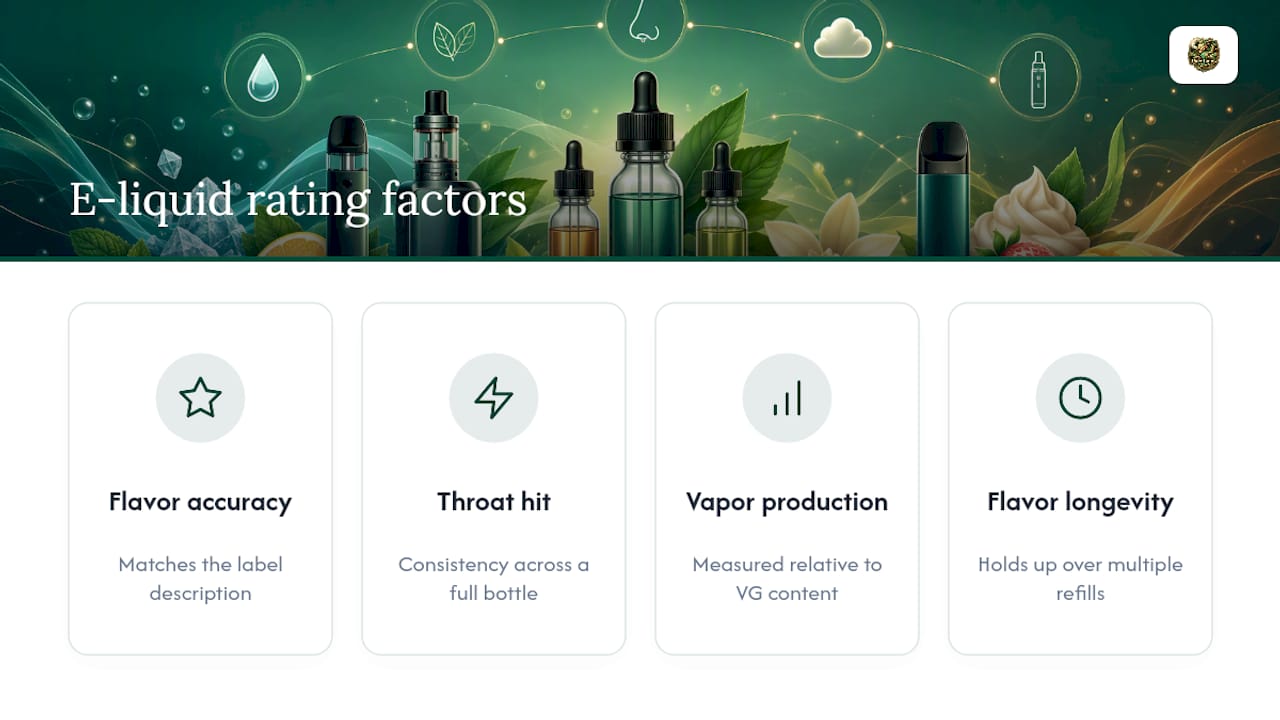
Most 2026 e-liquid reviews combine a few consistent factors: flavor accuracy against the label description, throat hit consistency across a full bottle, vapor production relative to VG content, and how the flavor holds up over multiple refills on the same coil. None of these are regulated metrics, so ratings vary by reviewer and by device used for testing, which is worth remembering when a flavor gets glowing praise on one platform and a shrug on another.
Star ratings on retail product pages tend to reflect a mix of flavor satisfaction and reliability, meaning a 4.5-star bottle usually means “tastes as advertised and doesn’t leak or clog,” not necessarily “best flavor on the market.” Read the actual review text, not just the star count, since two 4-star reviews can describe completely different experiences.
Verified purchase reviews carry more weight than open reviews, since they confirm the reviewer actually bought and used the product rather than commenting based on the label alone. When comparing options, look for reviews that mention specific device pairings (“works great in my pod kit” versus “clouds well in my sub-ohm tank”) because flavor performance shifts dramatically based on hardware, as covered above.
A single review, even a detailed one, is still one person’s palate and one device setup. Cross-referencing a handful of reviews that mention different devices gives a far more reliable picture than trusting the single highest-rated comment on a product page.
How Should You Store E-Liquid to Keep It Fresh?
E-liquid degrades from three main forces: light, heat, and air exposure. A bottle left on a sunny windowsill or in a hot car will darken and lose flavor accuracy within weeks, even if the seal is intact.
Store bottles upright in a cool, dark place, ideally under 75°F, away from direct sunlight. A cabinet or drawer works better than a countertop near a window. Most unopened e-liquid holds its flavor profile for about one to two years when stored properly, though nicotine potency slowly declines over time regardless of storage conditions.
Once opened, try to use a bottle within three to six months for best flavor accuracy, especially with beverage or citrus profiles that rely on volatile top notes. Custard and tobacco flavors tend to age more gracefully than bright fruit or menthol blends, since their flavor compounds are more stable.
Always tighten caps fully after each use to limit air exposure, and never store e-liquid near heat sources like a stove or a car dashboard. A darkened bottle or a noticeably muted flavor compared to when you first opened it is a clear sign the liquid has started to degrade, even if the nicotine itself is still active.
What the Data Actually Tells Us About Buying E-Liquid in 2026
Here’s where I’ll push back on how most buying guides frame this category: they treat “best e-liquid” as a single winner you can crown, when the real answer depends entirely on what’s already in your hand. A custard blend that dominates every 2026 flavor list is a bad purchase if you’re running a low-wattage pod. The device, not the brand name, is the first filter that matters.
The conventional wisdom oversells nicotine strength as the main decision point. In practice, VG/PG ratio and device wattage determine satisfaction more reliably than whether you picked 6mg or 12mg. I’d also argue the “premium” label gets more credit than it deserves. It’s a real signal of consistent manufacturing, not a guarantee that a $9 bottle outperforms a $5 one for your specific setup.
If you take one thing from this guide, prioritize matching liquid to hardware before you even look at flavor names. Everything else, including nicotine strength and price, sorts itself out once that pairing is right.
— James
Ready to Shop the Picks Featured in This Guide?
Every e-liquid and device mentioned above is in stock and ready to ship from VapeCiga, so you’re not left hunting across multiple sites to build a compatible setup. Start with the Vapetasia E-Liquid 100ml if you want the dessert pick, or check Juice Head Salts if a fruit-forward pod setup is more your speed.
VapeCiga ships fast within the U.S., and larger bottle formats like the Big Bottle Co. E-Liquid 120ml give frequent vapers a lower cost per mL than repeatedly buying smaller bottles. If you’re also shopping for hardware, the GeekVape T200 (Aegis Touch) Mod and Vaporesso GTX One Vape Mod pair well with the sub-ohm dessert liquids covered in this guide. Browse the full e-liquid catalog and pick your bottle and device pairing in one checkout.
Key Takeaways
The right e-liquid in 2026 depends on matching nicotine format and VG/PG ratio to your device before flavor preference ever enters the decision.
| Point | Details |
|---|---|
| Device dictates format | Pod systems need nic salts and 50/50 blends; sub-ohm tanks need high-VG freebase juice. |
| Price scales with volume | Premium e-liquid runs $0.15 to $0.30 per mL, so larger bottles cut cost for daily vapers. |
| Flavor performance depends on hardware | Custard and dessert blends need sub-ohm setups; fruit and tobacco suit MTL devices better. |
| Check labels before buying | Confirm nicotine mg, VG/PG ratio, batch code, and lab-test claims on the product page. |
| Store liquid away from heat and light | Keep bottles capped, upright, and cool to preserve flavor for up to two years unopened. |
| VapeCiga stocks the full lineup | Vapetasia, Juice Head, Naked 100, and Custard Monster are all available with fast domestic shipping. |
Sources
- Best Premium E-Juice 2026 - Vaping360
- About the Center for Tobacco Products | FDA
- Gas chromatography–mass spectrometry - Wikipedia
- About ISO | International Organization for Standardization
FAQ
What are the best vape juices in 2026?
Nic salt blends from established lines like Juice Head and Naked 100 lead for pod-kit users, while high-VG custard bottles like Vapetasia suit sub-ohm setups best.
What is the best vape to buy in 2026?
The best device depends on your e-liquid choice: pod systems like the Packspod 5000 suit nic salts, while mods like the GeekVape T200 handle high-VG dessert and fruit shortfills.
What is the best brand of vape e-liquid?
Brands cited most consistently across 2026 roundups include Dinner Lady, Naked 100, Vapetasia, and Juice Head, each known for consistent flavor development.
What are the best quality vape liquids?
Quality shows up as consistent flavor across a bottle, clean vapor production, and vendor transparency through batch codes and lab-test claims like GC‑MS reports rather than a single “best” label.
How do I store e-liquid to keep it fresh longer?
Keep bottles capped tightly, stored upright in a cool, dark place under 75°F, and use opened bottles within three to six months for the best flavor accuracy.