


A disposable vape that lights up but produces no smoke is activating its sensor correctly but failing to generate vapor. The industry term for these failure modes is “vapor production failure,” and it covers four root causes: restricted airflow, battery issues, coil problems, and e-liquid depletion. Most cases are fixable in under two minutes without any tools. This guide walks you through every cause, a clear diagnostic process, and the practical fixes that actually work, so you stop wasting devices and start vaping again.
What causes a disposable vape to light up but not produce vapor?
The light on a disposable vape confirms the auto-draw sensor fired. It does not confirm vapor was produced. These are two separate events, and understanding that gap is the key to fast troubleshooting.
The six most common causes are:
- Restricted airflow. Blocked intake holes filled with lint, dust, or condensation are the leading cause of vapor failure with lights on. When airflow is restricted, the sensor still activates the light, but not enough air passes through the coil to create vapor.
- Condensation in air channels. Moisture buildup inside the air path can choke the auto-draw sensor, blocking vapor production even when the device appears to be working.
- Flooded coil. Excess e-liquid saturates the heating element. The coil cannot vaporize liquid it is drowning in. You will usually hear a gurgling sound when this is the problem.
- Dry hit from chain vaping. Taking multiple rapid inhales outpaces wick saturation. The coil fires but has no liquid to heat, producing no vapor and a harsh, burnt taste.
- Battery dormancy or low power. Cold storage slows electrochemical reactions inside the battery. The device lights up on residual charge but cannot sustain the power needed to heat the coil.
- Empty e-liquid. The battery often outlasts the e-liquid in a disposable. Vapers frequently mistake this for a device malfunction when the device has simply run its course.
A less common but real cause is a manufacturer defect, including a faulty sensor connection or a coil that was never properly primed at the factory. If none of the fixes below work, a defect is the likely explanation.
How to diagnose the cause when your vape pen shows ignition but no smoke
Systematic diagnosis takes less than three minutes. Work through these steps in order before attempting any fix.
- Check the light pattern. A steady light during a draw means the sensor is working. A blinking or flashing light often signals a low battery or a protection circuit trigger. If you own a Caliburn and notice it blinking blue without producing vapor, that blink pattern typically indicates a connection or battery issue rather than an airflow problem.
- Listen during the draw. A gurgling or bubbling sound points directly to a flooded coil. Silence with no vapor points to an airflow blockage or battery issue.
- Inspect the intake holes. Look at the bottom or sides of the device for small air intake vents. Visible debris, lint, or moisture confirms an airflow blockage.
- Check the mouthpiece. Condensation or residue inside the mouthpiece can block airflow at the top of the device. A quick visual inspection takes five seconds.
- Feel the device temperature. A cold device, one stored in a car overnight in winter, for example, may have dormant battery chemistry. Warming the device in your hands for several minutes before drawing is the recommended first step for cold-stored units.
- Count your recent draws. If you have been chain vaping, the wick is likely dry. Wait 60 seconds before drawing again and the issue often resolves itself.
Pro Tip: Tap the device firmly against your palm three or four times before drawing. Trapped air bubbles around the wick are a surprisingly common cause of no vapor, and a few firm taps dislodge them without any disassembly.
Step-by-step practical fixes to get vapor flowing again

Once you have identified the likely cause, apply the matching fix. These are ordered from quickest to most involved.
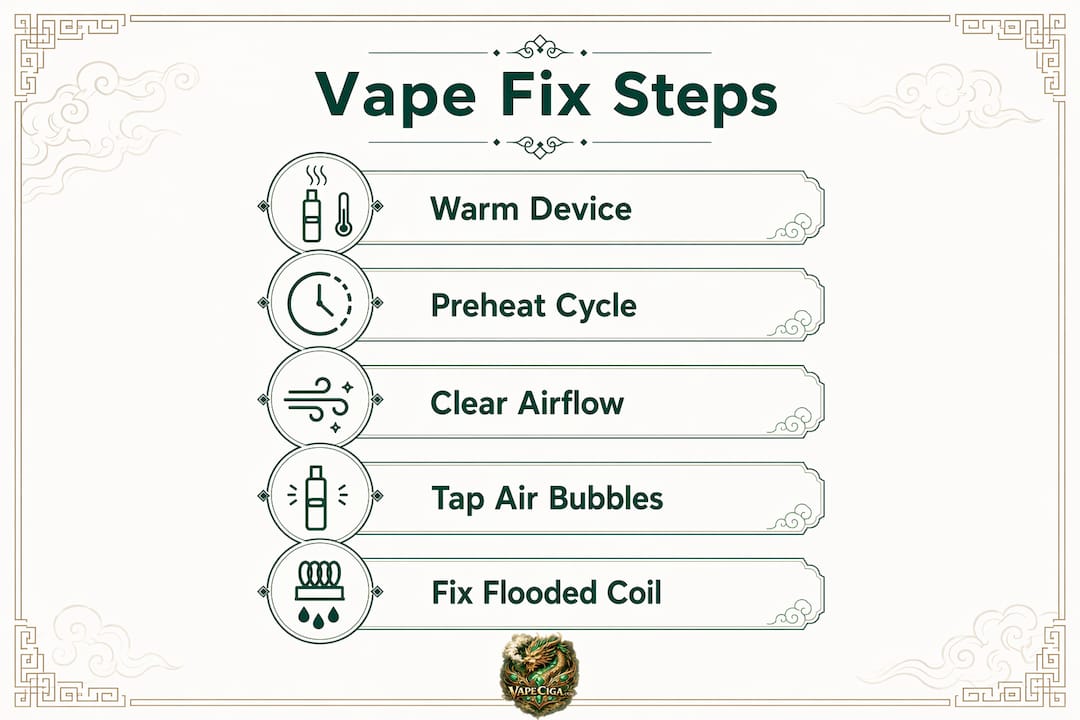
Fix 1: Warm a cold device
Hold the device in both hands and rub it gently for two to three minutes. Body heat is enough to reactivate dormant battery chemistry in a cold-stored unit. Do not use a hair dryer, heating pad, or any external heat source. Excessive heat damages the battery and can warp the device casing.
Fix 2: Activate the preheat cycle
Many high-end disposables include a preheat function. Clicking the fire button two or three times in quick succession activates a low-power cycle that lasts 10–15 seconds. This cycle gently warms thickened e-liquid and allows it to flow back into the wick. Thick oils, especially in cold environments, are a frequent cause of a disposable cart lighting up but not hitting.
Fix 3: Clear blocked airflow holes
Use a clean cotton swab lightly dampened with isopropyl alcohol to wipe around the intake vents. For stubborn blockages, blow gently into the intake holes from the outside. Never blow hard enough to force debris deeper into the device. A toothpick works for visible lint but use it carefully to avoid scratching the sensor.
Fix 4: Tap out air bubbles
Hold the device with the mouthpiece pointing up. Tap the base firmly against your palm five to ten times. This forces air bubbles away from the wick and allows e-liquid to flow back into contact with the heating coil. This fix works particularly well on newer devices that have not been used for several days.
Fix 5: Clear a flooded coil
Blow gently through the mouthpiece while holding a folded paper towel against the air vents at the base. The paper towel catches the excess liquid pushed out by your breath. Blowing through the mouthpiece while holding a paper towel under the airflow vents removes excess liquid and restores coil function. After clearing, wait 30 seconds before taking a draw.
Pro Tip: After clearing a flooded coil, take one very short, gentle draw before a full inhale. This primes the coil without re-flooding it.
Here is a quick reference for matching symptoms to fixes:
| Symptom | Likely cause | Fix |
|---|---|---|
| Light on, no vapor, no sound | Airflow blockage | Clear intake vents with cotton swab |
| Light on, gurgling sound | Flooded coil | Blow through mouthpiece with paper towel |
| Light on, harsh or burnt taste | Dry wick from chain vaping | Wait 60 seconds, take a gentle draw |
| Light on, device feels cold | Battery dormancy | Warm in hands for 2–3 minutes |
| Light on, no vapor after all fixes | Empty e-liquid or defect | Replace the device |
Common mistakes and troubleshooting pitfalls to avoid
Most failed troubleshooting attempts come from doing too much, not too little. These are the mistakes that make the problem worse.
- Using direct heat. A lighter, hair dryer, or microwave will damage the battery and can cause a thermal event. Body heat is the only safe warming method.
- Forcing rapid, heavy pulls. Hard draws when the wick is dry accelerate coil damage. They also push more liquid into an already flooded coil, making that problem worse.
- Ignoring the gurgling signal. Continuing to draw on a gurgling device forces liquid into the airpath and can cause leaking. Address the flooded coil before taking another draw.
- Skipping the tap test. Most vapers go straight to cleaning or warming without first tapping the device. The tap test costs nothing and fixes a meaningful share of no-vapor cases.
- Poor storage habits. Storing a disposable in a hot car, a freezing garage, or a pocket full of lint creates the exact conditions that cause airflow and battery problems. Store devices upright, at room temperature, and away from debris.
“The single most effective thing you can do before any other fix is tap the device and check the airflow holes. Most no-vapor problems are mechanical, not electrical, and they respond to simple physical intervention.”
When none of these fixes work after two or three attempts, a warranty claim or replacement is the right call. Repeated failed fixes on a defective unit waste time and can damage a device that a manufacturer would otherwise replace.
Key takeaways
A disposable vape that lights up without producing vapor almost always has one of four fixable causes: blocked airflow, a flooded coil, battery dormancy, or an empty e-liquid reservoir.
| Point | Details |
|---|---|
| Airflow is the top cause | Blocked intake holes are the most common reason a device lights up but produces no vapor. |
| Tap before anything else | Tapping the device dislodges air bubbles and takes seconds before trying more involved fixes. |
| Preheat cycles work | Activating the preheat function liquefies thick oil and clears wick clogs in 10–15 seconds. |
| Chain vaping dries the wick | Waiting 60 seconds between draws prevents dry hits and extends coil life. |
| Replace when fixes fail | If all fixes fail, the e-liquid is depleted or a defect is present. Replace the device. |
What I’ve learned from years of watching vapers troubleshoot the wrong thing
The most common mistake I see is vapers assuming the battery is dead the moment they get no vapor. They toss the device or charge it when it is not rechargeable. The battery is rarely the problem when the light is still on. The light is your confirmation that power exists. The real issue is almost always mechanical.
Airflow blockages and flooded coils account for the vast majority of no-vapor complaints I have encountered. Both are invisible from the outside, which is why vapers overlook them. The gurgling sound is the clearest diagnostic signal in vaping, and most people ignore it or do not know what it means.
I have also seen a lot of devices thrown away because of cold storage. A disposable vape stored in cold conditions can appear completely dead, then work perfectly after two minutes of hand warming. That is not a defect. That is basic battery chemistry responding to temperature.
The preheat function is genuinely underused. Most vapers do not know their device has one. If you are using a higher-capacity disposable and getting weak or no vapor, check the manual or product page for a preheat activation sequence before assuming the device is broken.
My honest advice: spend 90 seconds on the tap test, the airflow check, and the warm-up before concluding anything is wrong. You will save money and reduce waste. And if the device is genuinely empty or defective, you will know that quickly too.
— James
Vapeciga has the disposable vapes worth your time
Troubleshooting a no-vapor issue is straightforward once you know the mechanics. The better long-term move is starting with a device built to minimize these problems in the first place.
Vapeciga carries a wide selection of high-capacity disposable vapes with features like preheat functions, mesh coil technology, and airflow designs that resist clogging. The EBCREATE BC40000 PRO delivers up to 40,000 puffs with a build quality that reduces the airflow and coil issues covered in this guide. For vapers who prefer a nicotine-free option, the Hyve 5000 offers 5,000 puffs without nicotine. Vapeciga ships across the United States with customer support available for any product questions.
FAQ
Why does my disposable vape light up but produce no vapor?
The device is activating its sensor but failing to generate vapor, most commonly because of a blocked airflow vent, a flooded coil, or battery dormancy from cold storage. Work through the tap test, airflow check, and warm-up before assuming the device is defective.
What does a gurgling sound mean on a disposable vape?
A gurgling sound indicates a flooded coil, where excess e-liquid is preventing the heating element from vaporizing properly. Blow gently through the mouthpiece while holding a paper towel against the air vents to push out the excess liquid.
Why is my Caliburn blinking blue and not hitting?
A blinking blue light on a Caliburn typically signals a low battery, a connection issue, or a protection circuit trigger rather than an airflow problem. Check the pod connection and charge the device before attempting other fixes.
Can chain vaping cause a disposable vape to stop producing vapor?
Yes. Rapid successive draws outpace wick saturation, leaving the coil with no liquid to heat. Waiting 60 seconds between draws allows the wick to re-saturate and restores normal vapor production.
When should I replace a disposable vape instead of fixing it?
Replace the device when all fixes fail after two or three attempts, when the e-liquid is visibly depleted, or when the device shows signs of physical damage. Repeated failed fixes on a defective unit are not worth the time when a replacement resolves the issue immediately.