


Quitting vaping cold turkey is defined as stopping all nicotine use at once, with no tapering, no nicotine gum, and no replacement devices. It is the most direct vaping cessation method available, and it works. The long-term success rate sits at roughly 7–10% per attempt, which sounds low until you realize most successful quitters needed 6–11 total attempts before it stuck. That number reframes the goal: not a single perfect attempt, but a persistent process. Nicotine withdrawal is uncomfortable but safe for healthy adults, with no risk of severe medical complications. Knowing that changes everything.
What happens when you quit vaping cold turkey?
Withdrawal follows a predictable pattern, and knowing the timeline removes a lot of the fear. Symptoms peak between 48 and 72 hours after your last puff. That window is the hardest stretch, and it passes.
Acute symptoms resolve within 2–4 weeks for most people. Full baseline normalization, meaning your brain chemistry returns to its pre-nicotine state, takes 30–90 days. That longer window surprises many people, but it explains why cravings can resurface weeks after you feel “fine.”
Physical symptoms to expect
The most common withdrawal symptoms include intense cravings, irritability, anxiety, difficulty concentrating, insomnia, and headaches. Appetite increases significantly for most people, and average weight gain runs 5–10 pounds before stabilizing over 3–6 months. That weight shift is temporary and manageable with intentional food choices.

| Timeframe | Primary symptoms | Intensity |
|---|---|---|
| Hours 1–24 | Cravings, restlessness, mild headache | Moderate |
| Hours 48–72 | Peak cravings, irritability, insomnia | High |
| Days 4–14 | Anxiety, appetite increase, fatigue | Moderate |
| Weeks 2–4 | Mood swings, occasional cravings | Mild |
| Days 30–90 | Baseline normalization, rare cravings | Low |
Psychological symptoms and how they shift
Anxiety and difficulty concentrating are the two psychological symptoms that catch people off guard. They feel like a personal failing, but they are a direct result of nicotine’s effect on dopamine pathways. Within two weeks, concentration typically returns to normal. Mood stabilizes around the same time, though stress triggers can revive cravings for months.
Pro Tip: When a craving hits, set a 20-minute timer and do anything else. Cravings peak in 3–5 minutes and then dissipate. The timer gives your brain a concrete task instead of a battle of willpower.
How to prepare before you stop vaping suddenly
Preparation is the single biggest predictor of cold turkey success. Cold turkey quitting is more about preparation and behavioral support than willpower alone. Willpower is a finite resource. A prepared environment is not.
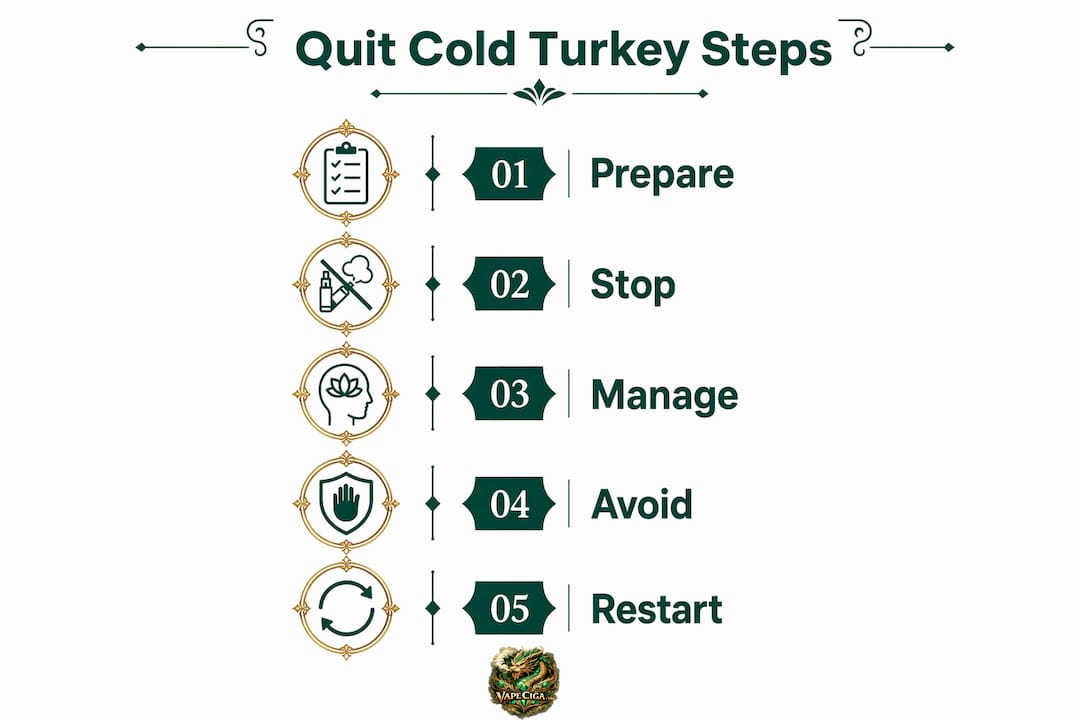
One critical distinction: true cold turkey involves zero nicotine intake after quitting. Using nicotine gum, pouches, or patches is nicotine replacement therapy (NRT), which is a different method entirely. Both are valid, but they are not the same thing. Know which path you are choosing before your quit date.
Your pre-quit checklist
Start preparing at least three days before your quit date. Removing devices and vaping-related triggers ahead of time eliminates the easiest relapse opportunities.
- Set a specific quit date and write it down somewhere visible
- Throw away all vaping devices, pods, and e-liquids
- Delete vaping apps and unsubscribe from vaping-related content
- Identify your top three craving triggers (stress, boredom, social situations)
- Stock up on substitutes: gum, sunflower seeds, toothpicks, or crunchy snacks
- Plan a physical replacement for the hand-to-mouth habit, such as a stress ball or pen
- Tell at least two people your quit date and ask them to check in on you
- Choose a low-stress week to quit, avoiding major deadlines or social events
Research also shows that cold turkey works best for people who vape fewer than 10 times per day and have vaped for less than two years. If that describes you, your odds are better than average.
Pro Tip: Text a friend your quit date the night before. Social accountability creates a low-cost external commitment that makes backing out feel concrete, not just abstract.
Step-by-step guide to your first two weeks without vaping
The first two weeks are where most attempts succeed or fail. A clear daily structure removes decision fatigue during the hardest stretch.
Quit day actions
- Discard every remaining device and cartridge the moment you wake up
- Drink a full glass of water before doing anything else
- Eat breakfast, even if your appetite feels off
- Text your accountability contact that today is day one
- Plan your first three hours in detail so there is no unstructured time
Days 2–5: managing the peak
Days 2 through 5 are the hardest. Symptoms peak, sleep suffers, and irritability spikes. Exercise is the most effective tool for this window. A 20-minute walk raises dopamine and serotonin without nicotine. Hydration matters more than most people expect: nicotine is a diuretic, and withdrawal often comes with dehydration that worsens headaches.
| Day | Focus | Recommended action |
|---|---|---|
| Day 1 | Environment control | Remove all devices; plan your schedule |
| Days 2–3 | Symptom management | Exercise, hydrate, use the 20-minute craving rule |
| Days 4–5 | Sleep and appetite | Prioritize 7–8 hours; eat regular meals |
| Days 6–10 | Habit replacement | Replace vaping rituals with walks or breathing exercises |
| Days 11–14 | Milestone recognition | Track your progress; reward yourself with something concrete |
Avoiding the “just one puff” trap
One puff is not a controlled experiment. It is a relapse trigger. Nicotine reactivates reward pathways almost immediately, and a single puff can restart cravings at full intensity. Treat any puff as a full reset, not a small slip. That framing keeps the stakes clear without being dramatic.
For a deeper look at what your body goes through during this period, the side effects of quitting vaping are worth reading before your quit date.
How to handle relapse and stay on track long term
Relapse is common. It is not a character flaw. Most people who successfully quit vaping did so after multiple attempts, and each attempt builds knowledge about personal triggers and weak points.
Common relapse triggers
- Stress at work or in relationships
- Social situations where others are vaping
- Alcohol, which lowers inhibition and raises cravings
- Boredom, especially in the evening
- Emotional lows, including loneliness or frustration
Recognizing your personal triggers before they hit is the most effective prevention strategy. Write them down during your preparation phase and assign a specific response to each one. “When I feel stressed at work, I will walk outside for five minutes” is more effective than a general commitment to resist.
What to do if you relapse
If relapse occurs, discard remaining devices immediately and restart quitting within 24–48 hours. That window matters because your nicotine tolerance has already dropped. Restarting quickly preserves that lowered tolerance and keeps your motivation from collapsing. Do not treat a slip as permission to vape for a week before “starting over Monday.”
Mindset is the lever here. Relapse is data, not defeat. Ask what triggered it, adjust your plan, and go again. The 7–10% success rate per attempt means persistence across multiple attempts is the actual strategy, not perfection on the first try.
Key Takeaways
Quitting vaping cold turkey succeeds through preparation, a clear withdrawal timeline, and the willingness to restart quickly after any relapse.
| Point | Details |
|---|---|
| Withdrawal peaks fast | Symptoms hit hardest at 48–72 hours, then improve steadily over 2–4 weeks. |
| Preparation beats willpower | Remove all devices and triggers at least 3 days before your quit date. |
| The 20-minute rule works | Setting a timer during cravings lets the urge pass without a relapse. |
| Relapse is not the end | Restarting within 24–48 hours preserves lowered tolerance and momentum. |
| Multiple attempts are normal | Most successful quitters needed 6–11 attempts before achieving lasting cessation. |
What I’ve learned from watching people quit cold turkey
The conventional wisdom says quitting cold turkey is the hardest method. I think that framing is wrong, and it sets people up to fail before they start.
Cold turkey is intense, not hard. The distinction matters. Intensity is short. Cold turkey produces a brief but sharp withdrawal period rather than a prolonged, grinding taper. Most people underestimate how quickly the worst of it passes, and they quit the quit during hours 48–72 because they assume the pain is permanent. It is not.
The other misconception I see constantly: people treat quit day as the starting line. It is not. The preparation phase is where the attempt is won or lost. Someone who spends three days sanitizing their environment, lining up social support, and planning their first week has a fundamentally different experience than someone who decides to quit on a Tuesday morning and wings it.
Repeated attempts are not a sign of weakness. They are the method. Every attempt teaches you something specific about your triggers, your peak craving windows, and what support actually helps you. Use that information. The people who quit for good are not the ones with the most willpower. They are the ones who kept adjusting and trying again.
If you are reading this and you have already tried and relapsed, that experience is an asset. You know more now than you did before. Use it.
— James
VapeCiga is here if you need a different approach
Not every quit attempt looks the same. Some people step down gradually before going fully nicotine-free, and having the right device or e-liquid for that transition makes a real difference.
 VapeCiga is a USA-based online vape store with fast domestic shipping and a wide selection of devices, pod systems, and e-liquids across nicotine levels. If you are reducing your nicotine intake before quitting fully, options like the non-nicotine device give you the hand-to-mouth habit without the nicotine. For those who want to browse the full catalog, VapeCiga’s store covers everything from disposables to advanced mods. Whatever stage you are at, the right equipment helps you stay in control of the process.
FAQ
What does quitting vaping cold turkey actually mean?
Cold turkey means stopping all nicotine use at once, with no replacement products or tapering. Using nicotine gum or patches is NRT, not cold turkey.
How long do vaping withdrawal symptoms last?
Acute symptoms resolve within 2–4 weeks. Full baseline normalization takes 30–90 days, though most people feel significantly better within the first two weeks.
Is it dangerous to stop vaping suddenly?
Nicotine withdrawal is uncomfortable but not medically dangerous for healthy adults. No severe physical complications result from stopping vaping abruptly.
What is the 20-minute craving rule?
The 20-minute rule means setting a timer when a craving hits and doing something else until it passes. Cravings peak in 3–5 minutes and then fade, so the timer outlasts the urge.
What should I do if I relapse while quitting cold turkey?
Discard any remaining devices immediately and restart quitting within 24–48 hours. That window preserves your lowered nicotine tolerance and keeps your progress from resetting entirely.