


Several states enforce full flavored-vape bans, and others have enacted statewide prohibitions. Beyond that list, a second wave of states, including Florida, North Carolina, Tennessee, Virginia, and Wisconsin, run PMTA-based product directories that quietly strip most flavored disposables off shelves without ever passing a “ban” by that name. Menthol carve-outs still separate the two groups in a few places, which matters more than most headlines let on.
TL;DR:
- Flavor bans generally exclude tobacco and unflavored products, but menthol-specific restrictions vary by state and can still allow menthol sales.
- States with PMTA-based product directories enforce compliance through real-time product listings, pulling unauthorized items from shelves rapidly.
- Online sales are complex because products must adhere to the PACT Act and match state-specific regulations, including age verification and shipping restrictions.
- Enforcement efforts focus on civil fines and license penalties, with cross-border shopping often undermining flavor bans.
- Staying current requires checking official state and federal lists regularly, as regulations and product statuses change frequently.
Table of Contents
- Which States Have Banned Flavored Vapes?
- What Are Registry States, and How Do They Work?
- What Vape Products Are Still Legal to Buy?
- How Are Flavor Bans Enforced, and Do They Actually Work?
- How to Verify a Product Is Legal Before You Buy
- A Note From VapeCiga on Shopping Within the Law
- Shop VapeCiga’s Compliant Flavor Options for Adults 21+
- Where to Check for the Latest Regulatory Updates
- Sources
- FAQ
Which States Have Banned Flavored Vapes?
A “full ban” typically means the state prohibits the retail sale of any flavored e-liquid or flavored disposable device, with flavor defined broadly enough to cover fruit, candy, mint, and dessert profiles. Some states draw a hard line at menthol; others fold it into the same restriction as bubblegum or mango.
Here’s the state-by-state breakdown as it stands going into 2026:
- California bans flavored tobacco products including e-cigarettes statewide, with menthol included. The state also maintains an Unflavored Tobacco List that retailers must check before stocking anything, and products not on that list can be seized on sight.
- Massachusetts banned all flavored tobacco and vapor products, menthol included, back in 2020, making it one of the earliest and strictest bans in the country.
- New Jersey prohibits flavored e-liquids and flavored vapor devices statewide, with limited exceptions for certain tobacco-flavored products.
- New York bans flavored vapor products at the state level, and menthol is covered under most local and state enforcement actions.
- Rhode Island restricts flavored e-cigarette sales statewide, with enforcement tied to its tobacco retail licensing system.
- Washington enacted restrictions on flavored vapor products, with exceptions carved out for certain adult-only vape shops in some jurisdictions.
- Oregon and Colorado have each passed statewide flavor restrictions, though the scope and menthol treatment vary by local ordinance layered on top of state law.
None of these bans typically touch tobacco-flavored or unflavored products, and most exempt on-site vapor lounges that don’t sell for off-premises consumption. Watch for legislative sessions running through 2026, since several states are debating menthol carve-out removals and expanded definitions that would sweep in synthetic nicotine products currently sitting in a gray area.
What Are Registry States, and How Do They Work?
A premarket tobacco product application, or PMTA, is the FDA review process a manufacturer must complete before selling any vaping product legally in the United States. The FDA applies a heightened evidentiary burden to flavored products specifically, requiring manufacturers to prove a net public health benefit, not just that the product is safe in isolation.
Several states have built their own enforcement layer on top of that federal process: a product directory. Instead of banning flavors by name, these states require every vapor product sold within their borders to appear on a state-maintained list of PMTA-authorized or PMTA-pending items. Anything not on the list is illegal to sell, regardless of flavor.
States running registry or directory systems include:
- Florida
- North Carolina
- Tennessee
- Virginia
- Wisconsin
These systems have proven more effective at clearing shelves than plain flavor bans in some respects, because they target a product’s paperwork status rather than its label. A disposable can be pulled from every store in a registry state overnight if its manufacturer never filed a PMTA or had one rejected, and that’s exactly what happened across multiple registry states as directories went live between 2025 and 2026, with popular flavored disposables disappearing from convenience-store counters almost as fast as they’d arrived. Retailers in these states carry real compliance exposure: selling an unlisted product, even one that’s federally legal to manufacture, can trigger fines under state law. VapeCiga’s PMTA update coverage breaks down how these authorizations move through the federal pipeline and land on state lists.
What Vape Products Are Still Legal to Buy?
Not everything flavored is off the table, and the exceptions matter for anyone trying to shop within the law.
- Tobacco and menthol-flavored products remain legal almost everywhere except the handful of states, like Massachusetts, that specifically include menthol in their ban. Check your state’s statute before assuming menthol is safe just because “flavor bans” usually mean fruit and candy.
- FDA-authorized flavored products exist, but they’re rare. The FDA has issued a small number of marketing authorizations for specific flavored ENDS products through 2026, and holding federal authorization doesn’t override a state ban or a missing registry listing.
- Online purchases still fall under the PACT Act, which requires age verification, ID-check-on-delivery shipping, and monthly reporting to state tax authorities. A product legal to ship from one state can still be illegal to receive in another, so shipping compliance and state law have to line up. VapeCiga’s guide to buying online as an adult walks through what that verification actually looks like at checkout.
How Are Flavor Bans Enforced, and Do They Actually Work?
Enforcement mostly runs through civil fines, product seizures, and retail license consequences rather than criminal charges against individual buyers. Boards of health, state attorneys general, and tobacco licensing agencies typically handle inspections, and a retailer caught with unlisted or banned flavored stock risks losing the license that lets it sell any tobacco product at all.
One consistent finding across the research: bans don’t stop flavored vaping so much as redirect it. Research on cross-border purchasing found that state flavor bans get meaningfully blunted when consumers can drive to a neighboring state without one, which is exactly the pattern seen along borders like Massachusetts and New Hampshire.
- Civil fines for illegal flavored sales can escalate quickly on repeat violations.
- License suspension or revocation is the penalty retailers fear most, since it ends the business, not just one product line.
- Directory enforcement has shown the clearest short-term wins, pulling unauthorized products from shelves faster than flavor-definition bans that rely on inspectors identifying banned flavors case by case.
How to Verify a Product Is Legal Before You Buy
Checking legality takes about two minutes if you know where to look, and it’s worth doing before you order anything flavored across state lines.
- Search your state’s official product directory or attorney general’s tobacco page, not a retailer’s marketing claim, for the exact product name.
- Cross-reference against the FDA’s PMTA database to confirm federal authorization status.
- Confirm the seller verifies your age at checkout and again at delivery, per PACT Act requirements.
- If you run a shop and mix or repackage e-liquids, know that the FDA can classify you as a manufacturer, which triggers PMTA obligations most small retailers can’t realistically meet.
Pro Tip: Bookmark your state’s product directory page, not a vape blog. Directories update as products get approved or pulled, and a list that was accurate in January can be missing a dozen items by summer.
A Note From VapeCiga on Shopping Within the Law
I built this breakdown because too many adult vapers assume “no ban” means “anything goes,” when a registry state can be just as restrictive as a state with a flavor law on the books. VapeCiga sells to adults 21 and over, verifies age at checkout and delivery, and tracks PMTA developments closely because our own catalog depends on staying current with them. That means the products listed below are ones we can actually ship where the law allows it, not a guess dressed up as inventory.
— James
Shop VapeCiga’s Compliant Flavor Options for Adults 21+
If your state still allows flavored disposables, VapeCiga carries a rotating lineup built around current PMTA status rather than whatever sells fastest. The Fifty Bar 6500 is a high-capacity disposable with a broad flavor lineup for shoppers in states where flavored disposables remain legal. The Adjust MyFlavor 40K gives adjustable multi-flavor output in one device, useful if you’re comparing profiles before committing to a full case. The FLUM UT Bar 50K rounds out the lineup as one of the higher-capacity options currently shipping to eligible states.

Every order runs through age verification at checkout and again at delivery, and shipping follows PACT Act reporting requirements state by state, so you won’t get a product mailed somewhere it can’t legally arrive. If you’re weighing a switch from smoking rather than shopping flavors, Cigarette Nearby’s guide for adult smokers covers what to consider before making the jump. Check your state’s status against the list above, then browse the current flavor lineup to see what’s shipping to your address today.
Where to Check for the Latest Regulatory Updates
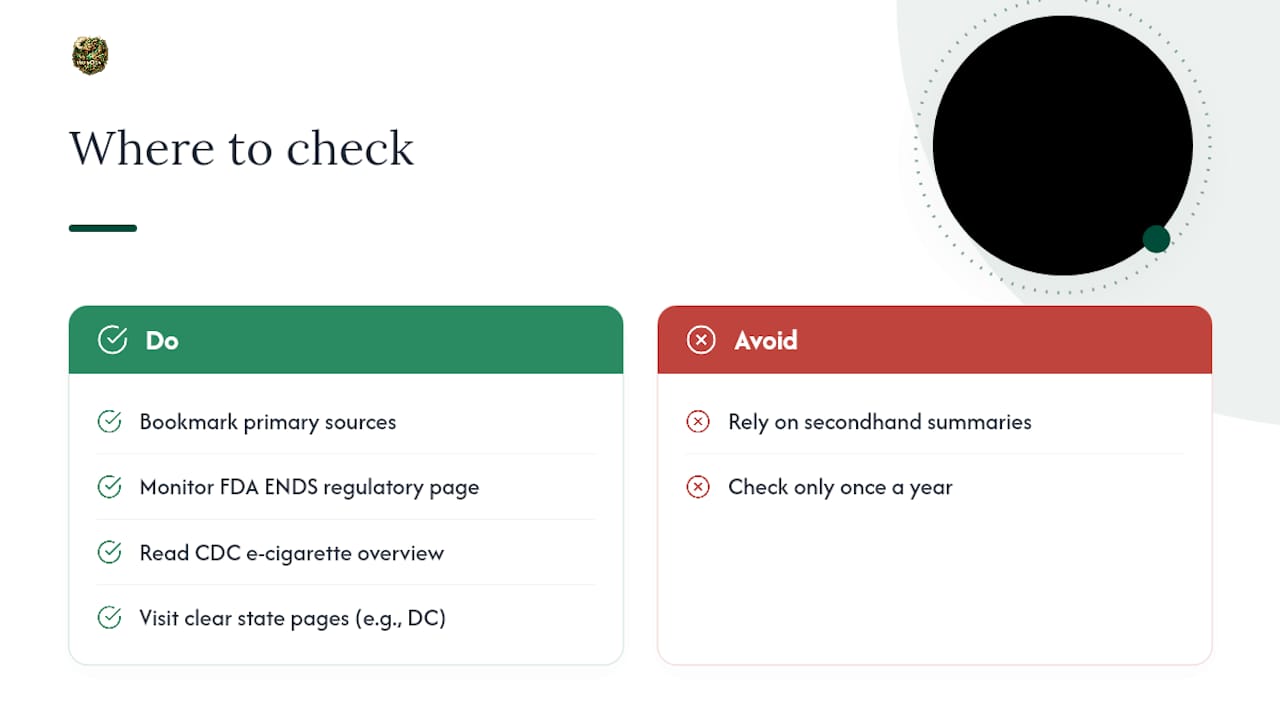
State flavor laws and PMTA registries change faster than most articles can track, so bookmark primary sources instead of relying on secondhand summaries. The FDA’s ENDS regulatory page covers federal authorization status, while the CDC’s e-cigarette overview explains the public-health reasoning behind these restrictions. For state-specific detail, DC’s official flavored-tobacco prohibition page is a solid model of what a clear state summary looks like, and California’s Unflavored Tobacco List regulations show how a registry actually functions day to day. Check these every few months, not once a year.
Sources
- E-Cigarettes, Vapes, and other Electronic Nicotine Delivery Systems (ENDS) | FDA
- Dlcp
- About electronic cigarettes (e-cigarettes) | CDC
- Cross-border purchasing and the impact of flavor bans (2026 research) - Journal (example)
FAQ
Will Vapes Be Illegal in 2026?
Vaping itself isn’t illegal nationwide, but flavored vapes are illegal to sell in states like California, Massachusetts, New Jersey, New York, and Rhode Island, and effectively unavailable in registry states like Florida and Tennessee unless a product holds PMTA authorization.
Can You Still Buy Flavored Vapes in the US?
Yes, in states without a flavor ban or a strict product directory, flavored vapes remain legal to purchase, though online orders still require age verification under the PACT Act.
Which Vapes Are Now Banned?
Fruit, candy, mint, and dessert-flavored e-liquids and disposables are banned in full-ban states, and menthol is included in that ban in states like Massachusetts, though most other states still allow it.
What Vape Products Are Still Legal?
Tobacco-flavored and unflavored vaping products remain legal almost everywhere, and a small number of FDA-authorized flavored products can be sold legally even in states with strict PMTA registry requirements.