


Temperature control vaping regulates coil heat by monitoring resistance changes as the wire warms, then throttling power to keep that heat inside a set range. The practical payoff is simple: no more dry, burnt hits from a wick that ran low, plus steadier flavor and coils that last longer between rebuilds. Anyone tired of that harsh burnt taste at the end of a tank benefits most from switching a compatible device into temperature control (TC) mode.
TL;DR:
- Lock the coil’s resistance while it’s at room temperature to ensure accurate temperature control readings and prevent false warnings or dry hits.
- Use stainless steel, titanium, or nickel coils, as they have predictable resistance changes necessary for effective temperature regulation.
- Start with a low to mid-range temperature setting, typically between 392 and 482 degrees Fahrenheit, and adjust gradually for optimal flavor and vapor.
- Rebuildable coils and high-wattage setups benefit most from TC, especially when wicking or coil condition cause dry or burnt hits in wattage mode.
- Proper setup, including correct resistance locking and compatible gear, minimizes issues like Temp Protect warnings and extends coil lifespan.
Table of Contents
- What Is Temperature Control Vaping and Which Coils Support It?
- How the Temperature Control Feedback Loop Actually Works
- What Gear You Need to Vape With Temperature Control
- How to Set Up Temperature Control Mode Step by Step
- Recommended Starting Temperatures by Coil Material
- When Temperature Control Is Worth It and When It Isn’t
- Fixing Temp Protect Warnings and Keeping Your Setup Running
- Understanding TCR and Customizing It for Uncommon Coil Wires
- Temperature Control vs. Wattage Mode: Which Should You Use?
- Why Most Vapers Give Up on TC Too Early
- Try Temperature Control With Coils Ready to Ship Today
- Sources
- FAQ
What Is Temperature Control Vaping and Which Coils Support It?
Wattage mode fires a fixed amount of power at your coil no matter what’s happening to the wick underneath it. Temperature control mode does something different: it tracks how the coil’s electrical resistance shifts as it heats up, then cuts power automatically once you hit your target temperature. That’s the whole trick. A cold coil has a lower resistance than a hot one, and certain metals change resistance predictably enough that a chip can use that shift as a built-in thermometer.
Not every coil wire works for this. The metals need a stable, measurable temperature coefficient of resistance, or TCR, for the mod’s math to hold up.
- Nickel (Ni200), known for its strong, predictable resistance curve: one of the earliest TC metals, prized for a strong, predictable resistance curve, though it’s fragile and rarely used in modern coil builds.
- Titanium (Ti), which heats quickly and offers stable resistance for TC vaping: works well for TC but requires care since overheated titanium wire can pose combustion risks.
- Stainless steel (SS), a flexible option compatible with TC and wattage mode: the most flexible option because it has a measurable TCR and can be run in either TC or wattage mode, according to a technical breakdown of why stainless steel dominates temperature control.
Kanthal and nichrome, the two most common wattage-mode wires, have a nearly flat resistance curve. That flatness makes them excellent for straightforward wattage vaping but useless for TC, since the mod has no meaningful resistance shift to read.
How the Temperature Control Feedback Loop Actually Works
Every TC-capable mod runs the same basic loop: measure resistance, calculate temperature, adjust power, repeat. It happens dozens of times per second, which is why a well-calibrated TC hit feels so steady from the first draw to the last.
Here’s the sequence in practice:
- You lock in the coil’s resistance while it’s cold, right after installing it and before firing.
- You select the coil’s material (Ni, Ti, or SS) so the mod applies the correct resistance curve.
- You set a target temperature, and the mod starts firing at whatever wattage gets there fastest.
- As the coil heats, resistance climbs, and the mod continuously compares that live reading against the cold baseline you locked in.
- Once the calculated temperature hits your target, the chip throttles power down to hold it there instead of letting it keep climbing.
That cold-resistance lock is the step people skip and instantly regret. According to Vaping360’s guide to temperature control setup, locking resistance while the coil is still warm from a previous session throws off every reading afterward, since the mod thinks “cold” means something it doesn’t.
If your device flashes a “Temp Protect” or similar warning, it usually means one of three things: the coil isn’t seated correctly, the wicking can’t keep pace with the heat, or the resistance was locked incorrectly. These messages are a safety feature, not a malfunction. The chip is refusing to keep firing into a coil it can’t get an accurate reading from, which is exactly what you want it to do rather than guess and risk a dry hit or worse.
What Gear You Need to Vape With Temperature Control
You can’t force TC onto random gear. It requires a specific combination of parts working together correctly.
- A TC-capable regulated mod. This means a chipset built for resistance tracking, not just a variable-wattage box. Most mid-range and higher mods from the last several years include it as a standard mode alongside wattage.
- TC-compatible coils. Look for coils built from Ni200, titanium, or stainless steel wire, with the material usually printed right on the coil or its packaging.
- A tank rated for the wattage and airflow your setup needs. Sub-ohm tanks paired with mesh or single-coil builds tend to respond fastest and most predictably in TC mode.
- Batteries with enough continuous discharge headroom. TC mode can pulse power quickly to hold temperature, so a battery running near its limit adds instability to your readings. A quick Ohm’s law check before you build confirms your setup is within safe limits.
- Updated firmware. Older chipsets sometimes have buggy TC implementations that were patched in later firmware releases, so check your mod manufacturer’s update history if your temperature readings feel erratic.
How to Set Up Temperature Control Mode Step by Step
Getting TC dialed in takes maybe five extra minutes compared to wattage mode. Skip a step and you’ll spend a lot longer than that troubleshooting.
- Install the coil and prime it fully. Drip e-liquid directly onto the visible wick through the airflow slots and let it sit for a couple of minutes before installing the tank. A dry wick is the single biggest cause of harsh, inconsistent TC hits.
- Reassemble the tank and let it sit a moment longer. Give the wick time to draw liquid up from the tank before you fire anything.
- Attach the tank to the mod and check the cold resistance reading. It should be displayed on screen the moment you connect it, before you’ve fired a single time.
- Lock that cold resistance in the mod’s settings. This is the calibration step from the previous section, and it has to happen while the coil is genuinely at room temperature.
- Select the correct wire material (Ni, Ti, or SS) in the mod’s menu so it applies the right resistance curve to its calculations.
- Set a conservative starting temperature. Somewhere in the low to middle of your coil material’s typical range gives you room to adjust up or down based on taste.
- Set an optional wattage ceiling if your mod supports it, which caps how hard the device can fire even while chasing your target temperature.
- Test with short, three-second draws first. Long pulls before you know how the coil behaves can flood it with more heat than expected.
- Adjust in small increments. Move temperature up or down by about 9°F (5°C) at a time until the flavor and vapor density feel right, rather than making big jumps.
Pro Tip: Keep a small notebook or phone note with the temperature and wattage ceiling that worked for each coil type you use. TC settings that feel perfect on one coil batch can feel off on the next, and having your old numbers saves a lot of repeat trial and error.
Recommended Starting Temperatures by Coil Material
Most guides converge on similar starting bands, though your exact sweet spot depends on coil mass, wick material, and how thick your e-liquid runs.
| Coil Material | Typical Starting Range | Adjustment Notes |
|---|---|---|
| Nickel (Ni200), known for its strong, predictable resistance curve | a typical starting range in the lower to mid-temperature spectrum recommended for nickel coils | Raise slowly; nickel responds fast to small changes |
| Titanium (Ti), which heats quickly and offers stable resistance for TC vaping | a typical conservative range recommended for titanium coils | Keep well below max; overheated titanium is a safety concern |
| Stainless steel (SS), a flexible option compatible with TC and wattage mode | a moderate starting range often used for stainless steel coils | Widest comfortable range; works in TC or wattage mode |
A conservative starting point of roughly 392 to 482°F (200 to 250°C) is standard advice across manufacturer guides for temperature control vaping, with stainless steel builds often landing closer to 400 to 450°F once broken in.
E-liquid thickness matters here too. High-VG juice carries more visible vapor but can feel cooler at the same temperature setting than a high-PG liquid, which tends to deliver a sharper throat hit at lower numbers. Wide-open airflow cools the vapor further before it reaches your mouth, so if you switch from a restricted to an airy tank, expect to nudge your temperature up a few degrees to get the same perceived warmth.
When Temperature Control Is Worth It and When It Isn’t
TC solves a specific, common problem: the burnt taste that shows up when a wick can’t keep pace with the heat. It doesn’t solve every vaping frustration, and it isn’t the right mode for every setup.
- No more dry or burnt hits, since the mod cuts power the instant your coil hits its ceiling instead of letting it keep climbing into scorched cotton.
- More consistent flavor from the first puff to the last, because the coil temperature stays in a narrow band instead of drifting hotter as the session goes on.
- Longer coil life, since coils running at a controlled, moderate temperature don’t degrade as fast as ones repeatedly pushed to their limit.
- A real learning curve, with resistance locking, material settings, and coil compatibility all things a wattage-only vaper has never had to think about.
- Limited coil compatibility, since Kanthal and nichrome builds simply can’t be used in TC mode at all.
Vapers running modern mesh coils optimized for wattage mode often see less benefit from switching, since well-designed mesh already resists dry hits fairly well. TC pays off most for rebuildable builds, high-wattage sub-ohm setups, and anyone who’s grown tired of babysitting wick saturation.
Fixing Temp Protect Warnings and Keeping Your Setup Running
Most TC problems trace back to one of three causes: bad wicking, an incorrect resistance lock, or a coil nearing the end of its life. Work through them in order rather than guessing.
- Check the wick first. Pull the tank apart and look at the cotton. If it’s scorched, dry, or discolored, that’s your answer, and the fix is a fresh coil, not a settings change.
- Re-verify your cold resistance lock. If you fired the device even once before locking, that reading is off. Let the coil cool completely, then relock it from scratch.
- Confirm the coil is seated properly in the tank’s base. A loose connection reads as a resistance spike that mimics an overheating coil.
- Double-check the material setting matches the coil you actually installed. A stainless steel coil running under a nickel profile will misbehave every time.
- Rule out battery issues by testing with a fresh, fully charged battery, since a weak cell can produce erratic voltage that confuses the resistance reading.
Heavier coil builds and thicker high-VG liquids need more efficient wicking to avoid instant heat spikes, since there’s simply more mass to saturate before the coil can fire safely. If your Temp Protect warnings show up consistently within the first few puffs after a coil change, that’s usually a priming problem rather than a hardware fault. If your device still tastes burnt even after fresh wicking, the common causes of burnt vape taste are worth checking against your specific symptoms.
For routine upkeep, replace coils every one to two weeks under regular use, rinse rebuildable builds under water when flavor starts muddying, and keep your mod’s firmware current so any TC calibration bugs get patched as manufacturers find them.
Pro Tip: If a coil throws Temp Protect warnings repeatedly even after a fresh wick and a clean resistance lock, retire it. A coil nearing failure often develops uneven hot spots that no amount of recalibration will fix.
Understanding TCR and Customizing It for Uncommon Coil Wires
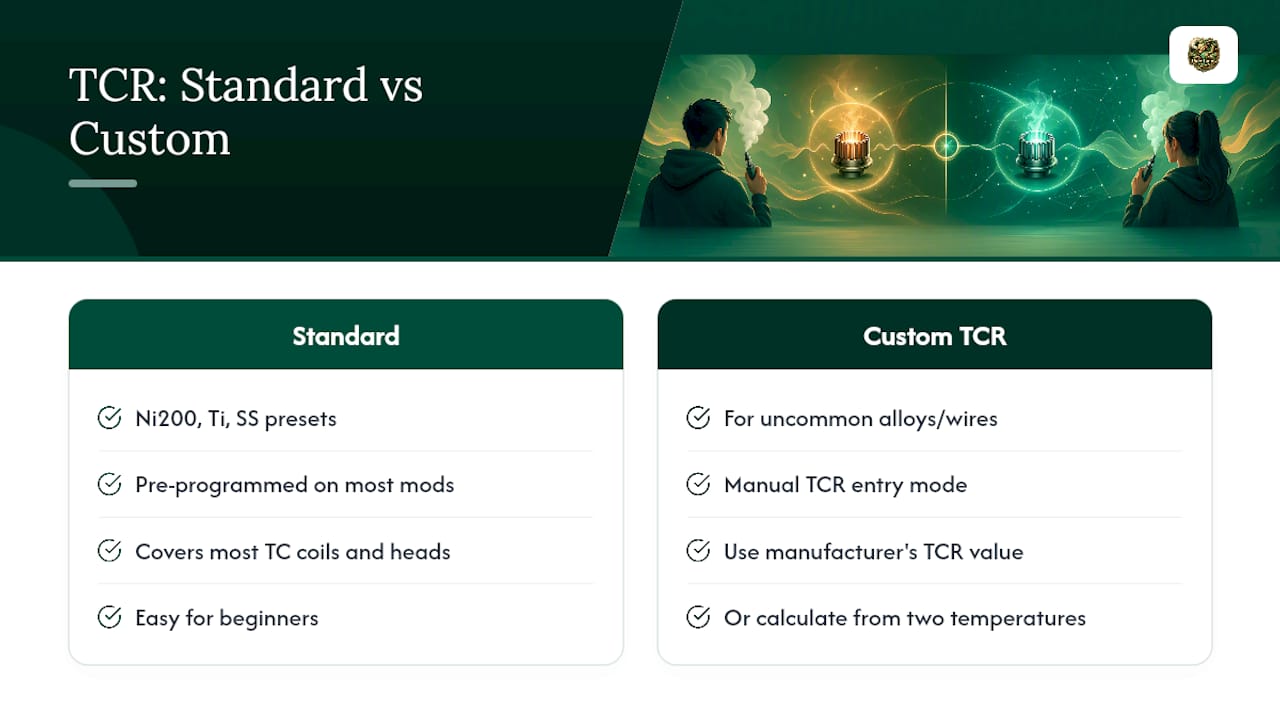
Temperature coefficient of resistance describes exactly how much a material’s resistance rises for every degree it heats up, expressed as a small decimal value unique to each metal. Nickel, titanium, and stainless steel each have their own well-documented TCR value, which is why mainstream mods ship with those three materials pre-programmed into their menus.
Less common wire types, like certain nickel-titanium blends or specialty alloys used in some rebuildable builds, don’t always have a built-in profile on your mod. That’s where a custom TCR setting comes in. Most TC-capable mods include a manual TCR mode that lets you enter the material’s coefficient directly instead of picking from a preset list.
Finding the right number takes a bit of trial and calibration. Some vapers pull published TCR values for their specific wire from the manufacturer’s spec sheet, while others calibrate by comparing resistance readings at two known temperatures and calculating the coefficient themselves. It’s a more advanced process than the standard three-material setup, and it’s not something a beginner needs to worry about right away.
For nearly everyone starting out, sticking to the standard Ni200, titanium, or stainless steel presets covers the vast majority of TC-compatible coils on the market, including most pre-made coil heads sold for tank systems. Custom TCR only becomes relevant once you’re building your own coils from wire that isn’t one of the three standard options, which is a project for later, not day one.
Temperature Control vs. Wattage Mode: Which Should You Use?
Wattage mode is simpler, works with every coil type on the market, and is the right default for anyone using pre-built mesh coils in a standard tank or pod system. There’s nothing wrong with staying in wattage mode permanently if your coils aren’t burning out early and your flavor stays consistent tank after tank.
Temperature control earns its keep in more specific situations. Rebuildable atomizer users building their own coils get the most obvious benefit, since hand-built coils vary more in mass and resistance than mass-produced ones, making them more prone to hot spots. Sub-ohm tank users running high-wattage builds also see real gains, particularly toward the end of a tank when e-liquid levels drop and wicking becomes marginal. That’s exactly the moment wattage mode has no way to protect the coil, while TC catches it automatically.
If you’re chasing maximum vapor production above all else, wattage mode often edges out TC since it lets the coil run as hot as the wire allows without a ceiling. If you’re chasing all-day consistency and coil longevity, TC is the better tool. Neither mode is objectively superior. Match it to what’s actually bothering you: burnt hits point to TC, while inconsistent cloud size or throat hit in wattage mode usually points to a wattage tuning issue rather than a reason to switch modes entirely.
Why Most Vapers Give Up on TC Too Early
Temperature control has a reputation for being finicky, and honestly, that reputation is earned in the first ten minutes with a new device. The resistance lock trips people up constantly, and it’s rarely explained clearly in the little pamphlet that ships in the box with most mods.
Here’s the part that gets underrated: once you’ve locked resistance correctly one time, TC becomes almost boringly reliable. The whole system is designed to remove guesswork, not add it. The people who abandon TC after one bad session usually skipped the cold-resistance step entirely or tried to fire a warm coil right after installing it, which guarantees a bad first impression no matter how good the mod is.
Stainless steel deserves more credit than it gets in beginner conversations. It’s the only wire that works competently in both TC and wattage mode, which means you can experiment with temperature control without committing to it. If it’s not for you, switch back to wattage on the exact same coil. That flexibility removes almost all the risk from trying it.
The honest advice: don’t switch to TC because it sounds more advanced. Switch because you’re tired of the last third of every tank tasting burnt. That’s the actual problem TC solves, and if you’re not experiencing that problem, wattage mode is doing its job fine.
— James
Try Temperature Control With Coils Ready to Ship Today
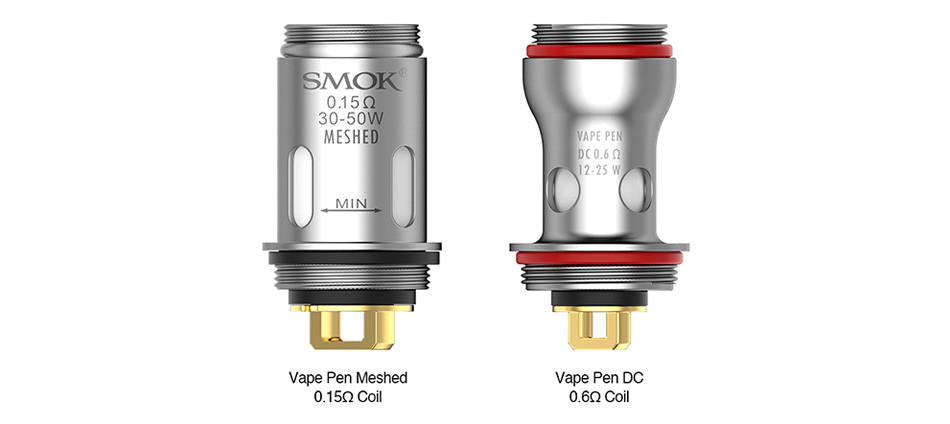
You don’t need to overhaul your whole setup to test temperature control. VapeCiga stocks the exact stainless steel and standard replacement coils this guide covers, so you can try TC on gear you may already own instead of guessing which coil pack will actually fit. If you’re running a Vape Pen 22 style tank, the Smoktech Vape Pen 22 replacement coils come in a 5 pack and are a straightforward first swap for anyone curious about TC.
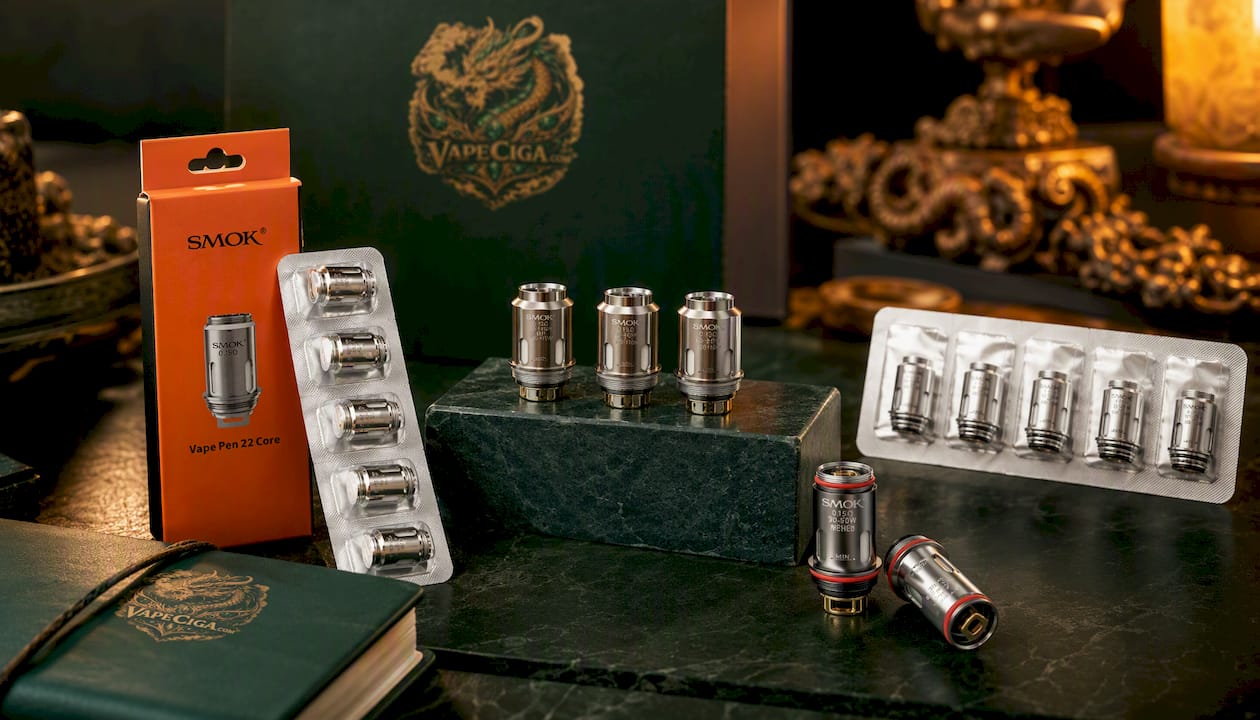
For sub-ohm tank users running higher wattage, the Smok TFV18 coil 3-pack covers a build style well suited to the TC range discussed above. If you’re using the standard Vape Pen V2 tank instead, the Smok Vape Pen V2 replacement coils fit that setup directly. Pair any of these with a TC-capable device like the Vaporesso Tarot Baby 85W kit, which ships with the chipset and firmware needed to run the full setup described in this guide. All orders ship fast within the USA, so you can have a working TC setup within days instead of waiting on a slow overseas shipment. Browse the current coil lineup and pick the pack that matches your tank to get started.
Sources
- PMCID article on respiratory effects and recovery literature
- Beginner’s Guide for Vaping with Temperature Control
- Temperature coefficient — Wikipedia
FAQ
Can lungs heal after years of vaping?
Recovery varies by individual, and public-health literature shows long-term respiratory recovery after smoking or vaping cessation is inconsistent rather than guaranteed. Temperature control is a device feature that reduces overheating risk during use, but it has no bearing on healing that happens after you quit.
Is 20 puffs of vape a day a lot?
There’s no universal safe number, since it depends heavily on nicotine strength, device output, and individual tolerance. What matters more than the raw puff count is whether your coil and wicking are keeping up, since dry or overheated puffs carry more risk than well-wicked ones at the same frequency.
Can you tell if someone has vaped in a room?
Vapor dissipates faster than cigarette smoke and doesn’t cling to fabric and surfaces the same way, but a strong e-liquid scent can linger briefly, especially with sweeter or heavily flavored juices. Detection typically depends on ventilation, flavor concentration, and how recently the vaping happened.
Is one puff of a vape equal to one cigarette?
No, and the comparison isn’t a clean one-to-one ratio, since nicotine delivery per puff varies widely by device wattage, e-liquid strength, and inhale depth. A detailed breakdown of how vape puffs compare to cigarettes covers the variables that make this math more complicated than it sounds.
What’s the safest starting temperature for a new TC coil?
A conservative starting point of roughly 392 to 482°F (200 to 250°C) is standard advice across manufacturer guides, then adjusting upward in small steps once you’ve confirmed the resistance lock and wicking are solid.