


Refillable pod systems are the best practical JUUL alternative for most adult vapers who want lower running costs and more flavor variety. If convenience or a fresh-out-of-the-box experience matters more to you, prefilled closed-pod systems and disposable vapes still work well. VapeCiga carries recommended devices in every category, so the right pick depends mostly on how you actually vape.
TL;DR:
- Refillable pod systems are more cost-effective over time, especially for heavy users, due to the lower price of bottled e-liquid and bulk coil purchases.
- Device compatibility varies: some pods use proprietary cartridges while others are universally compatible via 510-thread connections, affecting cost and choice.
- Nicotine strength should match your previous device, with salt nicotine delivering a smoother throat hit at higher concentrations similar to JUUL.
- Larger pod capacities and bigger batteries improve convenience by reducing refills and charges, especially for daily or heavy vaping habits.
- Buying from authorized retailers minimizes risks of counterfeit products, ensuring device safety, ingredient transparency, and reliable performance.
Table of Contents
- What Are the Best JUUL Alternatives on the Market?
- How Do You Choose the Right Device?
- Why Do Refillable Systems Cost Less Than JUUL Over Time?
- Which VapeCiga Devices Match Your Vaping Style?
- Brand History and Practical Maintenance Tips
- Health and Safety Considerations When Choosing JUUL Alternatives
- What Are the Legal Rules for Buying JUUL Alternatives?
- Where Should You Buy a JUUL Alternative?
- How Do Flavor and Brand Variety Compare Across Alternatives?
- Why I Recommend Making the Switch to Refillable Pods
- Ready to Switch? Here’s Where to Start
- Sources
- FAQ
What Are the Best JUUL Alternatives on the Market?
Every JUUL alternative falls into one of three buckets: refillable open pods, prefilled closed pods, or disposables. Each one trades cost, flavor access, and convenience differently, and picking the wrong bucket is the main reason people switch devices three times before finding one that sticks.
Refillable pod systems use replaceable coils and a tank or pod you fill yourself with bottled e-liquid. You control the flavor, the nicotine strength, and the resistance of the coil, which changes how warm or airy the vapor feels. The tradeoff is a little more hands-on work: you fill the pod, swap the coil every couple of weeks, and keep a bottle of juice around. In exchange, you get access to thousands of e-liquid flavors instead of whatever a handful of proprietary pods offer.
Prefilled or closed pod systems are the middle ground. You snap in a sealed pod, vape it down, then toss it and snap in another. No filling, no leaking, no coil-swap ritual. The catch is flavor: you’re limited to whatever pods that specific brand sells, and per-milliliter costs run noticeably higher than buying bottled juice for a refillable system.
Disposable vapes need nothing beyond charging (on rechargeable models) or nothing at all on true single-use units. Puff counts on today’s disposables commonly run from a few thousand up into the tens of thousands on higher-capacity devices, and flavor variety across the disposable category is enormous. They’re the easiest entry point for someone testing whether they even like a different device shape, but the ongoing cost per puff is typically the highest of the three categories.
Which category fits your lifestyle usually comes down to a few habits:
- Frequent travelers tend to prefer disposables or compact rechargeable pod devices that skip carrying a juice bottle.
- Heavy daily users save the most money with refillable pods, since bottled e-liquid runs far cheaper per milliliter than prefilled cartridges.
- Flavor explorers gravitate toward refillable systems, where thousands of e-liquid blends are available versus a handful of closed-pod flavors.
- First-time switchers often start with a disposable or closed pod simply because there’s nothing to learn before the first puff.
How Do You Choose the Right Device?
Five factors decide whether a device fits your routine or ends up in a drawer after two weeks. Work through them in this order, because getting the first one wrong makes the rest irrelevant.
- Device and pod compatibility. Some pod systems use proprietary cartridges you can only buy from that brand; others use interchangeable 510-thread connections that open up dozens of tank and coil options. Check this before buying, since a proprietary format locks you into one manufacturer’s pricing and availability.
- Nicotine format and strength. Nicotine salt e-liquids deliver a smoother throat hit at higher concentrations and are the standard for pod systems, while freebase nicotine is more common in higher-wattage mods with lower strengths. If you’re coming from JUUL pods, a salt-based nicotine salt e-liquid in a comparable milligram strength will feel closest to what you already know.
- Pod capacity and puffs per fill. A 2ml pod typically lasts a light user a day or two; heavier users burn through the same pod in hours. Bigger capacity means fewer refills, but also a heavier device in your pocket.
- Battery life and charging standard. USB-C charging has become the practical standard because it charges faster and uses the same cable as most phones. Battery capacity matters more than people expect: a 1000mAh cell might get you through a workday, while anything under 500mAh often needs a midday top-up.
- Maintenance model. Replaceable-coil systems cost less over time but need a five-minute coil swap every one to three weeks. Closed-pod and disposable formats need zero maintenance, but you pay for that convenience every time you toss a pod.
Pro Tip: If you’re not sure which nicotine strength to buy first, match your old JUUL pod’s milligram strength as closely as possible, then adjust down after two or three weeks once your body adjusts to the new device’s vapor production.
Why Do Refillable Systems Cost Less Than JUUL Over Time?
Refillable pod systems provide a real economic edge over closed-pod devices like JUUL, cutting ongoing costs substantially according to Vaping360’s pod vape buying guide. The math is straightforward once you break down where the money actually goes.
Three things drive your ongoing cost with any device: the price of the pod or cartridge itself, the cost per milliliter of the e-liquid inside it, and how often you need to replace a coil. Closed-pod systems bundle all three into one expensive cartridge you throw away every few days. Refillable systems separate them: buy a large bottle of e-liquid once, buy replacement coils in bulk, and your per-puff cost drops fast.
Three realistic usage patterns show how that plays out:
- Light user (a pod or so every few days): Cost differences between formats stay modest, since you’re not burning through much liquid or many coils either way.
- Moderate user (a pod every day or two): This is where refillable systems start pulling ahead. A single large bottle of e-liquid, like Vapetasia’s 100ml line, replaces what would be a week or more of closed-pod purchases.
- Heavy user (multiple pods daily): The gap becomes hard to ignore. Bottled e-liquid at a few cents per milliliter versus prefilled cartridges priced per milliliter at a serious markup adds up fast over a month.
Battery life shapes daily satisfaction just as much as running cost. Closed-pod devices built for pocket size often carry small batteries that need charging once or twice a day. Larger refillable mods and pod-mod hybrids pack bigger cells that comfortably last a full day of moderate use, and USB-C charging means a five-minute top-up gets you through the rest of an evening without hunting for a proprietary cable.
Which VapeCiga Devices Match Your Vaping Style?
VapeCiga’s catalog covers every category discussed above, so matching a device to your habits doesn’t require guesswork.
For travel and compact convenience: The 2027 Date 7 2000 is a slim disposable-style option built for anyone who wants a JUUL-sized device with a fixed flavor and no maintenance. The Packspod 5000 sits in the same lane, a pocket-friendly rechargeable pod with enough puffs to last several days of light use before you replace it.
For daily heavy users who want maximum runtime: The EBCREATE BC40000 PRO targets exactly this reader. Its high-capacity build means fewer swaps, fewer charges, and lower cost per puff over a month than any closed-pod cartridge could match.
For flavor-first switchers: Anyone leaving JUUL because they’re bored of the flavor lineup should look at refillable options paired with bottled e-liquid. The Vaporesso GTX One at 2000mAh and 40W gives you enough power to run flavor-forward coils, and a bottle like Big Bottle Co. E-Liquid opens up flavor profiles no closed-pod brand offers.
For mod and advanced users ready to leave pods behind entirely: The GeekVape T200 (Aegis Touch) Mod and Vaporesso Swag II VW Box Mod 80W both give experienced switchers adjustable wattage and bigger batteries, useful once you’ve outgrown pod-only devices and want more control over vapor production.
Keep these consumables on hand:
- Smok Vape Pen V2 Coils (5-pack) for standard replacement cadence on compatible tanks.
- A Reewape 510 adapter if you want to run 510-thread tanks on a pod mod that didn’t ship with one.
Pro Tip: Buy your first replacement coil pack at the same time as the device. Running a coil past its useful life is the single biggest cause of burnt-tasting hits, and having a spare on hand means you swap it the moment flavor starts fading instead of riding it out for another week.
Brand History and Practical Maintenance Tips
VapeCiga has built its catalog around giving U.S. adult vapers a wide selection of top brands alongside device-specific compatibility advice, rather than pushing a single proprietary format the way closed-pod brands do. That range matters when you’re switching from JUUL, because the right replacement depends entirely on your habits, not on what one manufacturer happens to sell. For a broader look at how vaping options stack up against traditional alternatives, VapeCiga’s comparison of vaping and smoking alternatives is worth a read.
A few maintenance habits prevent most of the problems that make people abandon a new device early:
- Wipe the metal contacts on your pod and battery with a dry cloth weekly; buildup here causes intermittent firing and weak hits.
- Never fill a pod past its max-fill line. Overfilling is the leading cause of leaking and the “gurgling” sound users mistake for a defective device.
- Swap coils every one to three weeks depending on daily volume. A coil that tastes burnt or produces noticeably less vapor is done, regardless of how new it looks.
- Store spare pods and bottled e-liquid upright, away from direct sunlight, to keep flavor and nicotine potency stable.
U.S. orders for vaping products require age verification at checkout and often signature confirmation on delivery, so have your ID ready when your order arrives.
Health and Safety Considerations When Choosing JUUL Alternatives
Every vaping device, JUUL alternative or otherwise, carries the health considerations tied to nicotine consumption and inhaled aerosol, and no device on this list changes that underlying risk profile. What does vary is how much control you have over what you’re inhaling. Refillable systems let you choose e-liquid from brands that disclose ingredient lists and nicotine concentration clearly, which gives you more information than a sealed cartridge with proprietary contents.
Authenticity matters more than most buyers realize. Counterfeit pods and coils, especially cheap knockoffs sold through unverified third-party marketplaces, have been linked to inconsistent nicotine delivery and heating element failures that produce harsh, potentially harmful vapor. Buying coils, pods, and e-liquid from an authorized retailer rather than an anonymous online marketplace listing is one of the simplest ways to reduce that risk.
Battery safety deserves attention too. Only charge devices with the cable and charger they shipped with or a verified replacement, never leave a device charging unattended overnight, and stop using any battery that feels hot, swollen, or physically damaged.
None of this is a reason to avoid switching, but it is a reason to buy from retailers who can tell you exactly what’s in the pod you’re about to inhale and stand behind the product if something goes wrong.
What Are the Legal Rules for Buying JUUL Alternatives?
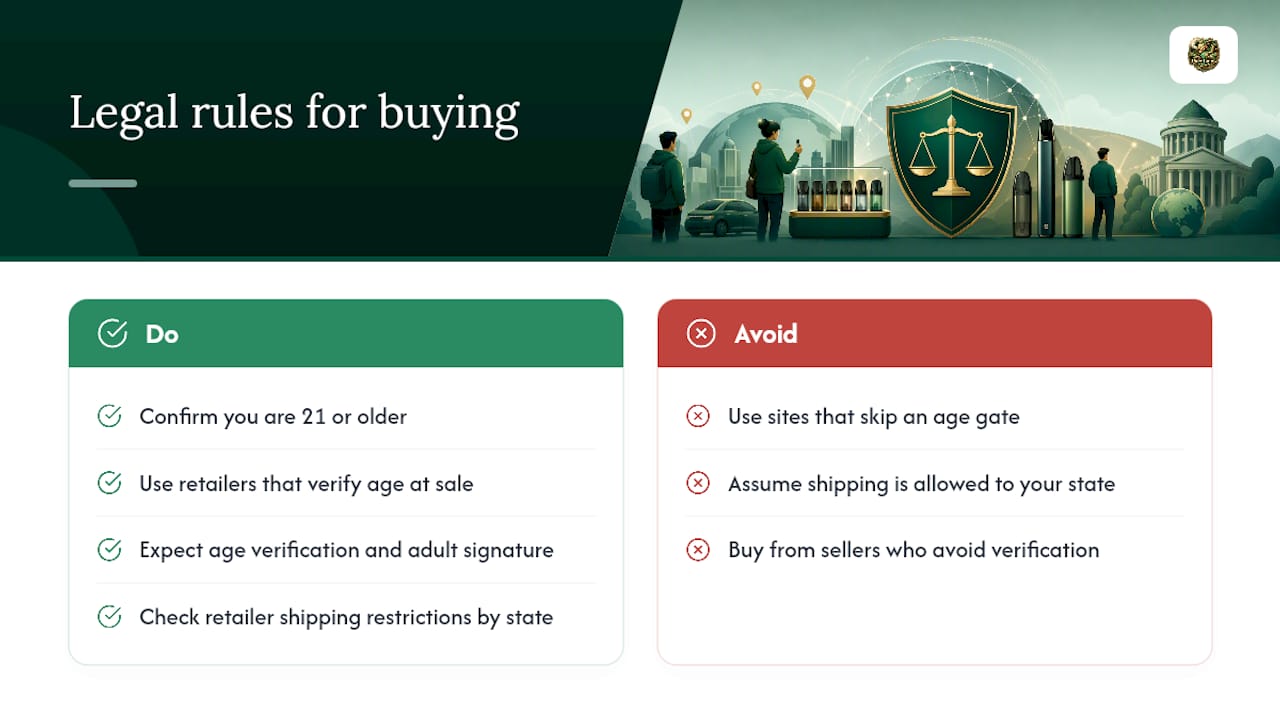
Federal law sets the purchase age for any vaping product, including every JUUL alternative discussed here, at 21 and older across the United States, and retailers are required to verify age at the point of sale, whether that’s in person or online. Some states and municipalities layer on additional restrictions, including flavor limits or local licensing requirements for retailers, so what’s available on a shelf in one state may differ from another.
Buying online doesn’t bypass these rules. Reputable U.S. retailers verify age electronically before an order ships and often require an adult signature at delivery, matching the same standard applied to alcohol shipments. If a website lets you check out without any age gate, that’s a signal to shop elsewhere, not a convenience worth using.
Shipping restrictions also apply. Some states and carriers restrict vaping product shipments entirely, and federal rules under the PACT Act require reporting and tax compliance for interstate vapor product sales. A legitimate retailer will tell you upfront if your state has restrictions rather than letting you find out after checkout.
None of this should feel like a hurdle if you’re a verified adult buyer. It exists specifically to keep these products out of the hands of minors, and a retailer that takes it seriously is generally a retailer that takes product authenticity seriously too.
Where Should You Buy a JUUL Alternative?
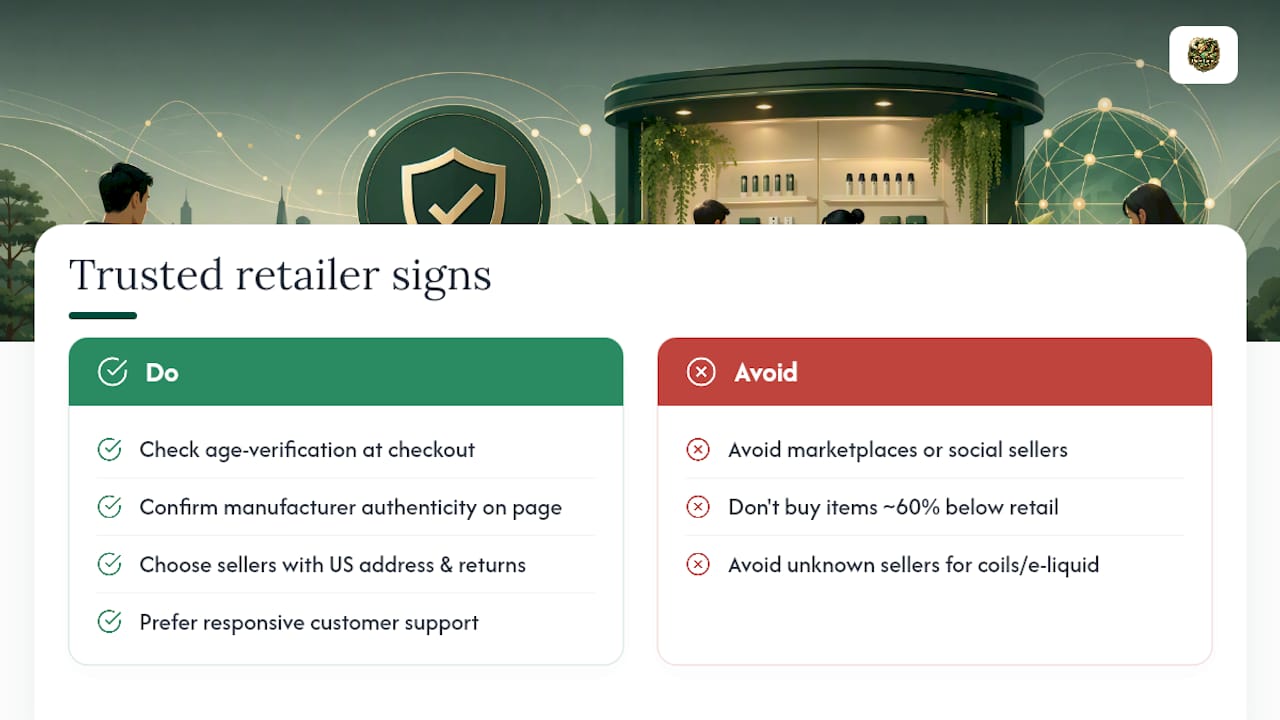
Dealer reliability matters as much as the device itself. A great pod system loaded with counterfeit coils or expired e-liquid performs worse than a mediocre device bought fresh from an authorized source. A few signals separate a trustworthy retailer from a risky one.
Look for retailers that display clear age-verification steps at checkout, list manufacturer authenticity information on product pages, and offer support if you’re unsure whether a device is compatible with the pods or coils you already own. Physical U.S. shipping addresses, responsive customer service, and transparent return policies are all basic signs a retailer stands behind what it sells.
Avoid marketplaces and social media sellers offering prices dramatically below retail. Counterfeit vape hardware is a real problem, and a device priced 60% under everywhere else is rarely a bargain; it’s usually a knockoff coil or an expired batch of e-liquid. Buying accessories like replacement coils or bottled e-liquid directly from a specialty retailer rather than a general marketplace listing reduces that risk considerably.
It’s also worth noting that switching behavior itself is common and not something to overthink. A look at how smokers explore multiple brands rather than staying loyal shows that brand loyalty in nicotine products has always been more flexible than marketing suggests, and the same pattern holds true for vapers moving away from JUUL.
How Do Flavor and Brand Variety Compare Across Alternatives?
JUUL’s pod lineup has always been limited by design: a handful of flavors, one nicotine format, and no room to experiment. Every alternative category beats that on variety, just by different margins.
Closed-pod competitors typically offer somewhat more flavor variety than JUUL did, but you’re still restricted to whatever that one brand manufactures. Disposables blow the doors open on flavor, with dessert, fruit, menthol, and beverage-inspired profiles across dozens of brands, though each specific device locks you into one flavor until it’s empty.
Refillable systems win this comparison outright. Bottled e-liquid comes from hundreds of manufacturers, in nicotine strengths from 0mg up through higher salt-based concentrations, and in flavor categories that closed systems simply don’t offer. Lines like Big Bottle Co. or The Cloud Chemist run entire dessert-focused portfolios, while others specialize in fruit blends or menthol. If you get bored of one flavor, you buy a different bottle. You don’t buy a different device.
That flexibility is exactly why refillable systems get recommended so often in current buyer guides: low running cost paired with essentially unlimited flavor choice is a combination closed systems can’t replicate.
Why I Recommend Making the Switch to Refillable Pods
Most people overthink the decision to leave JUUL. The honest case for refillable pods isn’t complicated: you get more control over nicotine strength, dramatically more flavor options, and a lower cost per week once you’re past the first device purchase. That’s the whole pitch.
What surprises most new switchers is the timeline. The first few days feel different: a refillable pod hits a little differently than a sealed cartridge, and dialing in the right e-liquid takes some trial and error. By week two, most people have found a flavor and nicotine strength they prefer over their old JUUL pods. By week four, the habit of filling a pod instead of grabbing a new cartridge feels completely normal.
This guidance is written for adults 21 and older who already vape or are transitioning from another nicotine product, not as an invitation for anyone who doesn’t currently use nicotine to start.
— James
Ready to Switch? Here’s Where to Start
The categories above cover the full range of what’s out there, but you don’t need to research a dozen brands to find your fit. VapeCiga stocks devices across every one of them, from pocket-sized disposables to high-capacity mods, and every product page lists the exact coil, pod, or e-liquid compatibility you need before you buy.
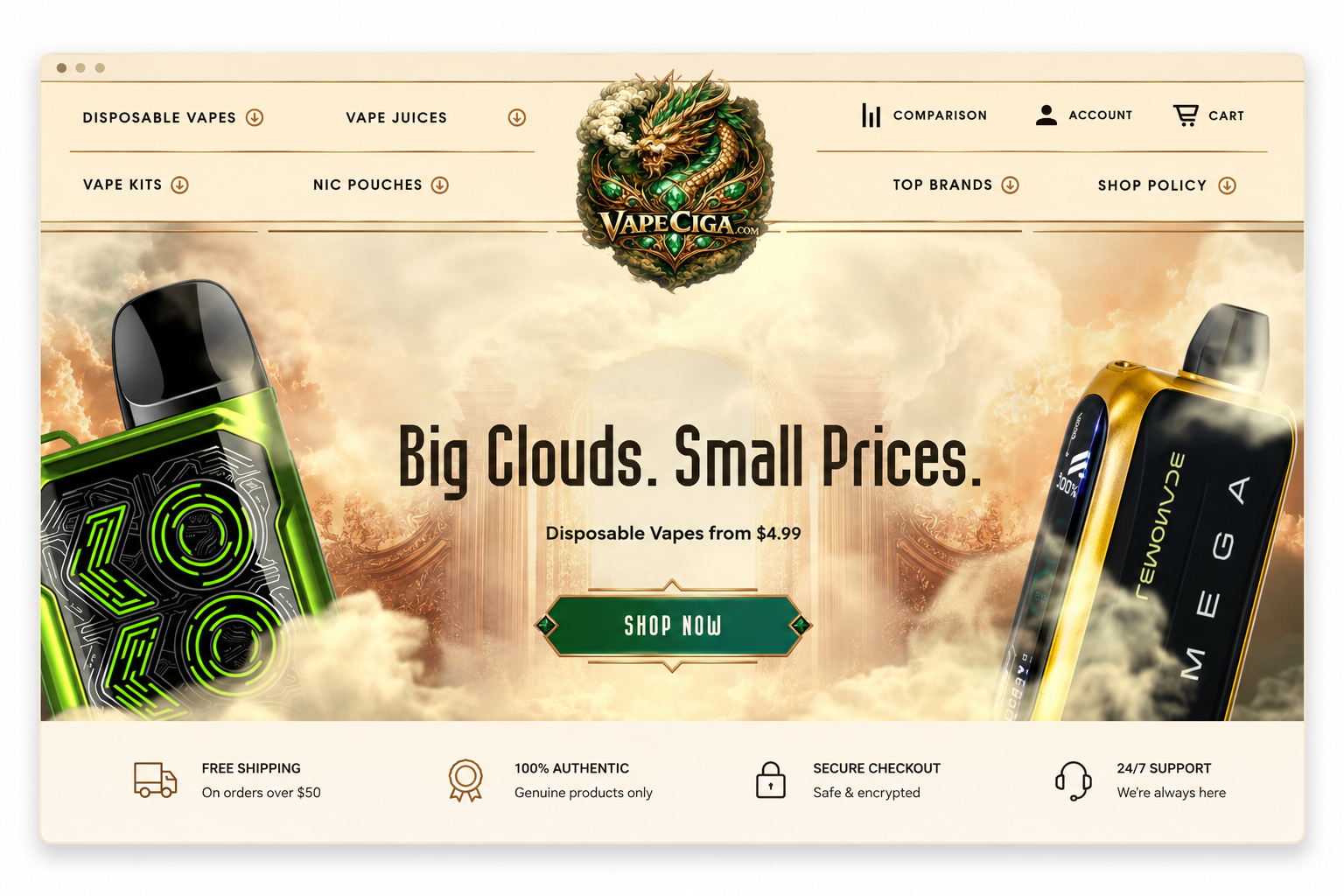
If you’re a light user or traveler, start with the Packspod 5000 or the 2027 Date 7 2000 for something close to your old JUUL’s footprint. Heavy daily users should look at the EBCREATE BC40000 PRO for the runtime and lower per-puff cost that comes with higher capacity. Flavor-first switchers get the most value pairing a refillable device like the Vaporesso GTX One with a large bottle of Vapetasia e-liquid.
Not sure which pod or coil fits the device you already own? VapeCiga’s support team answers compatibility questions before you order, so you’re not guessing at checkout. Browse the current lineup, confirm your coil and pod match, and place your order with age verification handled at checkout the way it should be.
FAQ
What Vape Is Most Similar to JUUL?
Compact rechargeable pod systems and slim disposables that use nicotine salt e-liquid feel closest to a JUUL, since they replicate the tight draw and quick nicotine delivery JUUL popularized. A device like the Packspod 5000 matches that form factor closely while adding refill flexibility.
Why Doesn’t Anyone Use JUUL Much Anymore?
Regulatory restrictions on flavored pods and rising competition from refillable and disposable formats with far more flavor variety and lower running costs pushed many users toward other devices. Cost is a major factor: refillable pod systems cut ongoing costs substantially compared to closed systems like JUUL, according to Vaping360.
How Many Cigarettes Does One JUUL Pod Equal?
JUUL has marketed a single pod as roughly equivalent to a pack of cigarettes in nicotine content, though actual nicotine absorption varies by individual vaping habits and inhale technique. This figure comes from JUUL’s own product marketing rather than an independent measurement standard.
What Is the Best Replacement for Vaping Nicotine Products?
For adults who already vape and want a JUUL alternative, refillable pod systems offer the strongest combination of lower cost and flavor variety for most usage patterns. If you’re looking to reduce nicotine intake entirely, a licensed healthcare provider can advise on FDA-approved nicotine replacement options, which fall outside what a vape retailer can recommend.