


Menthol is a sensation. Mint is a flavor. That single distinction explains why two vapers can describe completely different experiences from products that look nearly identical on the shelf.
Menthol activates the TRPM8 cold receptor in your mouth and throat, producing a sharp, medicinal chill that you feel rather than taste. Mint, by contrast, is a flavor category built around peppermint, spearmint, or wintergreen extracts. You taste the herb first; any cooling is secondary and usually softer. Synthetic “ice” agents like WS-23 sit in a third lane: pure cold, no herbal character at all.
Quick pick guide:
- Choose menthol if you want a cigarette-like throat hit, strong cooling, and a medicinal edge.
- Choose mint if you want herbal sweetness (peppermint brightness or spearmint’s milder, candy-like note) with light chill.
- Choose synthetic ice (WS-23/WS-3) if you want intense, clean cold paired with fruit or dessert flavors and no minty aroma.
Table of Contents
- What “mint” actually means on a vape label
- How cooling actually works: TRPM8 and why you feel it, not taste it
- Synthetic ice agents: WS-3, WS-23, and why they are everywhere now
- How mint and menthol behave across different devices and e-liquid types
- How to choose between mint, menthol, and ice
- Key Takeaways
- Why the menthol vs mint distinction matters more than most guides admit
- Try menthol, mint, and ice profiles at VapeCiga
- Useful sources
What “mint” actually means on a vape label
Mint on a vape label is a flavor family, not a single ingredient. The three most common members are peppermint, spearmint, and wintergreen, and each tastes noticeably different. Peppermint is bright and slightly sharp. Spearmint is sweeter and softer, closer to chewing gum. Wintergreen carries a faint medicinal note that sits between the two.
Manufacturers build mint e-liquids from natural extracts, nature-identical flavorings, or a blend of both. The herbal character comes first; cooling is a secondary effect. That said, many mint formulas quietly include a small amount of menthol to sharpen the chill, which is why mint and menthol labels often blur in practice.
Mint pairs naturally with fruit (strawberry mint, watermelon mint), tobacco, and even dessert bases. “Cool mint” on a label almost always signals that menthol or a synthetic cooling agent has been added to a spearmint or peppermint base.
How cooling actually works: TRPM8 and why you feel it, not taste it
Cooling from menthol and its synthetic cousins is a trigeminal sensation, not a gustatory one. The trigeminal nerve runs through your mouth, throat, and nasal passages and responds to temperature, touch, and certain chemicals. Menthol fools it into firing as if cold air just hit your throat.
The receptor responsible is TRPM8, a temperature-sensitive ion channel that normally activates below about 26°C. L-menthol binds to TRPM8 at concentrations as low as 0.8–1.8 ppm and produces a cooling sensation without any actual temperature drop. Mint extracts can stimulate TRPM8 too, but typically at higher concentrations and with less intensity.
The table below shows how the main cooling sources compare in onset, intensity, and character:
| Cooling source | Onset | Relative intensity | Aroma character |
|---|---|---|---|
| L-menthol | Fast | Moderate to strong | Minty, medicinal |
| Peppermint extract | Moderate | Mild to moderate | Herbal, bright |
| Spearmint extract | Moderate | Mild | Sweet, candy-like |
| WS-3 | Fast | Strong | Neutral to faintly minty |
| WS-23 | Fast | Strong to very strong | Neutral, no mint odor |
Research compiled across many cooling agents shows up to a 2,000-fold difference in reported perceived cooling intensity between the weakest and strongest agents tested. That range explains why one “ice” disposable can feel overwhelming while a mint pod feels barely cool.
Synthetic ice agents: WS-3, WS-23, and why they are everywhere now
WS-23 (N,2,3-Trimethyl-2-isopropylbutanamide) and WS-3 are the two synthetic cooling agents you will encounter most often in vaping products. Both activate TRPM8 similarly to menthol, but neither carries menthol’s herbal aroma. WS-23 in particular is stable, intensely cold, and flavor-neutral, which makes it the go-to choice when a formulator wants to add chill to a mango, peach, or lychee base without muddying the fruit character.
The regulatory backstory matters here. Research published in PLOS One found that some California-marketed “non-menthol” cigarettes contained WS-3, which produced TRPM8 activation comparable to menthol. Manufacturers used synthetic coolants to preserve the cooling appeal of menthol products after state-level bans, without technically including menthol. The same substitution pattern has appeared in the vaping category.
What this means when you read a label:
- “Ice,” “frost,” “glacier,” or “arctic” on a disposable almost always means WS-23 or WS-3, not menthol.
- “Menthol” or “L-menthol” in the flavor description means the actual compound, with its herbal aroma.
- “Cool mint” usually means a mint base with added menthol or a synthetic agent.
- A product labeled “non-menthol” can still deliver strong cooling if synthetic agents are present.
Fruit-ice hybrids using WS-23 have become the dominant “ice” category in disposables. If you want cold without any minty taste, that is the profile to look for.
How mint and menthol behave across different devices and e-liquid types
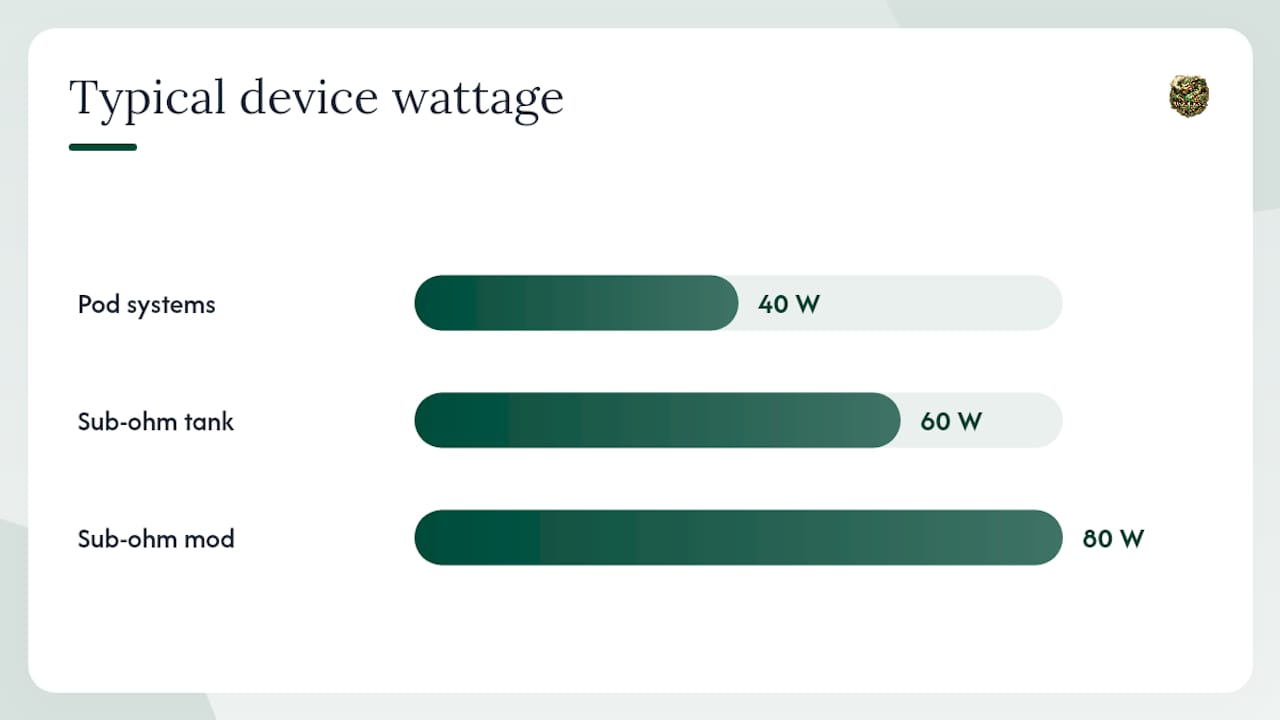
The same flavor can feel completely different depending on your hardware. A menthol salt-nic e-liquid in a low-wattage pod system hits sharper and colder than the same formula in a sub-ohm tank running at 60W. Higher wattage dilutes the cooling sensation across a larger vapor cloud, while a tight, restricted draw concentrates it.
Device-by-device breakdown:
- Disposables (like the Packspod 5000 or 2027 Date 7 2000): Almost always use nicotine salts and synthetic cooling agents. Expect intense, shelf-stable chill. Ideal for vapers who want maximum cold with minimal setup.
- Pod systems with salt-nic e-liquids (like the Vaporesso GTX One 40W): Low wattage amplifies throat hit and cooling. Menthol salt-nic feels noticeably sharper here than in a sub-ohm setup.
- Sub-ohm mods (like the GeekVape T200 Aegis Touch or Vaporesso Swag II 80W): Freebase nicotine menthol or mint e-liquids work best here. The larger vapor volume softens the cooling edge and opens up the herbal flavor notes in mint blends.
- High-capacity devices (like the EBCREATE BC40000 PRO): Designed for extended use; the consistent output keeps flavor and cooling stable across thousands of puffs.
Pro Tip: New vapers should start with a salt-nic menthol or mint disposable before committing to a bottle of e-liquid. The fixed output removes one variable and lets you judge the flavor profile on its own terms.
How to choose between mint, menthol, and ice
The decision comes down to three questions: Do you want herbal flavor or pure cold? Do you want a strong throat hit or a smooth one? Are you pairing the cooling with fruit, tobacco, or nothing else?
Rule-based guide:
- Pick mint when you want flavor complexity, a sweeter or greener herbal note, and mild cooling. Best with fruit pairings or as a standalone refresher on a sub-ohm device.
- Pick menthol when you want the cigarette-like cooling and throat hit, a medicinal edge, and a familiar profile. Best for smokers transitioning to vaping or experienced vapers who prefer sensation over flavor.
- Pick synthetic ice (WS-23/WS-3) when you want intense cold with a fruit or dessert base and no minty aroma. Best in disposables and salt-nic pods.
Before you buy, check the label for:
- “L-menthol” or “menthol” = compound-based, herbal aroma, strong throat hit.
- “WS-23,” “WS-3,” or “cooling agent” = synthetic, neutral aroma, potentially very strong cold.
- “Cool mint” = mint base with added cooling, usually moderate intensity.
Pro Tip: If you find menthol too harsh but want more cold than plain mint delivers, try a fruit-ice disposable with WS-23. The fruit sweetness softens the cold edge and makes the sensation feel less clinical.
Nicotine level also affects perceived cooling. Higher nicotine concentrations (25–50mg salt-nic) amplify throat hit, which can make menthol feel harsher than expected. Dropping to a lower strength often makes the cooling more pleasant without losing the character.
Key Takeaways
Menthol delivers a receptor-triggered cooling sensation via TRPM8, while mint is a flavor category with herbal taste and softer chill — and synthetic agents like WS-23 now dominate the “ice” segment of disposables.
| Point | Details |
|---|---|
| Menthol vs mint core difference | Menthol triggers cold receptors for a sharp, medicinal chill; mint delivers herbal flavor with mild cooling. |
| Synthetic ice agents | WS-23 and WS-3 produce intense, neutral cold and now appear in most “ice” disposables as menthol alternatives. |
| Device context matters | Salt-nic pods and disposables amplify cooling; sub-ohm mods soften it and open up herbal flavor notes. |
| Label reading tip | “Ice,” “frost,” or “glacier” signals synthetic cooling agents, not menthol; check for “L-menthol” for the real compound. |
| VapeCiga selection | VapeCiga carries menthol salt-nics, mint e-liquids, and synthetic-ice disposables for adults 21+ across the U.S. |
Why the menthol vs mint distinction matters more than most guides admit
The vaping category has quietly become a case study in sensory engineering. Most flavor guides treat menthol and mint as close cousins, but the gap between them is wider than the labels suggest. Menthol is a pharmaceutical-grade compound with a documented receptor mechanism. Mint is a culinary ingredient. Conflating them leads to real buyer frustration: someone who wants the throat-hit familiarity of a menthol cigarette picks a spearmint pod and wonders why it feels flat.
The synthetic cooling agent story adds another layer. The research on WS-3 in “non-menthol” cigarettes is a reminder that “menthol-free” does not mean “cooling-free.” For vapers, that cuts both ways. You can get intense cold from a product that contains no menthol at all, and you can get a product labeled “menthol” that tastes more herbal than cold depending on the concentration. Reading ingredient lists rather than marketing copy is the only reliable way to know what you are actually buying.
New vapers tend to underestimate how much device type shapes the experience. A menthol salt-nic at 50mg in a tight pod system is a very different sensation than the same compound at 3mg in a sub-ohm tank. The compound does not change; the delivery does. That is worth knowing before spending money on a bottle of e-liquid that performs nothing like the disposable that sold you on the flavor.
Try menthol, mint, and ice profiles at VapeCiga
VapeCiga stocks the full range of cooling profiles for adult vapers 21 and over across the U.S., from salt-nic mint e-liquids to menthol-forward disposables and synthetic-ice options that pair clean cold with fruit flavors.
If you want to compare profiles without committing to a full bottle, disposables are the practical starting point. The Packspod 5000 and 2027 Date 7 2000 both offer menthol and ice variants at a low per-unit cost, so you can test the sensation difference directly. For vapers ready to pair a cooling e-liquid with a capable device, the EBCREATE BC40000 PRO and GeekVape T200 Aegis Touch handle both salt-nic and freebase formulas cleanly.
For sub-ohm setups where you want menthol’s herbal complexity to open up, the Vaporesso Swag II 80W and Vaporesso GTX One 40W are solid hardware choices available at VapeCiga. Browse the full menthol and mint catalog at vapeciga.com and use the flavor filters to narrow by cooling intensity and nicotine type. For adults 21+ only. Vaping products contain nicotine, which is addictive.
This article is for general informational purposes only and does not constitute medical or legal advice. Consult a qualified professional and verify current regulations for your state.
Useful sources
- The tip of the iceberg: Profiling cooling agents using computational approaches to inform tobacco regulatory science | PLOS One
- Synthetic Cooling Agent and Candy Flavors in California-marketed “non-Menthol” Cigarettes
- Best Menthol & Ice Vape Flavors (2026) | 25+ Tested
- What’s the Difference Between Mint, Menthol, and Unflavored Vape Flavors? — VapeNice
- The Advantages of N,2,3-Trimethyl-2-isopropylbutanamide (WS-23) as a Menthol Alternative
- p65warnings.ca.gov