


Yes, vape juice expires. Manufacturers print best-by dates for a reason: nicotine potency fades, flavor compounds break down, and the overall experience degrades over time. The practical rule is simple. Check the printed date, look at the color, and smell the liquid before you vape it.
Three things to check right now:
- Printed date: Most sealed e-liquid lasts 1–2 years from manufacture. If you are past that window, proceed carefully.
- Color: Fresh liquid ranges from clear to pale gold. Dark amber or brown signals oxidation.
- Smell: A sharp, peppery, or chemical odor means the nicotine or flavor compounds have degraded. Toss it.
If the liquid looks or smells wrong, replace it. Vaping degraded juice won’t deliver the experience you paid for, and there are real reasons to avoid heavily deteriorated liquid.
Key Takeaways
Sealed e-liquid lasts 1–2 years; once opened, use it within months, and toss any liquid that looks dark brown or smells chemical before it goes in your tank.
| Point | Details |
|---|---|
| Sealed shelf life | Most e-liquid lasts 1–2 years sealed; zero-nic shortfills can reach the upper end of that range. |
| Opened window | Freebase and nic salt liquids are best used within 3–6 months of opening. |
| Three immediate checks | Inspect color (dark brown = toss), smell (peppery or chemical = toss), and printed date before vaping. |
| Safe storage | Store cool, dark, and sealed; refrigerate bottles you won’t finish within a month. |
| VapeCiga replacement | Fresh in-date disposables and e-liquids, including Juice Head 5K, Hyve X Mucho JuiceBox 5000, and Juice Head 30K, are available at VapeCiga with fast U.S. shipping. |
Table of Contents
- Does vape juice expire? Shelf life by type
- What actually makes e-liquid go bad?
- How nicotine changes as e-liquid ages
- How to tell if your e-liquid or disposable has gone bad
- Can you vape expired e-liquid? Safety considerations
- How opening a bottle changes the expiration clock
- How to store vape juice to maximize shelf life
- How to safely dispose of expired e-liquid and devices
- What the research actually shows
- The part most vapers get wrong about expiration
- Fresh e-liquid and disposables at VapeCiga
- Sources
Does vape juice expire? Shelf life by type
Not all e-liquid ages at the same rate. Format, nicotine type, and whether the bottle has been opened all shift the timeline.
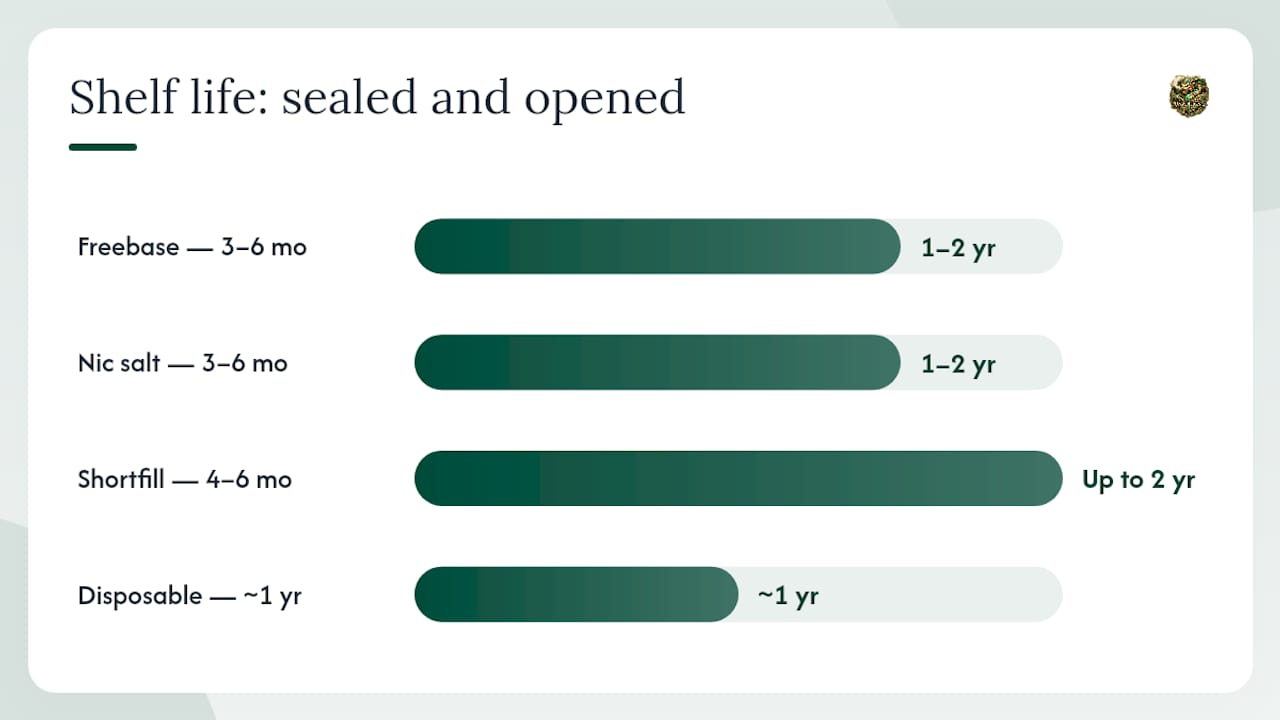
- Opened bottles: Once you break the seal, oxygen enters every time you refill. Freebase nicotine liquids are generally best used within 3–6 months of opening; nic salts tend to hold up slightly longer but still degrade.
- Nic salt e-liquids: The benzoic acid in salt nic formulas offers some stability, but the nicotine itself still oxidizes. Expect a similar opened window to freebase, with flavor degradation often showing up first.
- Disposable vapes: Manufacturer guidance places the usable window at roughly one year from manufacture for most disposables. The battery self-discharges over time regardless of whether you use the device, so a disposable sitting in a drawer for 18 months may have a dead cell before the liquid is gone.
Reading the date on the label: Most packaging prints a DOM (date of manufacture) or MFG date rather than a true expiration date. Add 1–2 years to that date to estimate the usable window. A “best by” date, when printed, is the more direct guide.
| Format | Sealed shelf life | Opened window |
|---|---|---|
| Freebase nic e-liquid | 1–2 years | 3–6 months |
| Nic salt e-liquid | 1–2 years | 3–6 months |
| nicotine-free shortfill | Up to 2 years | 4–6 months |
| Disposable vape | ~1 year (device) | N/A (sealed unit) |
What actually makes e-liquid go bad?
Degradation isn’t random. Four specific forces drive it, and understanding them tells you exactly why storage choices matter.
Oxidation is the primary culprit. The moment air contacts nicotine, a chemical reaction begins that converts nicotine into cotinine and other byproducts. The visual sign is darkening: a liquid that starts pale yellow and slowly turns amber or brown is oxidizing. Every time you open a bottle, you accelerate that clock.
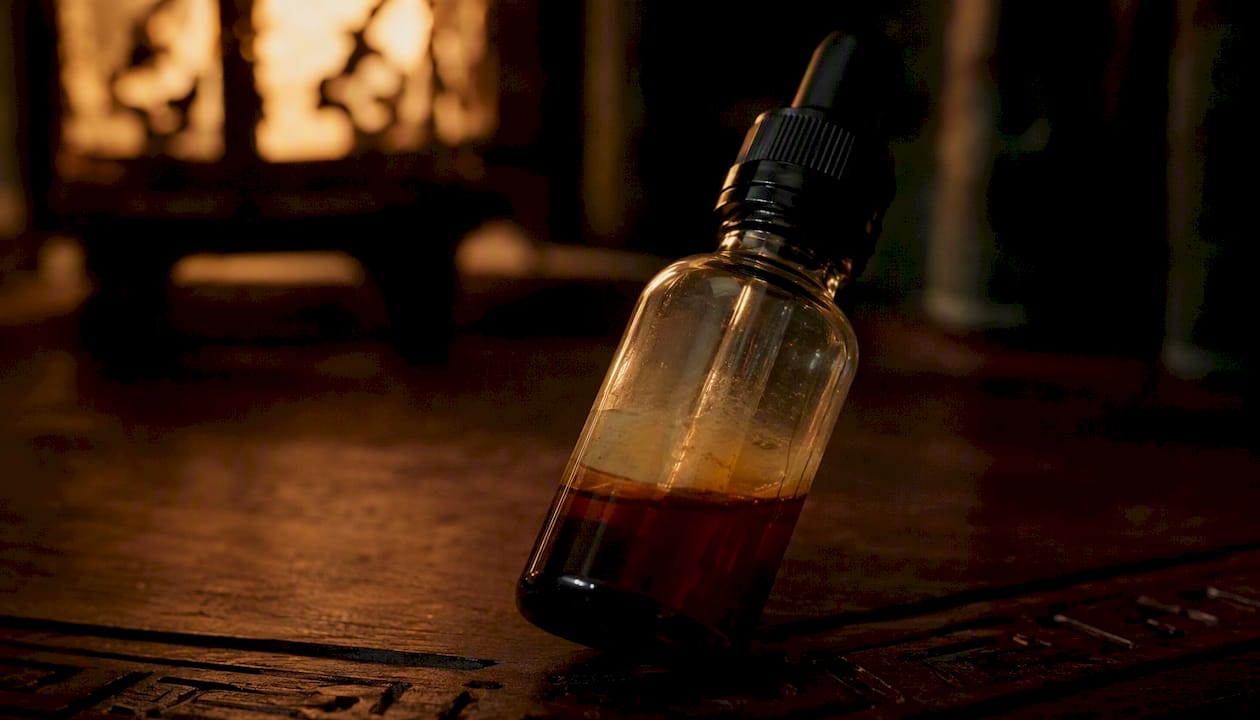
Heat and light speed up the breakdown of flavor compounds. Fruit flavors, which rely on volatile esters, lose their character noticeably faster than tobacco or dessert profiles. A mango liquid left on a sunny windowsill for two weeks can taste flat and muted. Direct UV exposure degrades both nicotine and flavor molecules at a molecular level, which is why dark glass bottles are a better long-term container than clear plastic.
PG and VG are relatively stable at room temperature. The concern arises when they’re vaporized. Peer-reviewed research shows that heating PG and VG under certain device and temperature conditions can produce aldehydes and other carbonyls, with the risk increasing when liquid has already degraded or when coils run hot. This is a device-and-condition-dependent finding, not a blanket condemnation of PG/VG.
Flavor volatiles are the most fragile component. Complex flavor blends with citrus, tropical fruit, or menthol notes tend to fade faster than simple tobacco or vanilla profiles. If your liquid smells fine but tastes flat, the flavor compounds have likely evaporated or broken down while the nicotine and base are still intact.
Pro Tip: Store e-liquid in a cool, dark drawer or cabinet, not on a shelf near a window or on top of a warm device. That single habit extends the usable life of an opened bottle by weeks.
How nicotine changes as e-liquid ages
Nicotine is the most chemically reactive ingredient in e-liquid, and it’s the first thing you’ll notice changing.
- Reduced potency: Oxidized nicotine delivers less of a hit. If you find yourself vaping more than usual to feel satisfied, degraded nicotine is a likely cause.
- Altered throat hit: Fresh freebase nicotine produces a clean, sharp throat hit. As it oxidizes, that sensation becomes either weaker or harsher and more irritating, depending on the byproducts formed.
- Bitter or peppery notes: Oxidized nicotine has a distinctly bitter, almost peppery taste. If your liquid suddenly tastes off even though the flavor was fine before, the nicotine has turned.
- Freebase vs. nic salts: Freebase nicotine oxidizes more readily than salt nicotine because the free-base form is more chemically reactive. Nic salts, stabilized with benzoic acid, tend to hold their character slightly longer, but neither format is immune.
- Higher nicotine degrades faster: A 50mg nic salt has more reactive material to oxidize than a 3mg freebase liquid. Higher-strength liquids stored poorly will show degradation signs sooner.
For readers thinking about nicotine alternatives while their stock ages, the best nicotine pouches guide covers options worth knowing about.
How to tell if your e-liquid or disposable has gone bad
Work through these checks in order. Stop at the first red flag.
Visual checks:
- Pour a small amount into a white dish or hold the bottle up to light. Fresh liquid is clear to pale yellow. Light amber is usually fine. Dark brown or near-black means heavy oxidation.
- Look for cloudiness or separation. Some separation in a VG-heavy liquid can be fixed by shaking. If it won’t re-mix after 30 seconds of shaking, the formula has broken down.
- For disposables, look through any transparent window on the device. Visible darkening of the liquid inside is the same signal as in a bottle.
Smell test:
Hold the open bottle a few inches from your nose and inhale gently. Fresh e-liquid smells like its flavor profile. A sharp chemical smell, a peppery or ammonia-like note, or a rancid sweetness all indicate degradation. Don’t take a deep sniff directly from the bottle.
Taste and performance checks:
- A harsh, scratchy hit that wasn’t there before suggests degraded nicotine or flavor compounds.
- Flat, muted flavor with no throat hit usually means the flavor volatiles have broken down.
- Gurgling, weak vapor, or a burnt note from a disposable can indicate either degraded liquid or a failing coil/battery.
Decision checklist:
- Dark brown color + off smell = toss immediately, no test puff needed.
- Slightly darker than usual + normal smell = take one small test puff. If it tastes harsh or bitter, stop.
- Normal color + faint off smell = likely early oxidation; use soon or replace.
- Disposable with weak vapor + no charge improvement = battery failure; dispose of the device properly.
Can you vape expired e-liquid? Safety considerations
Mildly expired e-liquid is unlikely to cause acute poisoning, but that’s a low bar. The real concern is what repeated exposure to degraded compounds might mean over time.
Studies document that e-liquid constituents and their emissions vary by formulation, and some degradation products are associated with respiratory irritation in laboratory settings. The findings depend heavily on device settings, coil temperature, and the specific formulation. A single puff from a slightly-past-date liquid is not the same risk as vaping heavily oxidized liquid daily on a high-wattage device.
The aldehyde question is the most cited concern. Heating PG and VG under certain conditions produces aldehydes and carbonyls, and that risk increases when the base liquid has already degraded. Device temperature and coil condition are the key variables. A degraded liquid on a hot coil is a worse combination than either factor alone.
The WHO’s framework for monitoring inhaled toxicants supports a precautionary approach: avoid prolonged use of heavily degraded materials when the risk profile is uncertain. That’s a reasonable standard to apply here.
On the regulatory side, industry sources report that the FDA added PG and VG to its Harmful and Potentially Harmful Constituents (HPHC) list. Treat that as a policy signal rather than proof of acute harm from normal use, but it does sharpen the case for replacing heavily degraded liquid rather than vaping through it.
Practical safety rules:
- Avoid vaping any liquid that smells chemical, peppery, or rancid.
- Don’t vape liquid that has turned dark brown or black.
- If a liquid causes unusual throat irritation or coughing, stop using it.
- Replace rather than risk chronic exposure to degraded compounds.
How opening a bottle changes the expiration clock
A sealed bottle and an opened one are fundamentally different situations. The seal is what keeps oxygen out, and oxygen is what drives oxidation.
Once you open a bottle, every refill introduces fresh air. The more frequently you open it, the faster the nicotine and flavor compounds degrade. A bottle you open twice a day ages faster than one you open every few days, even if both are stored in the same conditions.
Shortfills and nic shots: Adding a nicotine shot to a zero-mg shortfill introduces reactive nicotine into a previously stable base. The clock starts the moment you mix them. Use mixed shortfills within 3–4 months for best results, and store them the same way you’d store any opened nicotine liquid.
Disposables: The liquid inside a disposable is sealed at manufacture, so it ages more slowly than an opened bottle. The separate concern is the battery. Lithium-ion cells self-discharge at roughly 1–2% per month when stored. A disposable sitting unused for 12–18 months may have a battery too depleted to fire the coil even if the liquid is still acceptable. Disposable vapes stored well can last 1–2 years, but performance and flavor decline before they become unusable. Rechargeable disposables have an advantage here since you can top up the battery, but the liquid still ages.
Practical habits for opened bottles:
- Squeeze out excess air before capping, or transfer to a smaller bottle.
- Keep the cap tight between uses.
- Write the date you opened the bottle on the label.
- Store in the fridge if you won’t finish it within a month.
For a deeper look at opened e-liquid longevity, the opened e-liquid shelf life guide covers the technical side in more detail.
How to store vape juice to maximize shelf life
Good storage costs nothing and can add months to a bottle’s useful life. The priorities are straightforward.
Primary rules:
- Cool: Room temperature or below. Avoid anywhere that gets warm, including near electronics, in a car, or on a windowsill.
- Dark: UV light degrades nicotine and flavor compounds directly. A drawer, cabinet, or opaque bag is better than a shelf.
- Sealed: Tighten caps fully. For long-term storage, consider wrapping the cap in plastic wrap to reduce air exchange.
Bottle handling:
- Keep e-liquid in its original childproof packaging when possible. The amber or dark-tinted bottles many brands use aren’t just aesthetic; they block UV.
- Minimize the number of times you open a bottle in a single session.
- If you decant into a tank, only pour what you’ll use that day.
Refrigeration and freezing: Refrigeration slows oxidation and is a reasonable option for bottles you won’t use for several weeks. Freezing can extend life further, but PG-heavy liquids may thicken and require time to return to room temperature before use. VG-heavy liquids handle freezing better. Always let frozen liquid warm to room temperature before vaping.
Device and disposable storage: Keep disposables in their original sealed packaging until you’re ready to use them. Avoid storing them in a hot car or direct sunlight. For rechargeable disposables, a partial charge every few months prevents battery degradation during long storage.
Pro Tip: Label every bottle with the date you opened it. A simple piece of masking tape and a marker takes five seconds and removes all guesswork about whether a bottle is still within its opened window.
How to safely dispose of expired e-liquid and devices
Expired e-liquid and disposable vapes aren’t regular trash. Nicotine is toxic to children and pets even in small amounts, and lithium-ion batteries are a fire hazard in landfills.
Liquid disposal:
- Small amounts of diluted e-liquid (a few milliliters) can be absorbed into a material like cat litter or coffee grounds and disposed of in sealed household trash.
- Do not pour large volumes down the drain. Nicotine is an environmental contaminant.
- For larger quantities, treat it as household hazardous waste and take it to a local collection event.
Battery and device disposal:
- Lithium-ion batteries in disposable vapes require special handling. The EPA provides guidance on safe disposal of e-cigarettes and their batteries, recommending community e-waste programs and battery drop-off locations rather than household trash.
- Many hardware stores, electronics retailers, and municipal recycling centers accept lithium-ion batteries. Call2Recycle maintains a drop-off locator at call2recycle.org.
- Do not puncture, crush, or incinerate batteries before disposal.
Packaging: Remove any personal information from packaging before recycling. Check your local recycling rules for plastic bottles and cardboard.
What the research actually shows
The science on e-liquid degradation is real but conditional. Here’s what the evidence actually supports and where the gaps are.
What studies show: Peer-reviewed research confirms that heating PG and VG can produce aldehydes and carbonyls under specific device and temperature conditions. The key word is “specific.” Low-wattage devices with fresh coils produce far fewer of these compounds than high-wattage devices with degraded liquid. Formulation and device settings both influence which degradation products appear and at what concentrations, and some are associated with respiratory irritation in lab studies.
What public health bodies say: WHO’s monitoring framework for inhaled toxicants supports caution around prolonged exposure to degraded materials. This isn’t a specific ruling on e-liquid, but the precautionary principle applies.
Manufacturer and retailer consensus: Manufacturer guidance and retailer testing converge on the same practical advice: sealed e-liquid is best used within 1–2 years, storage conditions matter more than small label differences, and opened liquid should be used within months.
Where the evidence is weak: Flavor chemistry variability is the biggest unknown. Hundreds of flavor compounds are used across the industry, and their individual degradation profiles and thermal byproducts are not uniformly studied. The reported addition of PG and VG to the FDA’s HPHC list is a regulatory signal worth noting, but it doesn’t translate directly to a specific risk threshold for consumers. For readers newer to e-liquid ingredients, the vape liquid guide for beginners explains the base ingredients clearly.
The part most vapers get wrong about expiration
Most vapers treat expiration dates the way people treat the “best by” date on a can of soup: a vague suggestion, not a real deadline. That’s mostly fine for soup. It’s a worse habit with nicotine liquid.
The thing people underestimate is how gradual the degradation is. You won’t notice a dramatic change from one week to the next. What happens is a slow drift: the throat hit gets slightly weaker, the flavor gets slightly flatter, and you compensate by vaping more. By the time the liquid tastes genuinely bad, you’ve been vaping degraded material for weeks. The sensory checks in this article exist precisely to catch that drift before it becomes a habit.
There’s also a cost-benefit calculation worth making honestly. A bottle of e-liquid that’s 18 months old and slightly darkened isn’t worth the uncertainty. Fresh liquid is inexpensive enough that the right call is almost always to replace it. The same logic applies to disposables: a device that’s been sitting in a drawer for over a year has probably lost enough battery capacity and flavor quality that it’s not delivering what you bought.
One more thing worth saying: where you buy matters. A bottle that sat in a warm warehouse for six months before it reached you has already burned through part of its shelf life. Buying from a vendor with reliable stock rotation means the date on the label is actually meaningful.
Fresh e-liquid and disposables at VapeCiga
When a bottle is past its prime, the fix is simple: replace it with something fresh.
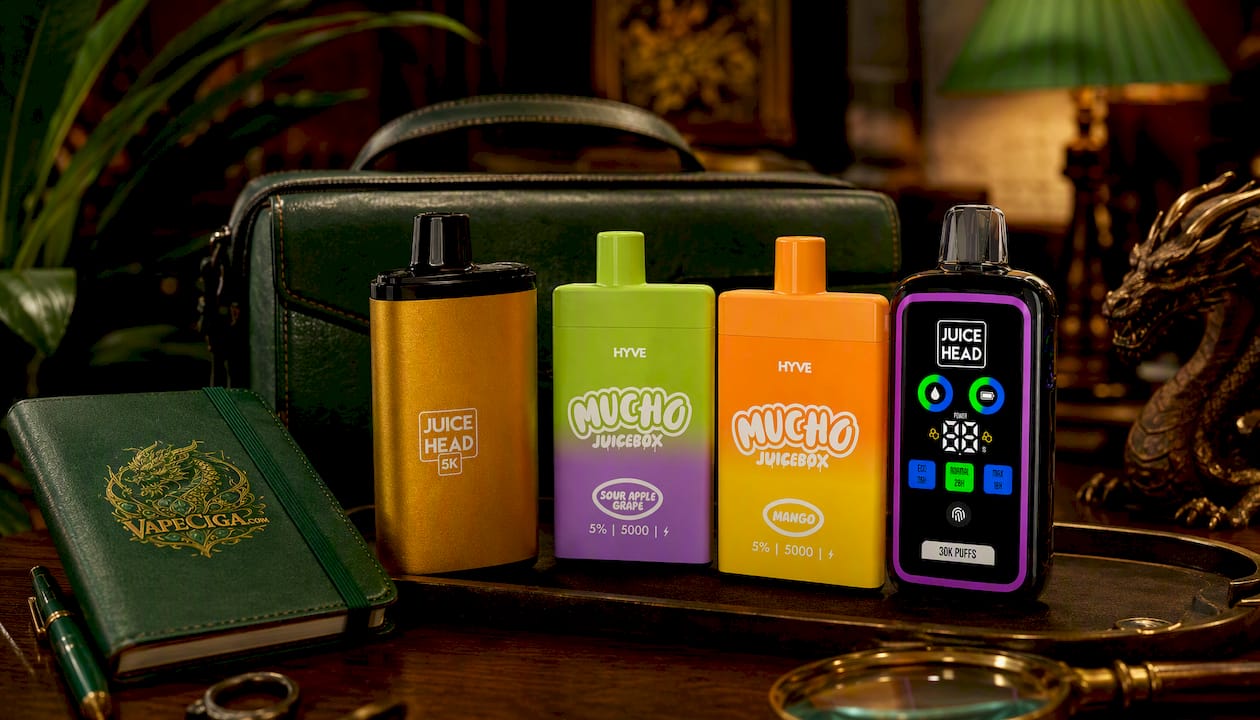
VapeCiga stocks a wide selection of in-date e-liquids and disposables with fast domestic shipping across the U.S. Three options worth knowing about right now:
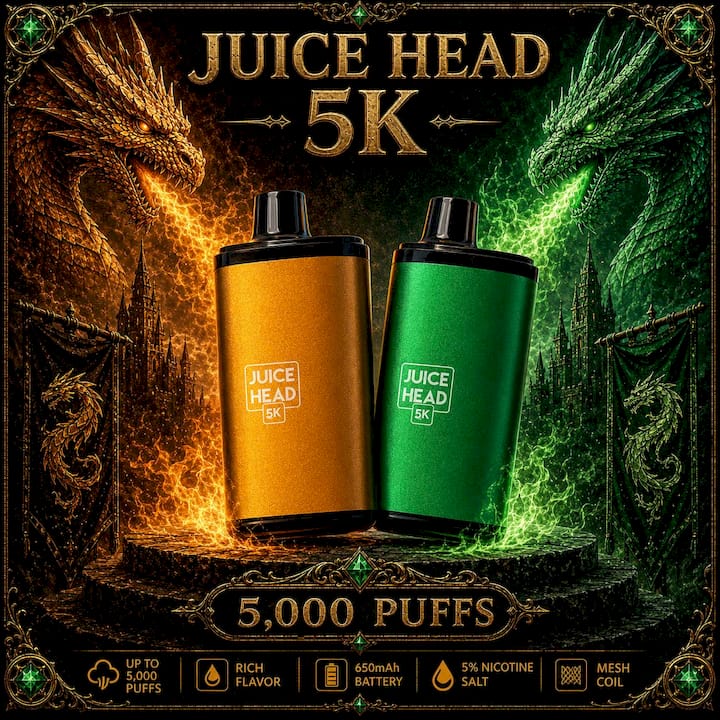
- Juice Head 5K: A high-capacity disposable with 5,000 puffs, ideal for vapers who want a reliable, ready-to-use device without managing bottles or coils.
- Hyve X Mucho JuiceBox 5000: Another 5,000-puff disposable option, well-suited for vapers who want variety in a compact format.
- Juice Head 30K: For vapers who go through devices quickly, the 30K delivers serious puff count with rechargeable convenience, so battery life doesn’t cut the session short.
Browse the full selection at VapeCiga and check the manufacture dates on every product page before you order.
Sources
These are the primary sources behind the guidance in this article, organized by type.
Check your local municipality’s hazardous-waste program for disposal specifics in your area, as rules vary by state and county.
This article is general information, not a substitute for advice from a qualified doctor. Consult a qualified healthcare professional about your own circumstances before acting on anything here.