


Yes, you can bring a vape on a plane in the United States, but only in your carry-on bag or on your person, never in checked luggage, and you can’t use or charge it once you’re onboard. That rule comes straight from the Transportation Security Administration, backed by FAA safety guidance, and every major U.S. airline enforces it the same way at the gate.
Here’s the quick version before you pack:
- Carry-on or pocket only. Checked bags are off limits, no exceptions.
- Protect the battery. Cover terminals, use a case, and don’t toss it loose in a bag with keys or coins.
- E-liquid follows the 3-1-1 rule. Bottles under 3.4 ounces, one clear quart bag.
- No vaping and no charging in flight. Not in the seat, not in the bathroom, not “just for a second.”
The short verdict: pack it like a phone with a hair trigger and TSA will barely notice it.
Key Takeaways
Bringing a vape on a U.S. flight is legal and routine as long as the device stays in your carry-on, the battery is protected, and you never use or charge it in flight.
| Point | Details |
|---|---|
| Carry-on only | Vapes and spare batteries must stay in the cabin; checked luggage is never allowed. |
| No onboard use or charging | Federal rules and airline policy both prohibit vaping or charging devices during the flight. |
| Battery limits apply | Lithium-ion batteries must stay under 100 Wh; protect terminals to avoid short circuits. |
| E-liquid follows 3-1-1 | Bottles need to be 3.4 ounces or less and fit in one quart-sized bag. |
| International rules vary | Check destination customs and airline policy before flying with a vape abroad. |
| VapeCiga offers travel-ready devices | Models like the EBCREATE BC40000 PRO list clear battery specs to confirm FAA compliance before you fly. |
This article is general information, not a substitute for advice from a qualified lawyer. Consult a qualified legal professional about your own circumstances before acting on anything here.
Table of Contents
- Can You Bring a Vape on a Plane? What TSA and the FAA Actually Require
- How to Pack a Vape for a Flight: A Step-by-Step Checklist
- Do E-Liquids and Pods Follow the Same Liquids Rule as Everything Else?
- What Happens at the Checkpoint and Why You Can’t Vape Onboard
- Traveling Internationally? Check the Destination Before You Pack
- Vaping Devices Belong in Your Carry-On, Never Checked Luggage
- Why You Can’t Use or Charge a Vape During the Flight
- Lithium Batteries: The Real Reason These Rules Exist
- The 3-1-1 Rule Applies to Every Ounce of E-Liquid You Pack
- Preventing Accidental Activation: The Step Airlines Care About Most
- Every Airline and Every Country Handles This a Little Differently
- What to Carry With You in Case an Agent Asks
- How to Declare Your Vape at Security Without Slowing Down the Line
- A Frequent Flyer’s Take on Traveling With a Vape
- Travel-Ready Devices That Make Packing Simple
- Sources
- FAQ
Can You Bring a Vape on a Plane? What TSA and the FAA Actually Require
The federal rule is simpler than most travelers expect, but it trips people up because it’s really two rules stacked together: one for the device, one for the battery inside it. TSA’s own guidance says electronic smoking devices are permitted only in carry-on baggage, and checked luggage is a hard no. The officer at the checkpoint makes the final call on anything that looks off, so a device that’s cracked, leaking, or missing a battery cover can get pulled aside even if the rule technically allows it.
The FAA’s reasoning behind this isn’t arbitrary. Vape batteries are lithium cells, and lithium battery fires are far easier to catch and put out in the cabin than in the cargo hold, where a smoldering battery can go undetected until it’s a real problem. That’s why the same PackSafe guidance spells out battery ceilings: lithium-ion batteries can’t exceed 100 watt-hours, and lithium metal batteries are capped at 2 grams of lithium content. Nearly every consumer vape battery falls well under those numbers, but it’s worth knowing the ceiling exists if you’re traveling with a high-capacity mod.
Devices that contain lithium batteries have been a leading cause of onboard battery incidents, which is exactly why the FAA tells passengers to keep them in the cabin, powered off, and protected from accidental activation.
Airlines layer their own rules on top of this baseline. JetBlue’s policy, for example, states devices and spare batteries must stay in the cabin, must be powered off, and can’t be plugged into a charger at any point during the flight. Delta and United echo the same restrictions, sometimes adding limits on how many spare batteries you can carry.
How to Pack a Vape for a Flight: A Step-by-Step Checklist
Getting through security without a hiccup comes down to five habits, and none of them take more than a few minutes the night before you fly.
- Power it down completely. If your device has a lock feature, use it. If it doesn’t, and the battery is removable, take it out. A powered-off device can’t accidentally fire in your bag.
- Use a hard case or padded sleeve. A rigid case keeps other items in your bag from pressing the fire button and keeps the device from cracking if something heavy shifts on top of it.
- Isolate spare batteries. Keep them in their original retail packaging or a battery case, and tape over the terminals if they’re loose. This prevents contact with keys, coins, or other batteries that could cause a short circuit.
- Pack e-liquid in your quart bag. Bottles need to meet the TSA liquids rule limit and travel with your other liquids, not buried separately in a different pocket.
- Expect a possible hand check. TSA officers sometimes pull vapes out for a closer look, so keep yours somewhere you can reach without unpacking your whole bag.
Pro Tip: Disposable vapes are notorious for auto-firing under pressure changes or when jostled in a crowded bag. A Vaping360 explainer on flying with disposables points out that a simple protective sleeve or a dedicated pocket away from other metal objects solves most of this. Don’t just toss a disposable loose into a backpack pouch.
Do E-Liquids and Pods Follow the Same Liquids Rule as Everything Else?
They do. TSA’s 3-1-1 rule treats e-liquid exactly like shampoo or toothpaste: containers must hold 3.4 ounces (100 ml) or less, and every liquid container has to fit inside one quart-sized clear bag.
- A 30 ml bottle of nicotine salt juice: compliant, goes in the bag.
- A 500 ml bulk refill bottle: not allowed in carry-on, and since the device itself can’t go in checked baggage, buy smaller bottles or refill at your destination instead.
- Sealed disposable vapes and prefilled pods: the e-liquid inside doesn’t need to be bagged separately since it’s sealed in the device, but the device stays in your carry-on regardless.
What Happens at the Checkpoint and Why You Can’t Vape Onboard
TSA officers are used to seeing vapes by now, and screening is usually routine. Expect this:
- Your device may need to come out of your bag for a separate look in the X-ray tray, especially if it’s bulky or metal-heavy.
- Spare batteries in a case usually pass without issue, but loose ones sometimes get a second glance.
- If asked, a simple answer works fine: “It’s a personal vaping device, it’s powered off, and it’s staying in my carry-on.”
Using or charging a vape in flight isn’t just an airline preference, it’s a safety rule with real teeth. Airlines can confiscate the device, issue fines, or in serious cases involve law enforcement, particularly if someone tries to vape in a lavatory and sets off a smoke detector.
Do not use or charge these devices onboard the aircraft. Keep them in the cabin, not in checked baggage, so any issue can be addressed immediately rather than discovered mid-flight in the cargo hold.
Traveling Internationally? Check the Destination Before You Pack
U.S. rules only cover U.S. airspace and U.S.-based carriers. Plenty of countries ban e-cigarettes outright or restrict how many devices and how much e-liquid you can bring in, and airlines can refuse to carry a device that violates the destination country’s law.
- Check the destination country’s customs page for e-cigarette import rules before you leave.
- Contact your airline directly if you’re flying an international carrier, since policies vary more than domestic ones do.
- On multi-leg trips, follow the strictest rule anywhere on your route. If your final destination bans vapes, expect the possibility of surrendering the device on arrival, a risk Delta explicitly flags in its own policy.
If the rules for your destination are murky or the country has a reputation for strict enforcement, it’s often easier to leave the device home and pick up a nicotine alternative for the trip instead.
Vaping Devices Belong in Your Carry-On, Never Checked Luggage
This bears repeating because it’s the single most common way travelers run into trouble: any vape, whether it’s a disposable, a pod system, or a full mod, has to travel in the cabin. That means your carry-on bag or your pocket, not a suitcase that gets handed off at the counter.
The reasoning ties directly back to the lithium battery inside. Checked bags sit in a pressurized but unmonitored cargo hold for the length of the flight, and if a battery shorts out or overheats down there, nobody notices until it’s already a fire. In the cabin, a crew member can respond in seconds. That’s the entire logic behind FAA PackSafe guidance, and it’s why the rule applies to every type of vaping device regardless of size or battery capacity.
If you’re checking a bag for your trip and you forget this rule, you’ve got two options at the counter: pull the device out and carry it on separately, or leave it behind. Airlines won’t make an exception, and TSA has the authority to remove it from a checked bag if it’s found during screening, sometimes without notifying you until you land and it’s missing.
Pack devices like the EBCREATE BC40000 PRO the same way you’d pack a laptop: in the bag that stays with you the entire trip.

Why You Can’t Use or Charge a Vape During the Flight
Federal aviation rules don’t just restrict where a vape rides, they restrict what you can do with it once you’re in your seat. Using it, whether that’s a quick pull in your seat or sneaking off to the lavatory, is against airline policy on every U.S. carrier, and it’s not a gray area they’ll overlook.
Charging is banned too, even from your own portable battery pack. Plugging a vape into a seatback USB port or a power bank mid-flight creates exactly the kind of unmonitored heat buildup the FAA is trying to prevent by keeping devices in the cabin in the first place. JetBlue’s policy states this plainly: devices must be off and disconnected from any charger for the entire flight, cabin included.
Getting caught vaping onboard usually starts with a smoke detector, particularly in lavatories, where devices are sensitive enough to pick up vapor even from a discreet puff. That triggers a response from the crew, and depending on the severity, can escalate to a diversion, a fine, or a referral to law enforcement once you land. It’s a disproportionate outcome for what feels like a minor rule to some travelers, but airlines treat it as seriously as smoking a cigarette onboard, because from a fire-safety standpoint, it’s the same category of risk.
Charge your device fully before you leave for the airport. If the battery dies mid-flight, it stays dead until you land.
Lithium Batteries: The Real Reason These Rules Exist
Every restriction on vapes in air travel traces back to one component: the lithium battery. The FAA sets a ceiling of 100 watt-hours for lithium-ion batteries carried on a plane, and most vape batteries sit far below that threshold, but the number matters more for high-capacity mods and spare battery packs than for your average disposable.
Spare batteries need extra attention because they’re not protected by a device housing. A loose 18650 battery rattling around in a bag pocket with keys, coins, or another battery is a short-circuit risk, and that’s precisely the scenario TSA and the FAA want travelers to avoid. The fix is simple: keep spares in their original retail packaging, a dedicated battery case, or with the terminals taped over.
Devices with a fixed, non-removable battery, which describes most disposables and many pod systems, don’t need this extra step, but they still need protection from accidental activation. A battery that can’t be removed is a battery that can still fire if the button gets pressed by something else in your bag.
If you’re shopping for a travel-friendly setup, higher-capacity devices like the iJoy XP50000 list their watt-hour and battery specs clearly on the product page, which makes it easy to confirm you’re well under the FAA’s limit before you ever get to the airport.

The 3-1-1 Rule Applies to Every Ounce of E-Liquid You Pack
E-liquid doesn’t get a pass just because it’s inside a vape rather than a standalone bottle. TSA’s liquids rule requires every liquid container in your carry-on, e-liquid included, to hold no more than 3.4 ounces (100 ml), and all of those containers together need to fit in one quart-sized clear bag.
This catches people who buy e-liquid in bulk. A 60 ml bottle is fine. A 480 ml bulk refill jug is not, and since vaping devices and their liquids can’t go in checked baggage either, the only real fix is buying smaller bottles for the trip or planning to restock once you land.
Sealed disposables and prefilled pods are a slightly different case. Since the e-liquid is sealed inside the device rather than sitting in a standalone bottle, it doesn’t need to go in the quart bag, but the device itself still has to travel in your carry-on like any other vape. If you’re carrying backup pods separately, treat any liquid in a refillable pod the same way you’d treat a bottle: under 3.4 ounces, and bagged with your other liquids.
Preventing Accidental Activation: The Step Airlines Care About Most
Airlines and TSA both flag accidental activation as one of the biggest real-world risks with carrying vapes, more so than deliberate misuse. A device firing inside a packed bag generates heat with nowhere to go, and that’s the scenario nearly every safety measure is built to prevent.
Start with the device itself. If it has a lock setting, engage it before you pack. If the battery is removable, taking it out entirely removes the risk altogether, since a device with no power source can’t fire no matter how it gets jostled.
For devices without a lock feature, and that includes most disposables, physical protection does the job instead. A hard case or padded sleeve keeps pressure off the fire button, and packing it away from other items, rather than loose in a side pocket with cables and chargers, reduces the odds that something else presses the button by accident.
Taping over exposed buttons or terminals is a low-effort backup step that costs nothing and takes ten seconds. It’s especially worth doing for spare batteries, where a stray strip of electrical tape over the contacts prevents the kind of short circuit that turns a minor annoyance into a genuine safety issue. This is also where a troubleshooting resource on common disposable vape failure modes comes in handy, since auto-firing and battery drain often share the same root causes.
Every Airline and Every Country Handles This a Little Differently
Federal rules set the floor, but airlines and foreign governments build their own restrictions on top of it, and that’s where a lot of confusion starts. TSA and the FAA govern what you can legally carry through a U.S. checkpoint. Your airline governs how many devices you can bring and how strictly they enforce onboard use. The destination country governs whether you can bring a vape in at all.
United’s guidance, for instance, specifies that electronic devices should stay accessible in the cabin rather than stowed in an overhead bin, a detail that goes beyond what TSA requires but reflects how seriously carriers take quick access to lithium battery devices. Delta’s policy adds a customs warning for international itineraries, explicitly stating the airline isn’t responsible if a device gets confiscated abroad.
That last point matters more than it sounds. Plenty of countries, including several popular vacation destinations, ban e-cigarettes entirely or require special import permits. An airline won’t necessarily stop you from boarding with a vape bound for one of these countries, but customs officials on the other end might, and “the airline let me bring it” isn’t a defense against a foreign country’s import law. If you’re flying somewhere with vague or strict-sounding vape laws, check the destination country’s customs page directly rather than assuming U.S. rules travel with you.
What to Carry With You in Case an Agent Asks
Most vape screenings at U.S. airports are quick and uneventful, but a little preparation avoids any awkward back-and-forth if an officer has questions. None of this is required by law, but it makes the interaction faster.
Carry proof that the device is yours, which for most travelers just means having it out and ready to hand over rather than buried at the bottom of a bag. If you’re carrying a higher-end mod or an unusual device an officer might not recognize on sight, having the product packaging or a printed spec sheet showing the battery’s watt-hour rating can clear up questions immediately. This is especially useful for devices that don’t have obvious branding, since an officer unfamiliar with the model may want to confirm what’s inside it.
If you bought the device recently, keeping the receipt or order confirmation in your email is a simple backup, particularly for travelers who’ve had a device questioned before. Sites like VapeCiga’s buyer’s guide for U.S. adults list battery specs and device manuals for exactly this reason, since having documentation on hand speeds up any conversation with a checkpoint officer.
Age verification isn’t a routine part of airport screening, but it’s worth knowing that vaping products are legally restricted to adults 21 and over nationwide, so if the topic comes up, a government ID settles it.
How to Declare Your Vape at Security Without Slowing Down the Line
You don’t need to make a formal declaration the way you would with cash over $10,000 or certain agricultural items. What you do need to do is be upfront if an officer asks, and keep your device somewhere easy to access rather than buried under clothes.
If your bag gets flagged during the X-ray scan, which happens fairly often with metal vape mods, the standard response is calm and simple: confirm it’s a personal vaping device, that it’s powered off, and that any spare batteries are in a protective case. Officers see this constantly and rarely treat it as anything unusual.
Where people run into delays is when the device isn’t easy to find, or when spare batteries are loose and mixed in with other electronics, forcing a slower manual search. Keeping your vape and batteries together in one accessible pouch, rather than scattered across multiple pockets, is the single biggest time-saver at the checkpoint. If asked to remove the device for a closer look, do it without hesitation. Refusing or acting evasive is far more likely to trigger a secondary screening than the vape itself ever would.
A Frequent Flyer’s Take on Traveling With a Vape
The travelers who breeze through security are the ones who treat their vape like a fragile electronic, not an afterthought stuffed in a jacket pocket. A hard case has saved more than a few checkpoint delays by keeping devices intact and buttons protected.
Pro Tip: Keep a photo of your receipt or the product packaging in your phone, especially for devices officers might not immediately recognize. And never, under any circumstance, try to sneak a puff in the cabin or a lavatory. It’s not worth the fine, the delay, or the conversation with a flight attendant.
Travel-Ready Devices That Make Packing Simple
VapeCiga stocks devices built with the exact features this guide recommends: removable batteries, lockable activation buttons, and clear watt-hour specs printed right on the product page, so you’re not guessing whether your gear clears FAA limits.
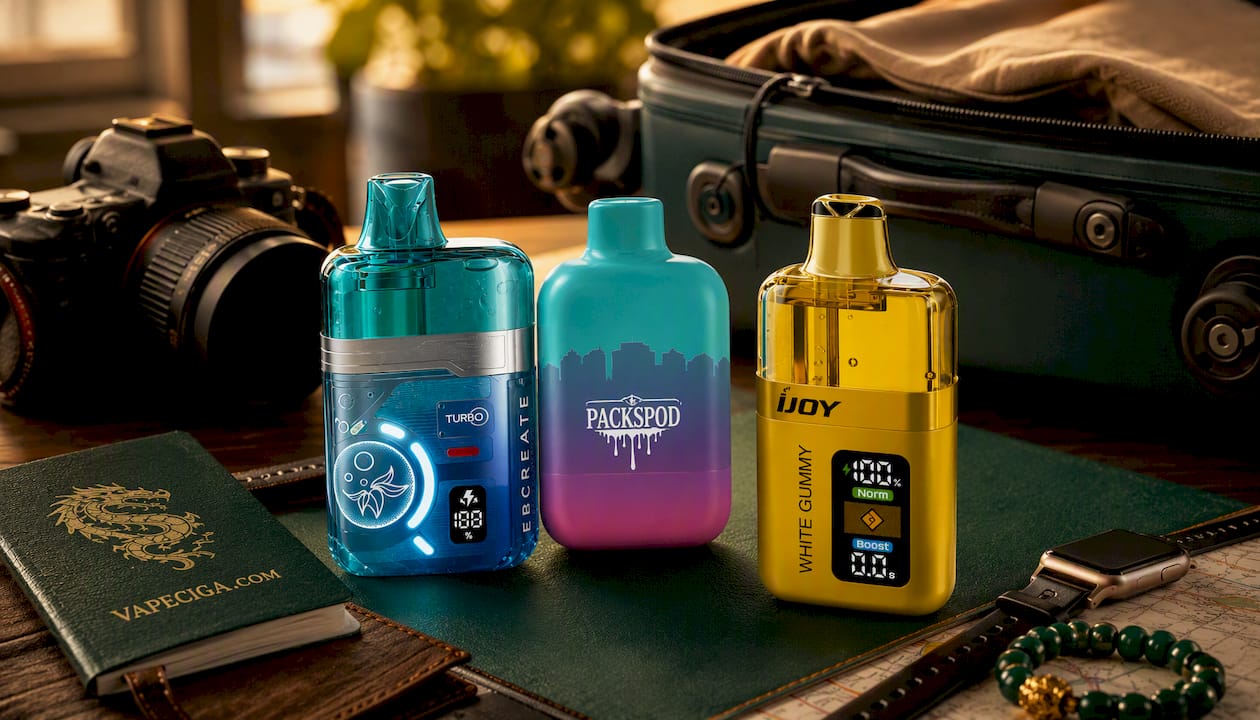
If you’re shopping for something travel-friendly, the EBCREATE BC40000 PRO offers a compact build that fits easily into a protective case, while the Packspod 5000 suits travelers who want a smaller device with straightforward battery handling. For anyone who wants higher capacity without guessing at the specs, the iJoy XP50000 lists its battery details clearly enough to double-check against FAA limits before your trip. VapeCiga ships fast across the U.S., so you can order before your trip and have a properly specced device in hand well before boarding. Browse the current lineup and pick the device that fits your itinerary before your next flight.
Sources
- Electronic Cigarettes and Vaping Devices - TSA
- PackSafe - Electronic Cigarettes, Vaping Devices | Federal Aviation Administration
- Electronic Cigarettes | JetBlue
FAQ
Will My Vape Go Through TSA?
Yes, vapes go through the X-ray scanner in your carry-on, and officers may pull the device out for a closer look, especially if it’s a larger mod or has visible metal components.
Can I Bring My Vape on a Plane With United or Other U.S. Airlines?
Yes, United and every other major U.S. carrier allow vapes in carry-on baggage under the same federal rules, though United specifically advises keeping devices accessible in the cabin rather than in an overhead bin.
Can I Carry a Vape in Flight in the USA?
You can carry it, but you can’t use it or charge it once you’re onboard; the device has to stay powered off in your carry-on for the entire flight.
Can I Bring My Vape on a Carry-On Plane Trip Without Extra Steps?
For most travelers, no extra steps are needed beyond protecting the battery and packing e-liquid within the 3.4 ounce limit; just keep the device in your carry-on and be ready to show it if asked.
Do Vape Batteries Need Special Packing?
Spare batteries should be kept in a protective case or their original packaging with terminals covered, since loose batteries touching metal objects create a short-circuit risk the FAA specifically warns against.