


Pods are the right call for most adults switching from cigarettes or starting fresh. Mods are the right call when you want serious battery life, adjustable wattage, and the ability to chase flavor or clouds. Pod-mods split the difference.
Here’s the short version:
- Pods: Compact, low-maintenance, cigarette-like draw, best with nicotine salts. Ideal for beginners and casual vapers.
- Mods (box mods): Larger, powerful, fully adjustable, best with freebase e-liquid. Built for experienced vapers who want control.
- Pod-mods: The hybrid. Pod convenience with mod-level battery and wattage. Works for most all-day vapers.
- Cost: Pods cost less upfront; mods often cost less per puff over time at high use.
- Maintenance: Pods are nearly plug-and-play. Mods require coil builds or sub-ohm tank swaps and battery management.
If you’re brand new, start with a pod. If you vape all day and want more, a pod-mod or box mod earns its complexity.
Key Takeaways
Pods suit beginners and cigarette switchers best; mods and pod-mods serve heavy or experienced vapers who need more battery life, wattage, and customization.
| Point | Details |
|---|---|
| Match device to nicotine type | Pods typically pair with nicotine salts at higher concentrations; mods pair with freebase e-liquids at lower concentrations. |
| Battery size drives daily use | Pod batteries (250–1,000 mAh) suit light use; pod-mods and box mods handle all-day heavy vaping. |
| Mods require more maintenance | External-battery mods need wrap inspection, dedicated chargers, and coil priming. |
| Beginners should start simple | A pod system with salt nic is the lowest-failure-rate entry point for cigarette switchers. |
| VapeCiga covers every level | From the Packspod 5000 for new users to the GeekVape T200 for advanced vapers, VapeCiga stocks the full range with U.S. shipping. |
Table of Contents
- What is a vape pod system and how does it work?
- What is a vape mod and how does it work?
- How do pods and mods compare across the factors that matter?
- Nicotine salts vs freebase: how your device choice shapes your experience
- Which device fits your situation?
- How to pick the right device: a practical checklist
- Real device examples from VapeCiga’s inventory
- Safety, health, and U.S. legal basics every vaper should know
- A perspective worth considering before you buy
- VapeCiga has the right device for wherever you’re starting
- Sources
What is a vape pod system and how does it work?
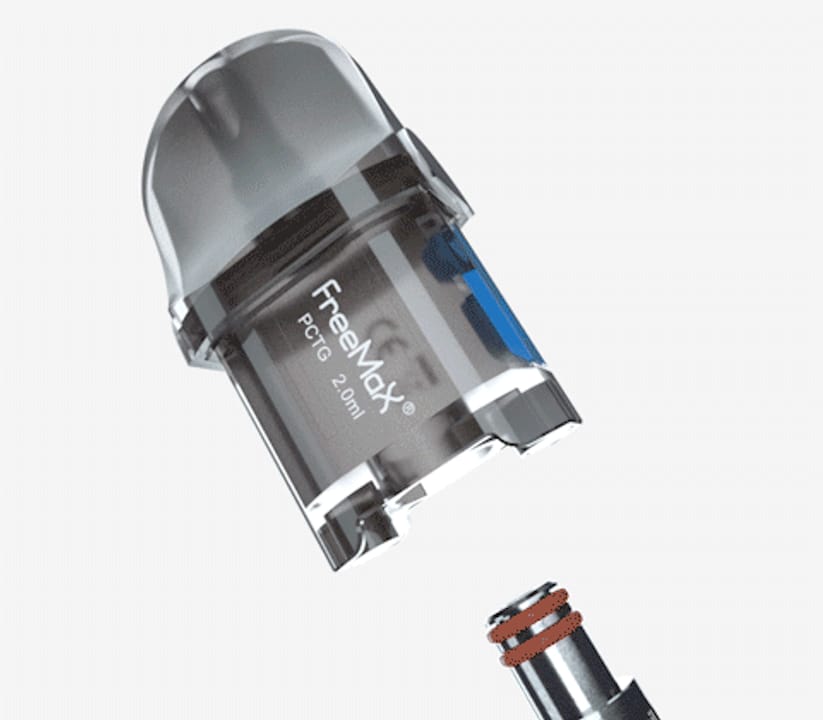
A pod system is a compact two-piece device: a battery section (the body) and a pod cartridge that snaps or magnetically attaches on top. The pod holds the e-liquid and the coil in one replaceable unit. Most pods hold between 2 ml and 5 ml of e-liquid, and the coil resistance typically runs between 0.6 ohm and 1.4 ohm, which keeps wattage low and nicotine delivery efficient.
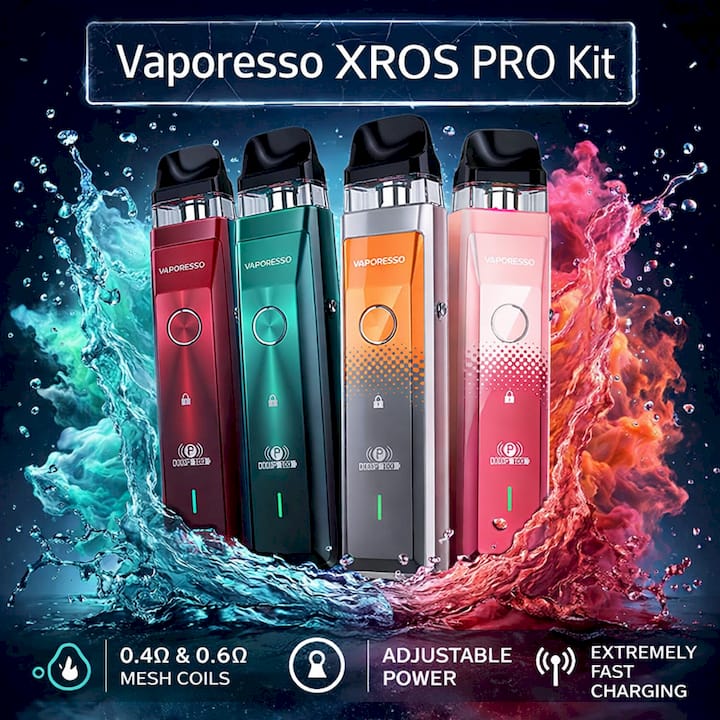
Pod batteries are almost always built-in and non-removable, ranging from roughly 250 mAh on the smallest devices up to 1,000 mAh on larger options like the Geekvape Aegis Nano 30W. Firing happens either by drawing on the mouthpiece (auto-draw) or pressing a single button. There are no wattage menus, no temperature control curves, and no coil resistance lookup tables. You fill the pod, attach it, and vape.
Research on device use patterns confirms what most retailers already know: pods dominate the nicotine-salt market because the low-wattage, high-resistance setup delivers nicotine smoothly without the harsh throat hit that freebase nicotine produces at the same concentration.
Pod specs worth checking before you buy:
- Pod capacity (ml): affects how often you refill
- Coil type and resistance (ohm): determines draw tightness and nicotine delivery
- Battery capacity (mAh): predicts how long a charge lasts
- Fill method: top-fill is faster and less messy than bottom-fill
- Compatibility: some pods only accept proprietary coils
The main limitation is battery life. A 650 mAh pod battery will get a moderate vaper through a day, but a heavy user will be charging by early afternoon. Pod cartridges also need replacing every one to two weeks depending on use, and the cost adds up if you’re vaping frequently.
What is a vape mod and how does it work?
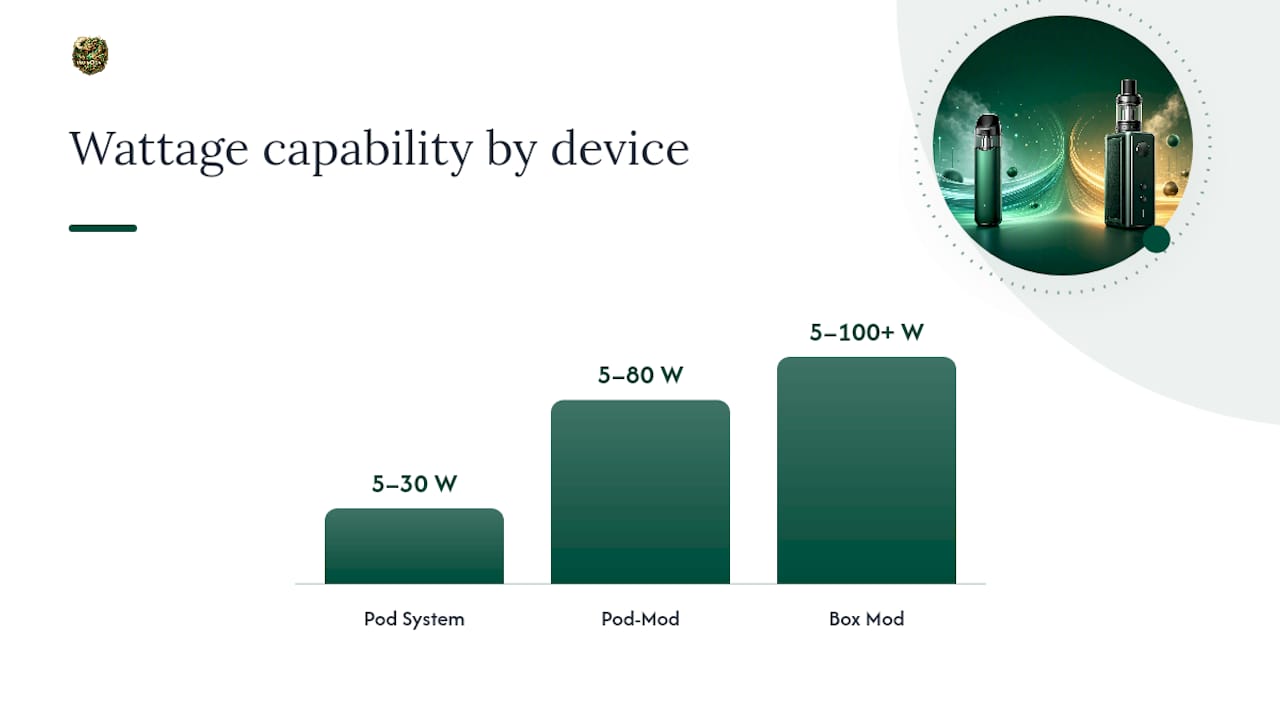
A vape mod, typically called a box mod or regulated mod, is the larger, more powerful category of vaping device. The defining feature is adjustable wattage, usually ranging from around 5W up to 80W, 100W, or beyond on dual-battery devices. Most box mods use a 510-threaded connection, which means they accept a wide range of sub-ohm tanks, rebuildable atomizers, and mesh coil heads from different manufacturers.
Battery configuration is where mods differ most from pods. Many box mods use external, removable cells, typically 18650 or 21700 lithium-ion batteries. You swap them out when they die rather than waiting for a USB charge cycle. That means a heavy vaper can carry a spare set and never worry about running out mid-day.
The pod-mod category sits between these two worlds. It uses a pod-style cartridge instead of a 510 tank but packs a larger internal battery and a wattage range that can reach 40W–80W. The Vaporesso TARGET PM80 is a textbook example: 80W output, 2,000 mAh battery, pod convenience.
Mod specs that matter:
- Wattage range affects vapor and flavor flexibility, with higher wattage allowing more output.
- Battery type: internal (convenient) vs. external 18650/21700 (swappable)
- 510 compatibility: opens access to a much wider tank and coil ecosystem
- Safety protections: short-circuit, overheat, and overcharge cutoffs are non-negotiable on any device with external batteries
- Coil resistance range: low-resistance sub-ohm coils (0.1–0.5 ohm) need higher wattage to perform correctly
The trade-off is size and complexity. A dual-battery box mod is noticeably heavier than a pod. You’ll need to learn about coil priming, wattage matching, and, if you use external cells, battery wrapping and safe storage. Studies on aerosol emissions and wattage show that higher-power setups produce larger aerosol clouds and shift aerosol particle distribution, which is exactly why cloud chasers and flavor hunters gravitate toward mods.
How do pods and mods compare across the factors that matter?
| Feature | Pod System | Pod-Mod | Box Mod |
|---|---|---|---|
| Portability / size | Pocket-sized, under 100g | Compact but slightly larger | Larger, heavy with batteries |
| Ease of use | Plug-and-play, no settings | Minimal settings, 1–2 buttons | Learning curve: wattage, coils, batteries |
| Wattage / power | 5W–30W typical | 5W up to 80W | 5W up to 100W or beyond |
| Battery capacity | 250–1,000 mAh internal | Starting around 1,000 mAh internal | External 18650 or 21700 batteries |
| Maintenance | Replace pod every 1–2 weeks | Replace pod/coil every 1–3 weeks | Prime coils, manage tanks, wrap batteries |
| E-liquid compatibility | Nicotine salts (25–50 mg/ml) | Salts or freebase | Freebase (3–6 mg/ml) primarily |
| Flavor vs. cloud | Tight flavor, minimal cloud | Balanced | Big clouds, rich flavor at high wattage |
| Upfront cost | $20–$40 | $30–$60 | $40 and up |
| Ongoing cost | Pods: $3–$8 each | Coils: $3–$6 each | Coils: $2–$5; e-liquid volume higher |
Battery safety note: devices with external 18650 or 21700 cells require proper battery wraps, a quality dedicated charger, and safe storage away from heat and metal objects. Never use a damaged or re-wrapped cell.
A few things that table can’t fully capture: pods leak less than tanks in most real-world use, which matters in a bag or pocket. Box mods with 510 tanks can leak if the coil isn’t seated correctly or the tank is overfilled. Pod-mods generally sit in the middle on leak risk. On cost, the math shifts with volume. A heavy vaper burning through two pods a day will spend more on pods per month than a mod user buying replacement coils and bulk e-liquid.
Nicotine salts vs freebase: how your device choice shapes your experience
Device type and e-liquid formulation are tightly linked, and a clinical study on nicotine delivery confirms that both the device and the formulation affect nicotine uptake and user satisfaction. Getting this pairing wrong is one of the most common mistakes new vapers make.
Pods and nicotine salts go together because the low-wattage, high-resistance setup doesn’t overheat salt nic. Nicotine salts use benzoic acid to lower the pH of nicotine, which makes high concentrations (25–50 mg/ml) smooth enough to inhale without a punishing throat hit. The result is a cigarette-like draw that satisfies quickly. Pod Juice SALT Synthetic E-Liquid is a solid example of what this category looks like in practice.
Mods and freebase nicotine pair well because the higher wattage and lower-resistance coils produce more vapor volume, which dilutes the nicotine per puff. Freebase e-liquids at 3–6 mg/ml deliver a satisfying hit without the harshness that would come from running 50 mg/ml salt nic through a 100W sub-ohm setup. The VG/PG ratio also matters here. Understanding VG/PG ratios helps you choose the right viscosity for your device’s coil and wicking system.
MTL vs DTL comes down to airflow and coil resistance. Mouth-to-lung (MTL) draws air through a tight airflow slot, mimicking a cigarette pull. Pods and high-resistance coils (0.8 ohm and above) are built for this. Direct-to-lung (DTL) opens the airflow wide and pulls vapor straight into the lungs, like breathing through a straw with the end cut off. Sub-ohm coils (below 0.5 ohm) at 40W+ are the DTL territory, and that’s where box mods live.
Pro Tip: If you’re switching from cigarettes, start with a pod and a nicotine salt at 25–35 mg/ml. If you’ve been vaping for a while and want bigger flavor or clouds, move to a pod-mod or box mod with freebase e-liquid at 3–6 mg/ml. Mixing these up (salt nic in a high-wattage mod, or freebase in a pod) usually leads to either a harsh hit or unsatisfying nicotine delivery.
Which device fits your situation?
New smoker switching to vaping. A pod system is the right starting point. The draw feels familiar, the nicotine delivery is fast, and there’s nothing to configure. A randomized trial found e-cigarettes helped some smokers reduce or stop combustible cigarette use compared with nicotine-replacement therapy, though results vary. Keep it simple.
Casual vaper who vapes between meetings. Pods again. Pocketable, discreet, no cloud production that draws attention. Battery life is usually sufficient for moderate use.
Heavy all-day vaper. A pod-mod or box mod. Battery capacity in basic pods is usually sufficient for light to moderate vaping, but heavier users benefit from pod-mods or box mods with larger or multiple batteries.
Cloud and flavor chaser. Box mod with a sub-ohm tank. High wattage, low-resistance mesh coils, and freebase e-liquid at 3 mg/ml. This is the setup built for that purpose.
Tinkerer or coil builder. Box mod with a rebuildable atomizer (RDA or RTA). This requires learning Ohm’s law basics and battery safety, but it gives complete control over coil material, resistance, and wicking.
Rough-environment user. Look for IP-rated rugged pod-mods. The Geekvape Aegis Boost line is built for dust and water resistance, which matters if you work outdoors or in physical jobs.
Disposable-heavy user thinking about switching. Disposable pods are convenient but generate significant plastic and battery waste. Moving to a refillable pod system cuts that waste substantially and costs less per puff over time.
How to pick the right device: a practical checklist
- Estimate your daily vape volume. Light (under 100 puffs/day) = pod. Heavy (300+ puffs/day) = pod-mod or box mod.
- Decide on your draw style. Tight, cigarette-like pull = MTL pod. Open, lung-filling draw = DTL mod.
- Choose your nicotine strength. High nicotine (25 mg/ml+) = nicotine salts in a pod. Low nicotine (3–6 mg/ml) = freebase in a mod.
- Be honest about maintenance tolerance. If you don’t want to think about coils, wattage, or batteries, stay with a pod.
- Assess battery needs. Need all-day power without charging? External-battery mod or large-battery pod-mod.
- Set a realistic budget. Pods: lower upfront, higher ongoing pod cost. Mods: higher upfront, lower ongoing cost at volume.
- Check portability requirements. Carrying in a shirt pocket = pod. Carrying in a jacket or bag = mod is fine.
- Verify your age. U.S. federal law requires buyers to be 21+. Confirm before purchasing from any retailer.
Red flags to avoid:
- Any device with external batteries that lacks short-circuit, overheat, and overcharge protections
- Vague wattage claims with no chip or regulation specs listed
- Pods with no coil resistance information (you can’t match them to the right e-liquid)
- Suspiciously cheap external-battery devices from unknown brands with no safety certifications
Pro Tip: Before committing to a mod, watch a 5-minute coil-priming video for that specific tank. A dry hit from an unprimed coil will ruin the coil and the experience. It’s a 30-second step that most beginners skip.
Real device examples from VapeCiga’s inventory
VapeCiga is the publisher of this article and the retailer selling the products below. These are examples mapped to use cases, not exhaustive endorsements. James has worked in the vaping industry and has evaluated these product categories for suitability across different user profiles.
Starter pod (simple, cigarette-like): The 2027 Date 7 2000 is a draw-activated pod with a 2,000 mAh battery and a compact form factor. Straightforward fill, no buttons to learn, and enough battery for a full day of moderate use.
High-puff pod for convenience-first users: The Packspod 5000 delivers up to 5,000 puffs in a slim, portable form. No refilling, no coil swaps. For users who want maximum convenience and don’t want to think about maintenance at all.
High-capacity option for heavy users: The EBCREATE BC40000 PRO is built for users who need serious puff capacity without constant device swaps. A strong pick when battery longevity is the top priority.
Step-up compact mod: The Vaporesso GTX One 40W runs on a 2,000 mAh internal battery with 40W output. It bridges the pod-to-mod gap without requiring external batteries, making it a natural first mod for someone graduating from a basic pod.
Mid-range box mod: The Vaporesso Swag II 80W is a compact 510-compatible box mod with 80W output and a single 18650 battery. Smaller than most dual-battery mods, with enough power for sub-ohm tanks and mesh coils.
Rugged advanced mod: The GeekVape T200 (Aegis Touch) is a dual-battery touchscreen mod rated for dust and water resistance. Built for heavy users who vape in demanding environments and want full wattage and temperature control.
| Device | Type | Battery | Max Wattage | Best For |
|---|---|---|---|---|
| 2027 Date 7 2000 | Pod | 2,000 mAh internal | Low (pod range) | Beginners, cigarette switchers |
| Packspod 5000 | High-puff pod | Internal | Pod range | Convenience-first users |
| EBCREATE BC40000 PRO | High-capacity pod | Internal | Pod range | Heavy-use, low-maintenance |
| Vaporesso GTX One 40W | Pod-mod | 2,000 mAh internal | 40W | Step-up from pods |
| Vaporesso Swag II 80W | Box mod | Single 18650 | 80W | Intermediate, compact mod users |
| GeekVape T200 Aegis Touch | Box mod | Dual 18650/21700 | 200W | Advanced, rugged environments |
Safety, health, and U.S. legal basics every vaper should know
Age and legal requirements. Federal law in the United States sets the minimum purchase age for tobacco and vaping products at 21. Every legitimate retailer, including VapeCiga, enforces this. State laws may add further restrictions on flavors, online sales, or taxation. Check your state’s current rules before ordering.
Battery safety for external-cell devices. This is where most vaping accidents originate.
- Use only batteries from reputable manufacturers with verified capacity ratings
- Inspect wraps before every use; a nicked or torn wrap on an 18650 cell is a short-circuit risk
- Charge with a dedicated lithium-ion charger, not a phone adapter
- Never carry loose batteries in a pocket with keys or coins
- Store batteries in a hard case away from heat sources
Health context. The National Academies report on e-cigarettes concluded that e-cigarette aerosol contains fewer toxicants than combustible tobacco smoke, but also identified known risks and significant research gaps. A 2019 toxicity review found that while aerosols contain fewer harmful constituents than cigarette smoke, they are not inert. A 2020 narrative review noted respiratory and cardiovascular considerations reported in some studies.
NHS guidance recognizes vaping as a less harmful alternative to smoking for adults trying to quit and provides practical cessation resources. It does not describe vaping as risk-free, and it recommends using vaping as a quitting tool rather than a permanent habit.
For context on vaping as a smoking alternative, VapeCiga’s own vaping vs. smoking overview covers the key comparisons. For anyone seeking to quit nicotine entirely, the CDC and SAMHSA both maintain free cessation resources.
This article is general information, not medical advice. Consult a healthcare professional for guidance specific to your health situation.
A perspective worth considering before you buy
The conventional wisdom in vaping communities is that beginners should always start with the cheapest possible pod and upgrade later. That advice is mostly right, but it misses something. The biggest reason people abandon vaping and go back to cigarettes isn’t device complexity. It’s a nicotine mismatch. A new switcher who buys a 40W mod and fills it with 3 mg/ml freebase e-liquid will get almost no nicotine satisfaction and quit within a week. The device wasn’t wrong; the pairing was.
The pod vs mod decision is really a nicotine delivery decision first, and a hardware decision second. Match the nicotine formulation to the device type, and almost any quality device from either category will work. Get that pairing wrong, and even the best hardware fails.
VapeCiga’s approach is to steer first-time buyers toward pods with salt nic, then let the upgrade happen naturally when the user wants more battery life or flavor depth. That’s not a sales strategy. It’s just the path with the lowest failure rate.
VapeCiga has the right device for wherever you’re starting
Whether you’re picking up your first pod or stepping up to a box mod, VapeCiga stocks the full range, from beginner-friendly pods to advanced dual-battery mods, with fast domestic shipping across the United States.

For cigarette switchers and first-timers, the Packspod 5000 is a zero-setup starting point with 5,000 puffs and no maintenance. Ready to step up? The GeekVape T200 Aegis Touch delivers full mod power in a rugged, touchscreen body. For the middle ground, the Vaporesso Swag II 80W gives you 510 tank flexibility in a compact single-battery form. All purchases require age verification (21+). Browse the full selection at VapeCiga and find the device that matches your actual vaping habits.
Sources
- NHS — Vaping to quit smoking
- NCBI PMC7191502 — review on e-cigarettes and health
- NCBI PMC7058175 — toxicity and emissions review
- PubMed 31854246 — nicotine delivery study
- National Academies — Public health consequences of e-cigarettes
This article is general information, not a substitute for advice from a qualified doctor. Consult a qualified healthcare professional about your own circumstances before acting on anything here.