


Every vape needs three things to keep running well: a daily 30 second wipe and leak check, a weekly rinse of removable parts plus contact cleaning, and a monthly teardown to inspect O-rings, coils, and battery health. Skip any one of these for too long and you get burnt hits, leaks, or a device that won’t fire. Which tasks apply depends on your device type, covered next, and one rule overrides everything else: never reassemble a device until every part is completely dry, and never charge a battery that looks swollen or feels hot.
TL;DR:
- Regular weekly disassembly and full teardown help prevent buildup that causes leaks, clogged airflow, and early coil failure.
- Daily wipes and contact checks are essential to avoid burnt tastes, leaking, and device malfunctions, especially if skipped for multiple days.
- Using proper cleaning supplies like water, isopropyl alcohol, and soft cloths is vital; avoid harsh chemicals such as bleach or acetone.
- Proper storage practices, including turning off devices, upright placement, and safe battery handling, reduce safety hazards and prolong device lifespan.
- Disposing of coils and batteries safely through designated recycling channels prevents fire risks and environmental harm.
Table of Contents
- Why Your Vape Maintenance Checklist Depends on Device Type
- What Should You Do Every Day to Maintain Your Vape?
- How Do You Clean a Vape Tank Each Week?
- What Does a Monthly Deep Clean Involve?
- Battery Care: What Are the Non-Negotiable Rules?
- How Do You Know When to Replace a Coil?
- Which Cleaning Supplies Are Safe, and Which Ruin Your Gear?
- How Do You Troubleshoot Common Vape Problems?
- How Should You Store and Transport Your Vape?
- Where Does This Checklist Come From?
- How Do You Dispose of Used Coils and Batteries Safely?
- A Publisher’s Note on Sticking With the Routine
- Gear That Makes This Checklist Easier to Follow
- Sources
- FAQ
Why Your Vape Maintenance Checklist Depends on Device Type
Not every vape gets cleaned the same way, and treating a disposable like a refillable tank mod is a fast way to break something. Refillable tank mods have removable glass, a replaceable coil, and exposed threading, so they can be fully torn down. Pod systems with replaceable coils open partway, letting you swap the coil but not always access every seal. Fixed-coil pods are sealed units where the coil and pod are one piece, so cleaning is external only. Disposables have no user-serviceable parts at all.
- Tank mods: full teardown, rinse, dry, reassemble
- Replaceable-coil pods: rinse the shell, swap the coil, wipe contacts
- Fixed-coil pods: wipe exterior and mouthpiece only, replace the whole pod when it fails
- Disposables: wipe mouthpiece, clear airflow vents, no internal cleaning possible
Knowing which category you own tells you which checklist items below actually apply to your setup.
What Should You Do Every Day to Maintain Your Vape?
A daily routine takes less time than brewing coffee, and it’s the single habit that prevents most of the calls people make asking why their device suddenly tastes burnt or won’t fire. Spending 30 to 60 seconds a day wiping contacts and checking your e-liquid level heads off a surprising number of troubleshooting headaches before they start.
- Wipe the mouthpiece and exterior with a lint-free cloth to remove oils and residue.
- Check the e-liquid level through the window or fill port and look for any pooling around the base.
- Clear visible gunk from airflow holes with a dry cotton swab.
- Wipe pod or tank contact points before your first vape of the day, especially if you set the device down overnight.
None of this requires disassembly. It’s a glance and a wipe, done before your first hit, and it catches leaks and low e-liquid before they turn into a mess in your pocket.
How Do You Clean a Vape Tank Each Week?
Once a week, your device needs more than a wipe. This is where cleaning vape tanks properly starts to matter, because gunk that sits for weeks hardens and clogs airflow, which speeds up coil wear.
- Rinse removable tank or pod parts under warm water, letting the water run through the airflow channels.
- Skip soaking the coil or wick itself; submerging it slows drying and can actually shorten its life rather than extend it.
- Clean the 510 connection and contact pins with a cotton swab lightly dampened in isopropyl alcohol, but only on metal or glass surfaces.
- Inspect the coil for early wear and swap it out if flavor has already started to fade.
- Let everything air dry completely before you put it back together.
Pro Tip: Set a phone reminder for the same day every week, like “tank Sunday.” Maintenance that isn’t scheduled gets skipped, and a skipped week is usually when the gunk crosses the line from annoying to actually clogging your airflow.
What Does a Monthly Deep Clean Involve?
Once a month, take the device apart completely rather than just rinsing the obvious parts. This is the checkup that catches problems before they become failures.
- Remove the coil entirely and soak the glass tank body and metal components in warm water, adding a drop of mild dish soap if there’s stuck residue.
- Dry every part fully. Vaporesso’s own guidance warns against boiling water or dishwasher cycles, since high heat warps plastic and degrades rubber O-rings.
- Inspect O-rings and seals for cracking or flattening, and replace any that look compressed or brittle.
- Check tank threads and glass for hairline cracks that only show up under close light.
- On regulated mods, check for firmware updates and inspect the battery contact plate for corrosion or pitting.
If your tank’s threading or glass has seen better days, a Smok T-Air Subtank makes a straightforward swap since it’s built for exactly this kind of teardown and reassembly cycle.
Battery Care: What Are the Non-Negotiable Rules?
Battery mistakes cause the vast majority of the vape-related incidents that make headlines, and nearly all of them trace back to the same handful of avoidable habits.
- Use only the cable that came with your device or one the manufacturer explicitly recommends.
- Never leave a battery charging unattended or overnight.
- Store devices upright in a cool, dry spot, away from direct sun or a hot car dashboard.
- Pull removable batteries out of the device entirely if you’re storing it for more than a few weeks.
- Stop using any device that feels unusually hot, smells odd, or has a swollen or bulging battery, no exceptions.
Pro Tip: A battery that swells even slightly has already failed internally. Don’t try to “finish out” a charge cycle on it. Stop, remove it, and dispose of it properly, covered further down.
How Do You Know When to Replace a Coil?
Coils are consumable by design, and expecting one to last indefinitely is where most flavor complaints start. A typical coil lasts somewhere between one and three weeks of regular use, though sweeter e-liquids gunk them up faster and higher wattages burn through cotton wicking sooner than a light, low-power puff pattern would.
- Burnt or acrid flavor that wasn’t there a few days ago
- Dark, sticky residue visible through the tank glass
- Noticeably weaker vapor production at the same wattage
- A faint gurgling that shows up even right after refilling
When you swap in a new coil, prime it first. Vaporesso’s own product guidance recommends waiting around five minutes after filling so the wick fully saturates before you fire it, which prevents the dry, burnt hit that ruins a brand new coil on its first pull. Stock up with something like Smok Vape Pen V2 coils so you’re never caught mid-week with a dying coil and nothing to replace it with.
Which Cleaning Supplies Are Safe, and Which Ruin Your Gear?
Keep it simple: warm water, a small amount of mild dish soap, cotton swabs, and a microfiber cloth handle almost every cleaning job. For metal and glass specifically, 70 to 91 percent isopropyl alcohol cuts through built-up residue that water alone won’t touch.
- Never use bleach, acetone, or cooking oils on any vape part.
- Skip boiling water entirely. It warps plastic housings and breaks down rubber O-rings.
- If a part contains rubber seals or certain plastics, rinse with water only. Isopropyl alcohol will dry out and crack those materials over time.
How Do You Troubleshoot Common Vape Problems?
Most symptoms point to one of three causes, and matching the symptom correctly saves you from replacing parts that were never the problem.
- Gurgling sound: usually condensation pooling in the airflow path. Dry the mouthpiece and tank chimney, and let the device sit upright for a few minutes.
- Muted or flat flavor: almost always coil gunk. Rinse the tank and check whether the coil is due for replacement.
- Device won’t fire: often dirty or corroded contacts, not a dead battery. Wipe the 510 pin and pod contacts with a dry cloth or alcohol-dampened swab and try again.
- Persistent leaking despite cleaning: check the seal at the base of the pod, since a worn O-ring is the usual culprit.
- Device feels hot, smells like burning plastic, or the battery looks swollen: stop using it immediately. This isn’t a cleaning fix.
How Should You Store and Transport Your Vape?
A few habits prevent most of the leaks and accidental firings that happen in bags and pockets, not at home.
- Turn off button-activated devices before pocketing them, and use a protective case when possible.
- Keep devices upright rather than laying them flat, and never leave one in a hot car.
- Store e-liquid bottles sealed and out of direct sunlight, and keep charging ports free of lint and pocket debris.
- If you’re flying, check your airline’s specific battery and carry-on rules separately, since they vary by carrier.
Where Does This Checklist Come From?
This routine reflects patterns we see constantly at VapeCiga, a USA based online vape retailer that fields real troubleshooting questions from customers every week. Author James draws on those recurring patterns, burnt coils reported too early, leaks traced back to a skipped weekly rinse, to build a checklist grounded in what actually fails, not just what sounds thorough. For device-specific issues, our related coil lifespan guide and pod leak guide go deeper on individual symptoms.
How Do You Dispose of Used Coils and Batteries Safely?
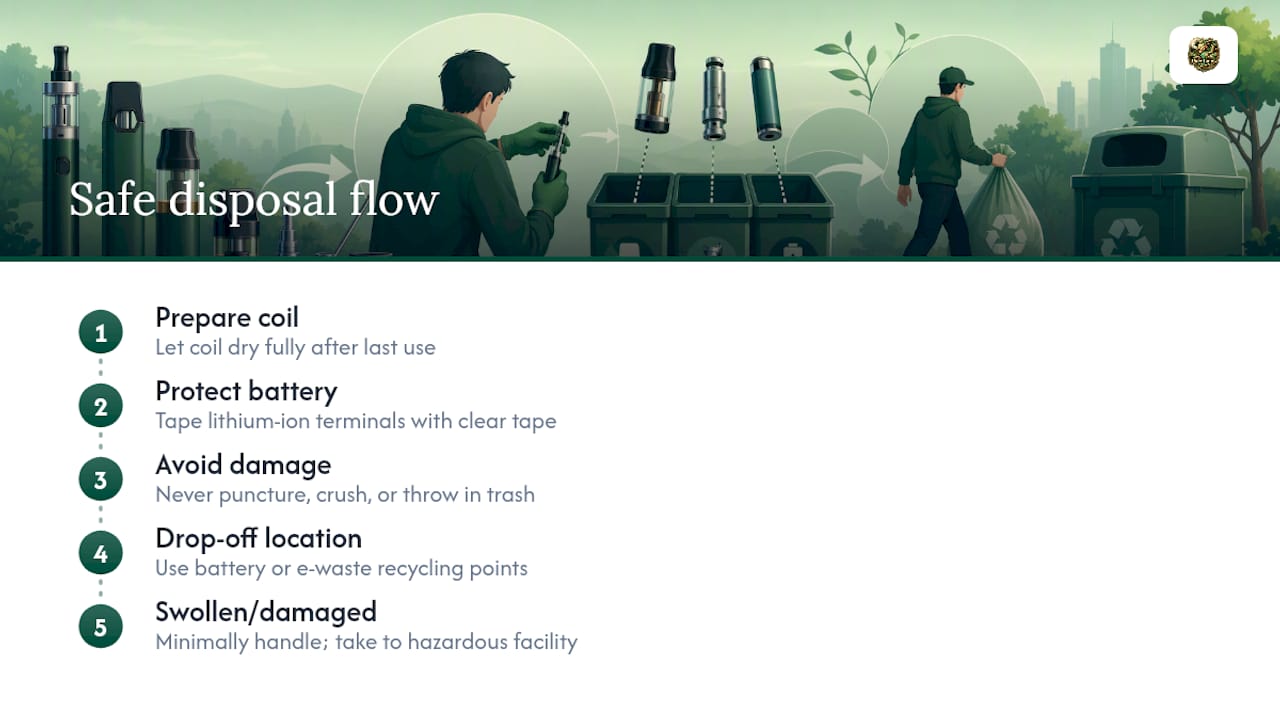
Used coils and vape batteries don’t belong in your household trash, and tossing them there carries more risk than most people realize. A spent coil still contains a thin wire heating element and cotton wicking, both of which are considered small electronic waste in most municipalities. Batteries are the bigger concern. Lithium-ion cells, even fully drained ones, can short-circuit if crushed in a garbage truck compactor or landfill equipment, and a punctured cell is a genuine fire risk.
Start with coils. Let them dry fully after their last use, then drop them in a dedicated battery or e-waste recycling bin rather than a curbside recycling cart, since mixed metal and cotton components usually aren’t accepted in standard recycling streams. Many vape and electronics retailers also accept small battery based waste for proper handling.
For batteries specifically, never puncture, crush, or throw a lithium-ion cell in regular trash. Tape over the terminals with clear tape before disposal to prevent accidental short-circuiting in transit, a simple step that battery safety guides on battery repair and handling consistently recommend. Most municipalities operate dedicated battery drop-off points at hardware stores, electronics retailers, or local recycling centers. A quick search for “battery recycling near me” usually turns up a location within a few miles. If a battery is swollen or damaged, handle it as little as possible and take it directly to a hazardous waste facility rather than a standard drop bin.
A Publisher’s Note on Sticking With the Routine
The devices that come back with real problems almost always belong to someone who skipped the daily wipe for a month straight, not someone who forgot once. A gurgling tank or a burnt coil rarely happens overnight. It builds from small skipped steps.
Try the daily checklist for one week straight before you decide it’s not worth the thirty seconds. Most people who do stick with it, because the alternative is troubleshooting a device that a quick wipe would have kept running fine.
— James
Gear That Makes This Checklist Easier to Follow
A checklist only works if you’ve got the right parts on hand when something needs replacing, not three days later when the tank is already leaking. VapeCiga stocks the specific components this routine calls for, so you’re never stuck improvising a fix with the wrong part.
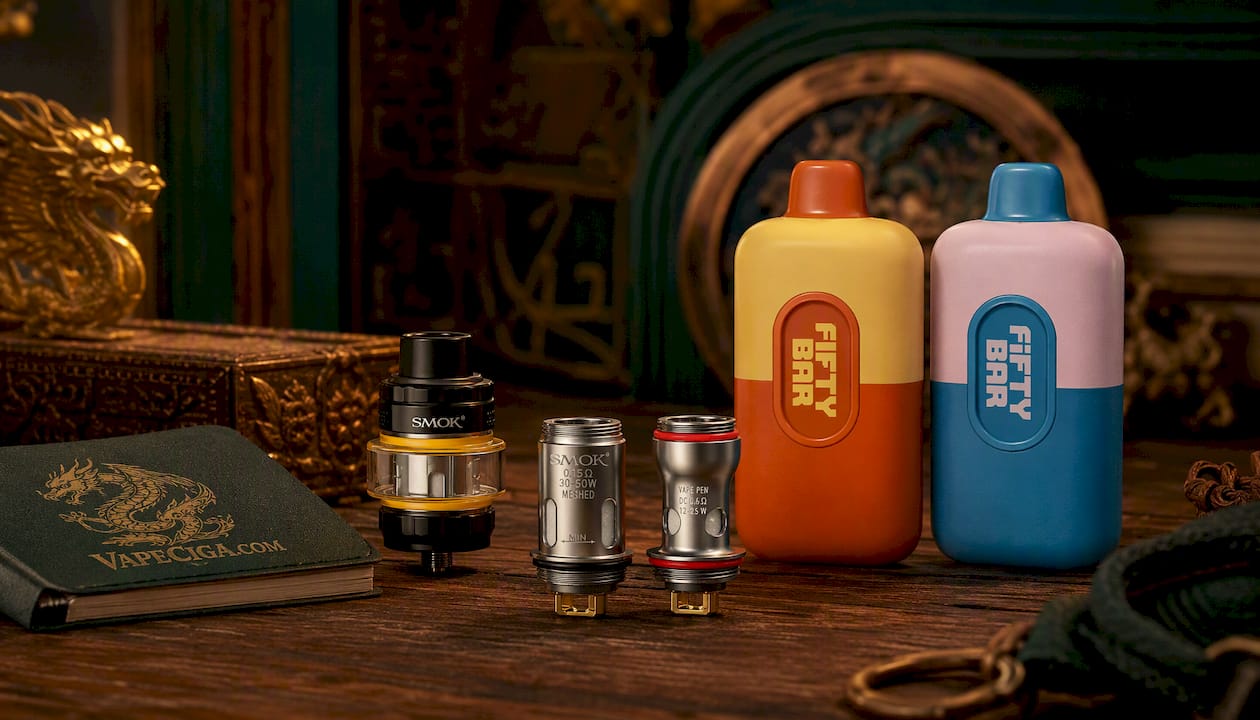
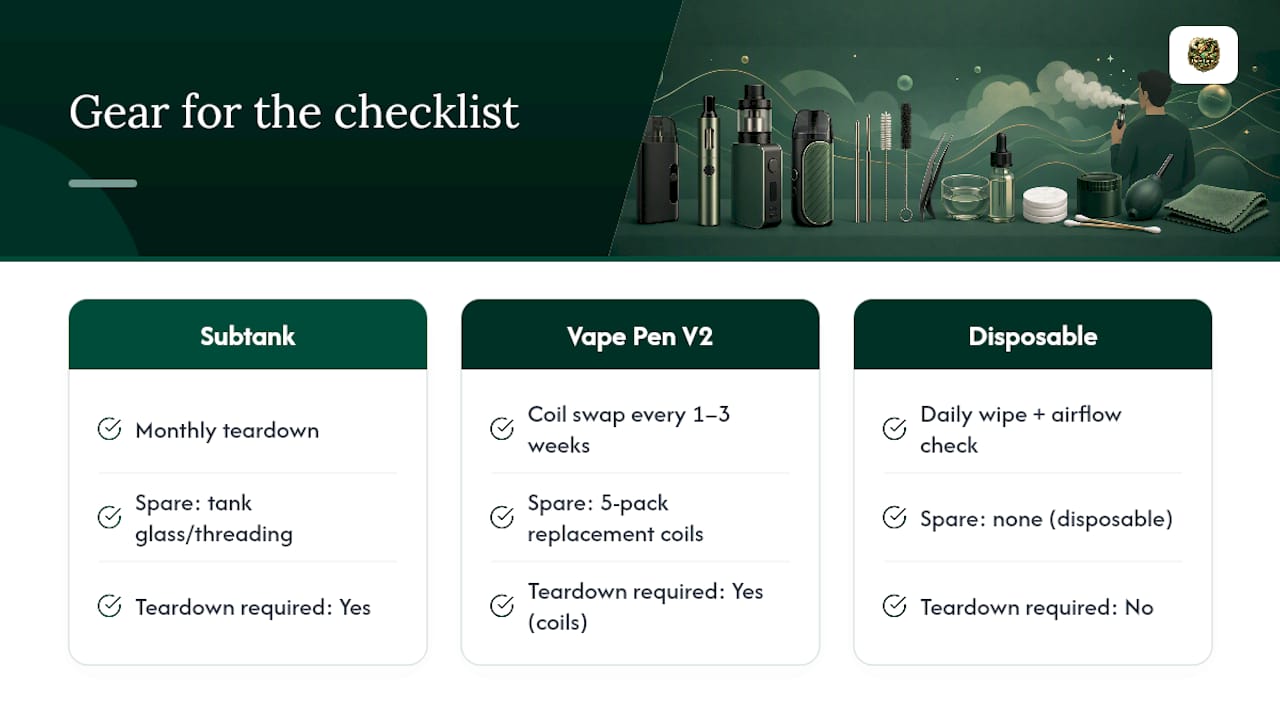
If your tank’s glass or threading has taken enough teardown cycles to start looking worn, the Smok T-Air Subtank is built for exactly the kind of monthly disassembly this checklist recommends. For the coil swaps that come up every one to three weeks, a five-pack of Smok Vape Pen V2 coils means you’re never caught without a replacement mid-week. And if you’d rather skip maintenance altogether on busy days, the Fifty Bar 6500 disposable needs nothing more than the daily wipe and airflow check covered above, no teardown, no coil swaps, no seals to inspect.
Browse the current lineup at an online vape store and pick up whichever piece your checklist is missing this week.
Sources
For deeper detail on cleaning steps, the Vape Observation cleaning guide and The Vapers Guide cover device-specific methods. Always check your manufacturer’s own guidance for material-specific limits.
- How to Clean a Vape: Tank, Pod & Disposable Cleaning Guide (2026) - Vape Observation
- How to Clean a Vape: Pen, Pod, Mod, and Dry Herb | The Vapers Guide
- Tips for Vape Tanks: How to clean a vape tank | VAPORESSO
- How to Clean Your Vape Tank - Vaporessostore
FAQ
How Often Should I Clean My Vape Tank?
Rinse removable tank or pod parts weekly, and do a full teardown with an inspection of O-rings and seals once a month.
Can I Use Isopropyl Alcohol on My Vape Coil?
No. Isopropyl alcohol belongs on metal and glass parts only. Using it directly on a coil or wick damages the wicking material.
Why Does My Vape Taste Burnt Even With a New Coil?
The coil likely wasn’t primed. Wait about five minutes after filling so the wick fully saturates before firing.
How Long Does a Vape Coil Actually Last?
Most coils last one to three weeks under regular use, though sweet e-liquids and high wattage settings shorten that window noticeably.
Is It Safe to Boil My Vape Tank to Clean It?
No. Boiling water can warp plastic housings and degrade the rubber O-rings that keep your tank from leaking.